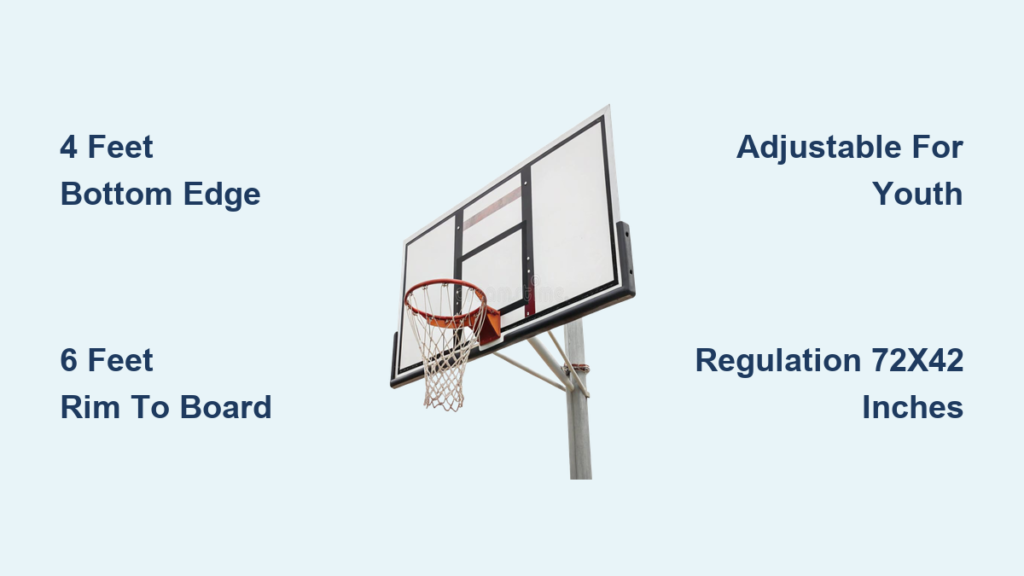
You’re setting up a new hoop, whether in a gym, driveway, or community court, and one question stands out: How high should the basketball backboard be? While most know the rim is 10 feet high, fewer understand how that translates to backboard positioning, especially when considering age groups, installation types, or competitive standards. Getting the height right isn’t just about rules compliance; it affects shooting accuracy, rebound behavior, and player safety.
This guide breaks down every aspect of basketball backboard height, from professional regulation specs to youth adaptations. You’ll learn where the bottom and top edges sit, how rim and board relate vertically, and what changes for younger players or outdoor setups. Whether you’re installing a permanent in-ground system or adjusting a portable hoop for your kids, this comprehensive overview ensures your setup meets performance, safety, and developmental needs.
Regulation Backboard Dimensions You Must Know
Standard Size for Competition Play
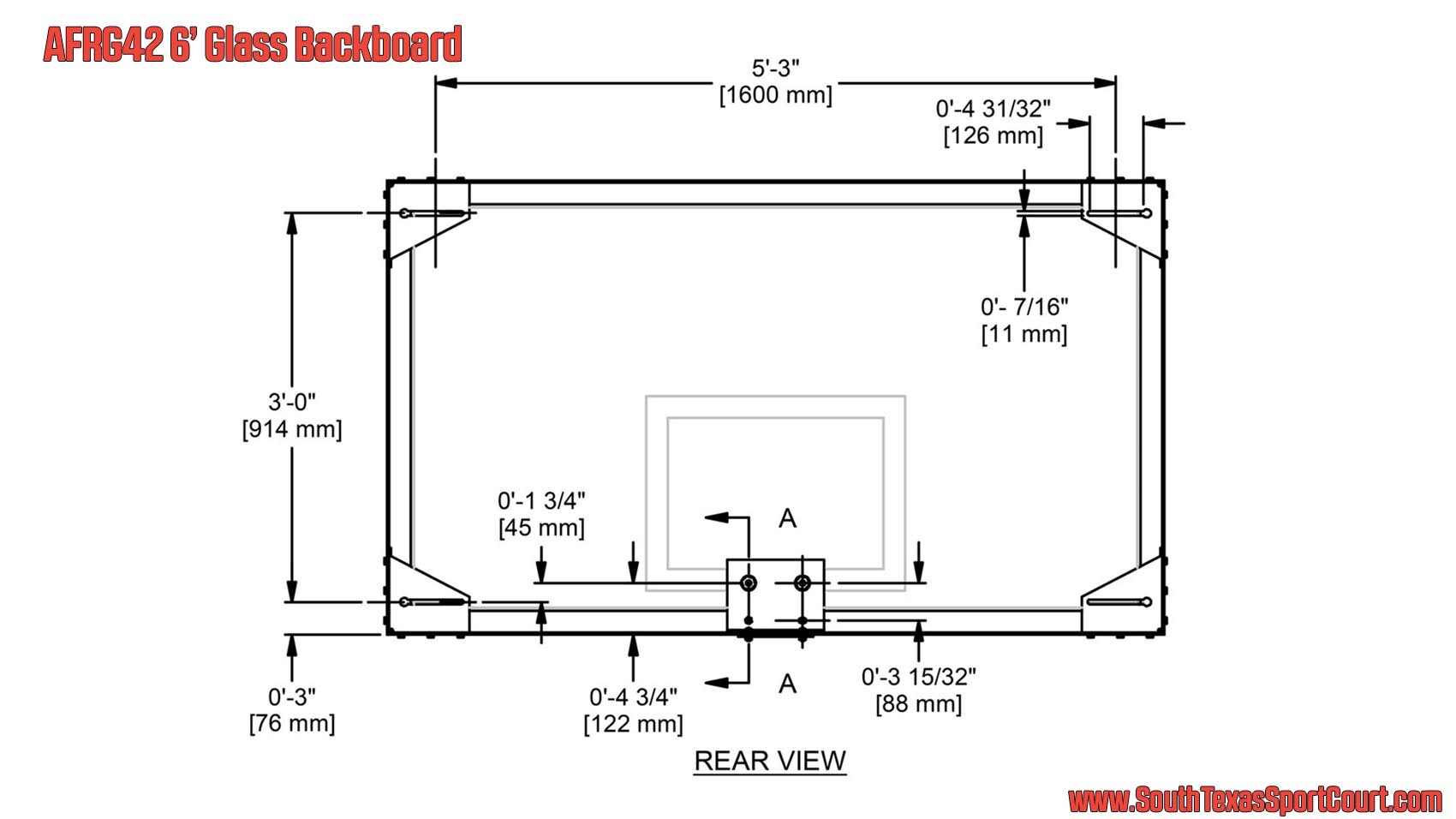
In NBA, NCAA, NFHS (high school), and FIBA play, backboards follow strict size regulations to ensure fairness and consistency. The official dimensions are:
- Width: 72 inches (6 feet / 1.83 meters)
- Height: 42 inches (3.5 feet / 1.07 meters)
- Shape: Rectangular
- Surface: Transparent (tempered glass) in professional settings
This creates a total surface area of 2,016 square inches, providing ample space for bank shots and consistent rebounds. The uniformity across elite levels ensures players can transition between arenas without adjusting to different rebound dynamics.
The Target Rectangle Explained
Centered on the backboard is a painted rectangle, commonly called “the square,” used as a visual aid for bank shots.
- Width: 24 inches
- Height: 18 inches
- Position: Top edge aligned with the rim height (10 feet)
- Line Thickness: 2 inches
This zone helps players judge angles for layups and mid-range shots. Its placement ensures that when aiming for a bank shot, the ball contacts the board at a predictable point relative to the rim.
How High Is a Backboard Mounted?
Bottom Edge Positioning at 4 Feet
The bottom edge of a regulation backboard sits exactly 4 feet (48 inches / 1.22 meters) above the ground. This standard is consistent across NBA, NCAA, and high school courts.
This measurement isn’t arbitrary; it’s calculated based on the fixed relationship between the rim and the board. When installing, measure from the ground up to confirm your setup meets this critical specification.
Top Edge Reaches 7.5 Feet
Since the backboard is 42 inches (3.5 feet) tall, adding that to the 4-foot base height places the top edge at 7 feet 6 inches (90 inches) above the playing surface.
This height keeps the board safely within reach for maintenance while ensuring it doesn’t interfere with ceiling-mounted systems or lighting in indoor facilities.
The 6-Foot Gap Between Rim and Backboard
A key design rule governs basketball backboard height: there are 6 feet (72 inches) between the top of the rim and the bottom of the backboard.
Even though the rim is at 10 feet, the backboard starts much lower. This spacing allows players to jump, dunk, and maneuver without immediate obstruction from the board itself.
Installation Tip: When checking or setting up a hoop, measure from the rim upward. If the bottom of the backboard is more than 6 feet above the rim, the system may not meet regulation standards.
Relationship Between Rim Height and Backboard
Fixed Rim at 10 Feet for Older Players
For players aged 12 and older, the rim must be 10 feet (120 inches / 3.05 meters) high—a standard unchanged since James Naismith invented basketball in 1891. He hung peach baskets on a balcony railing that happened to be 10 feet off the ground, and the height stuck.
All regulation backboards are mounted relative to this fixed point.
Universal Mounting Pattern: 4×5 Inches
Behind the backboard is a standardized 4-inch by 5-inch mounting pattern. This universal grid allows compatible rim assemblies to be attached securely across brands and models, making replacements and upgrades easier.
Ensure your goal uses this pattern if you plan to switch rims or backboards later.
Youth and Adjustable Hoop Heights
Lower Rims for Younger Players
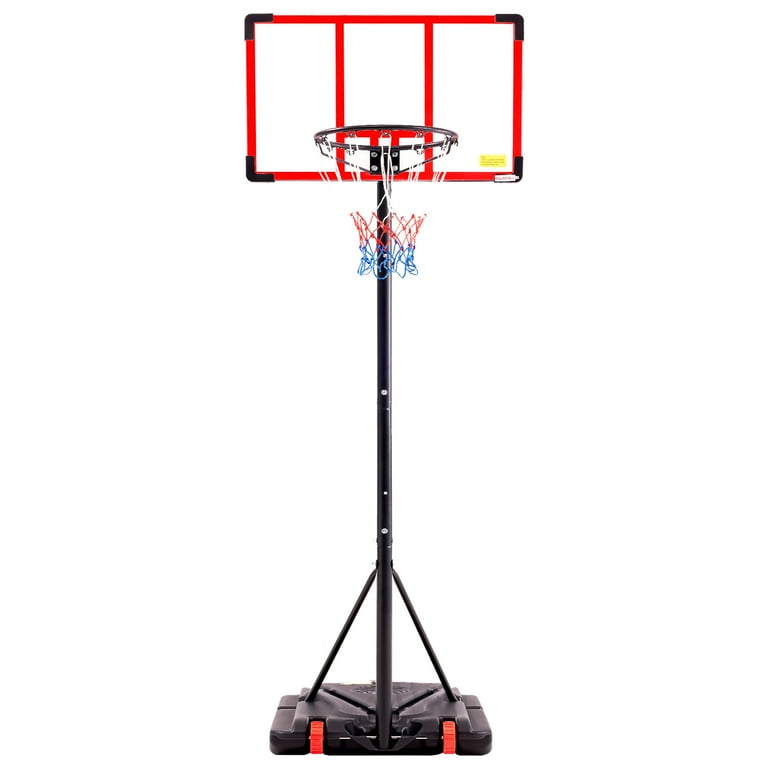
To support skill development, younger athletes use lower rim heights:
- Ages 7–10: 8 feet
- Ages 11–12: 9 feet
- Under 7: As low as 6–7 feet
Lowering the rim encourages proper shooting mechanics, increases scoring success, and builds confidence in young players.
Backboard Height Adjusts With Rim
On adjustable systems, the backboard typically lowers with the rim, maintaining the standard 6-foot gap between rim and board bottom. This preserves the correct visual and spatial relationship for aiming and rebounding.
Some budget models may not maintain perfect alignment, so check product specs before purchase.
Youth Backboard Sizes by Age Group
Middle School: 54×36 Inches
For intermediate youth play, a 54-inch wide by 36-inch high backboard is common. It offers a large enough surface for learning bank shots while fitting smaller gym spaces or driveways.
This size is ideal for schools and training centers using adjustable goals.
Elementary Level: 48×32 Inches
Smaller players benefit from a 48×32-inch board. This size reduces visual overwhelm and matches the scale of younger athletes.
These boards are often made from polycarbonate or acrylic for durability and lighter weight.
Residential Models: 44 to 60 Inches
Home courts use scaled-down options:
- 44–54 inches wide: Fits most two-car driveways
- 60 inches: A “mid-size” option offering near-regulation width without requiring full space
These are typically made from acrylic or polycarbonate, which is lightweight, weather-resistant, and shatterproof.
Backboard Materials and Performance Comparison

Tempered Glass: The Pro Standard
Used in NBA, NCAA, and top-tier high schools, tempered glass delivers the most accurate rebound response.
- Pros: Truest bounce, high clarity, broadcast-ready
- Cons: Expensive, requires strong support structure
- Safety: Shatters into small, dull pieces when broken (safety-tempered)
Modern pro boards resist breakage even during powerful dunks due to advanced engineering.
Acrylic: Premium Residential Choice
Clear like glass but lighter and less brittle.
- Pros: Good visibility, decent rebound, impact-resistant
- Cons: Slight flex affects bounce consistency over time
- Best for: Indoor gyms, training centers, upscale driveways
Polycarbonate: All-Weather Durability
Highly impact-resistant and ideal for outdoor use.
- Pros: Vandal-proof, UV-stable, won’t shatter
- Cons: More prone to scratching; bounce differs slightly from glass
- Best for: Public parks, playgrounds, rural courts
Fiberglass: Opaque and Affordable
Painted surface with printed rectangle.
- Pros: Low cost, durable, good for general play
- Cons: Not transparent; rebound less consistent
- Best for: Schools, rec centers, multi-purpose rooms
Steel and Aluminum: Rugged Outdoor Use
Common in fan-shaped park hoops.
- Pros: Maximum durability, minimal maintenance
- Cons: Harsh rebound, no transparency
- Best for: Public parks and playgrounds where vandalism is a concern
Backboard Shapes: Rectangular vs Fan

Rectangular Boards Dominate Competition
Standard in all formal play, rectangular boards maximize banking surface, provide consistent rebound angles, and support use of the target square. They are required by NBA, NCAA, and NFHS rules.
Most residential hoops also use this shape for authenticity.
Fan-Shaped Boards for Parks
Widely used in public playgrounds due to their compact footprint, aesthetic appeal, reduced wind resistance, and lower cost.
However, they offer limited banking area and aren’t regulation size, making them unsuitable for serious training.
Mounting Systems and Stability Guide
In-Ground Installations
Most permanent setups use one of two methods:
- Direct Burial: Pole set in concrete (typically 24–36 inches deep). Offers highest stability.
- Surface Plate Mount: Bolts to concrete pad. Easier to install and allows relocation.
Both require proper anchoring to prevent tipping, especially with heavy backboards.
Portable Hoops: Water or Sand Bases
Ideal for driveways and temporary setups.
- Base Weight Equivalent: At least 350–400 lbs of sand or water
- Stability Tip: Use BaseGel, a polymer that hardens with water, offering the weight of eight 50-lb sandbags in just 16 oz
Avoid aggressive dunking on portable units unless specifically designed for it.
Pole Types: Round vs Square
- Round Poles: Multi-piece, common on budget portables. Prone to wobbling over time.
- Square Poles: Single-piece steel. Far more rigid, reduces vibration, supports heavier backboards
For serious play, choose square pole systems.
Wall-Mounted and Ceiling-Suspended Options
- Wall-Mounted: Saves floor space and is ideal for shared gyms.
- Ceiling-Suspended: Used in arenas and retracts when not in use via pulley system.
Both require structural reinforcement and professional installation.
Safety and Maintenance Essentials
Use Edge Padding
NFHS requires padding on the bottom and sides of backboards in high school gyms. This prevents injuries during collisions.
For home or youth courts, add padding if players frequently jump near the structure.
Install Breakaway Rims
Standard on modern hoops, breakaway rims flex under pressure (like during a dunk) and snap back into place.
This prevents rim damage, pole stress, and player injury. Look for double-spring or hinge mechanisms.
Maintain Hardware and Surfaces
Regular checks extend equipment life:
- Tighten bolts on rim, backboard, and pole regularly
- Inspect for rust or cracks, especially on outdoor steel and aluminum
- Clean glass and acrylic with non-abrasive cleaner to prevent hazing
- Replace damaged nets, clips, or brackets promptly
For outdoor rims, choose enclosed springs to resist rust and debris buildup.
Professional Setup Features
Integrated Technology in Pro Arenas
In professional arenas, backboard stanchions often include built-in shot clocks, game timers, cabling for scoreboards and sensors, and quick-release mechanisms for fast replacement.
Many arenas keep a spare backboard on standby in case of breakage during games.
Branding and Visibility
Teams and sponsors place logos on the top edge of the backboard, upper portion of the glass, and behind the net.
High camera angles during broadcasts make this prime advertising space.
Why the Rim Is 10 Feet High
James Naismith nailed the first peach baskets to a 10-foot balcony railing at Springfield College in 1891. Though not officially codified at first, this height became standard because it challenged players while allowing for jump shots and dunks over time.
No level of competitive basketball has changed it since.
Evolution of Backboard Safety
Early glass backboards could shatter under 625 lbs of force. Today’s tempered glass is engineered to distribute impact energy, preventing breakage during normal play even with elite-level dunks.
Modern systems also include breakaway components and shatter containment films for added protection.
Choosing the Right Backboard by Setting

| Setting | Backboard Size | Material | Rim Height | Key Notes |
|---|---|---|---|---|
| Pro / College | 72″ x 42″ | Tempered Glass | 10 ft | Must meet NBA/NCAA standards |
| High School | 72″ x 42″ | Glass or Acrylic | 10 ft | NFHS compliant; padded edges |
| Middle School | 54″ x 36″ | Acrylic or Glass | 10 ft (or 9 ft) | Adjustable height recommended |
| Elementary | 48″ x 32″ | Polycarbonate | 8–9 ft | Focus on skill development |
| Residential | 44″–60″ | Acrylic/Polycarbonate | Adjustable | Weather-resistant preferred |
| Public Park | Fan or 54″ Rect | Steel/Aluminum | 10 ft (fixed) | Vandal-proof, low maintenance |
| Training Facility | 54″–60″ | Acrylic/Fiberglass | Adjustable | Cost-effective for multiple units |
Frequently Asked Questions About Basketball Backboard Height
What is the official height of a basketball backboard bottom edge?
The bottom edge of a regulation backboard sits exactly 4 feet (48 inches) above the ground in NBA, NCAA, and high school play. This standard ensures consistent relationships between the rim and backboard across all competitive levels.
How far is the rim from the bottom of the backboard?
The rim sits 6 feet (72 inches) below the bottom edge of the backboard. This gap allows space for players to jump and dunk without the board obstructing their movement, while still providing optimal rebound angles.
What height should a youth basketball backboard be?
For youth players, both the rim and backboard should be lowered together. Recommended rim heights are 8 feet for ages 7–10, 9 feet for ages 11–12, and 10 feet for ages 12 and older. The backboard maintains its proportional relationship to the rim at these heights.
Can you adjust the backboard height on portable hoops?
Yes, most adjustable portable hoops allow height modification from 7.5 feet up to 10 feet. Look for systems with sturdy crank or hydraulic mechanisms and verify they maintain the proper 6-foot gap between rim and backboard at each height setting.
What is the best backboard material for outdoor residential use?
Polycarbonate is the best choice for outdoor residential use because it’s impact-resistant, UV-stable, and won’t shatter like glass. Acrylic offers good visibility but may yellow over time. Both materials withstand weather better than tempered glass in outdoor environments.
Does backboard size affect gameplay?
Yes, larger backboards provide more surface area for bank shots and more consistent rebound angles. Regulation 72″ x 42″ boards are required for competitive play, while smaller youth and residential boards limit the angles available for banking and rebounding.
Key Takeaways for Basketball Backboard Height Setup
The basketball backboard height is more than just a number; it’s a critical component of the game’s integrity, safety, and player development. Remember that the bottom edge sits at 4 feet in regulation play, creating a 6-foot gap between the rim and backboard. This relationship ensures proper rebound physics and player safety during jumps and dunks.
For youth players, scale both the rim and backboard proportionally. Adjustable hoops make this easy, allowing you to set the rim at 8 or 9 feet for younger athletes. This approach develops proper shooting mechanics without the frustration of reaching too high.
Whether you’re selecting a home hoop or outfitting a gym, prioritize correct dimensions, durable materials appropriate for your setting, and safe installation. With the right basketball backboard height setup, players of all ages can train effectively, shoot accurately, and enjoy the game the way it was meant to be played.