You step onto the court, ready to make your first move. But your shoes slip on a pivot, your ankle wobbles, or the impact from a jump shoots up your leg. The problem might not be your game. It could be your footwear.
Choosing the right basketball shoes isn’t about style or celebrity endorsements. It’s about matching performance specs to your position, play style, and the surface you play on. This guide uses real data and measurable metrics to help you find shoes that actually improve your game.
Match Shoes to Your Position
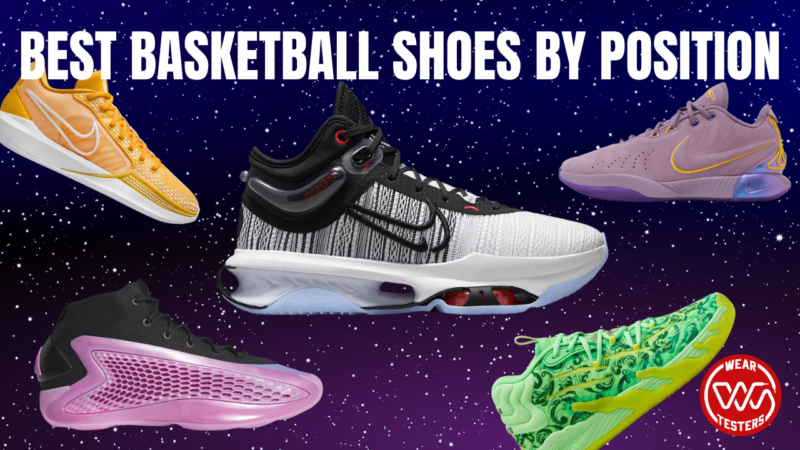
Your role on the court determines what your shoes need to do. Guards need speed, forwards need balance, and centers need protection. Picking based on position ensures your shoes enhance rather than hinder your performance.
Guards: Prioritize Speed and Responsiveness
As a guard, you live in transition. Quick first steps, sharp cuts, and sudden stops define your game. You need a shoe that responds instantly and grips the floor.
Look for these specifications:
- Cushioning: Low-to-moderate stack heights under 30mm for better court feel
- Traction: Friction coefficients above 0.80 for reliable multidirectional grip
- Weight: Under 13 oz to maintain agility
- Cut: Low-top models that allow natural ankle movement
Top performers for guards include the Nike Sabrina 3 at 12.4 oz with 0.81 traction, the Nike G.T. Cut 3 Turbo with 83.2% energy return, and the Anta Kai 3 with a rounded outsole for smooth transitions. Avoid heavy high-tops like the Nike LeBron 23, which will slow your first step.
Forwards: Balance Cushioning and Stability
Small and power forwards do it all. You drive to the rim, shoot from mid-range, and battle under the basket. Your shoe must handle both finesse and force.
Key specifications include:
- Cushioning: Mid-range shock absorption between 100-115 SA for joint protection
- Stability: Torsional rigidity of 4/5 or higher to prevent rollouts
- Base Width: Midsoles over 115mm for a stable platform
- Cut: Mid-top offers the best compromise between support and mobility
The Nike KD 18 delivers 0.89 traction with a 116.0mm forefoot base. The Way of Wade 12 and Anta KT 10 offer well-rounded performance for two-way players. If you play above the rim frequently, prioritize heel cushioning above 110 SA to absorb landing impact.
Centers: Maximize Impact Protection
You’re in the paint, absorbing contact and blocking shots. Your shoes must cushion hard landings and resist twisting during post moves.
Essential specifications:
- Shock Absorption: 115+ SA in the heel for protecting joints
- Stability: 5/5 torsional rigidity with a stiff heel counter
- Base: Wide platforms over 120mm to prevent tipping
- Cut: High-top for containment, but only if it provides true lockdown
The Nike G.T. Hustle 3 leads with 120 SA in the forefoot and 117 SA in the heel. The New Balance TWO WXY V5 and Nike Giannis Immortality 4 both score 5/5 for heel counter stiffness. The Giannis Immortality 4 offers a 124.5mm base that acts like an outrigger. Avoid lightweight models like the Sabrina 3, which lack the protection you need.
Understand Traction and Grip Performance

Slipping on a cut can cost you a turnover or an ankle injury. Traction isn’t just stickiness. It’s measurable, multidirectional grip tailored to your court conditions.
Measure Traction with Friction Coefficients
The SATRA TM144 test on FIBA-approved flooring provides objective traction scores. Higher numbers mean better grip.
- 0.89: Nike KD 18. Elite for indoor and blacktop
- 0.81: Nike G.T. Cut 3 Turbo. Strong for guards who push pace
- 0.77: Nike LeBron 23. Top-tier but slightly less aggressive
- Minimum threshold: Aim for 0.75+ to ensure reliable stopping and pivoting
Pick the Right Outsole Pattern
Your court surface determines the right outsole:
- Indoor courts: Use sticky rubber with herringbone or multidirectional patterns. Translucent rubber often offers superior grip but wears faster
- Outdoor courts: Need deep, recessed lugs and durable rubber compounds like Nike XDR. The Nike KD 18 and Way of Wade All City 14 are built for blacktop
- Avoid: Smooth or shallow treads that clog with dust and lose grip
Pro tip: Clean your outsoles after every game. Dust buildup kills traction fast.
Choose the Right Cushioning for Your Body

Cushioning isn’t just soft or firm. Two key numbers tell you what a shoe actually does: Shock Absorption and Energy Return.
Shock Absorption: Protect Your Joints
SA measures how much impact the midsole absorbs. Higher numbers mean better joint protection.
Target SA by your role:
- Centers: 110+ SA for maximum impact protection
- Forwards: 100-110 SA for balanced protection
- Guards: 80-100 SA to prioritize responsiveness over softness
The Nike G.T. Hustle 3 leads at 117 SA heel and 120 SA forefoot. The Nike LeBron 23 offers 112 SA heel. The Nike Sabrina 3 provides moderate 96 SA, fine for lighter players.
Energy Return: Get Power Back
Energy return measures how much force the foam gives back when compressed. High return means explosive takeoffs.
- 83.2%: Nike G.T. Cut 3 Turbo. Record-breaking thanks to ZoomX foam
- 81.5%: Nike G.T. Hustle 3. Elite bounce without sacrificing protection
- 70-72%: Nike KD 18 and LeBron 23. High performance for all-around play
Guards should prioritize energy return above 70%. Centers should balance return with shock absorption rather than sacrificing protection.
Ensure a Perfect Fit Every Time
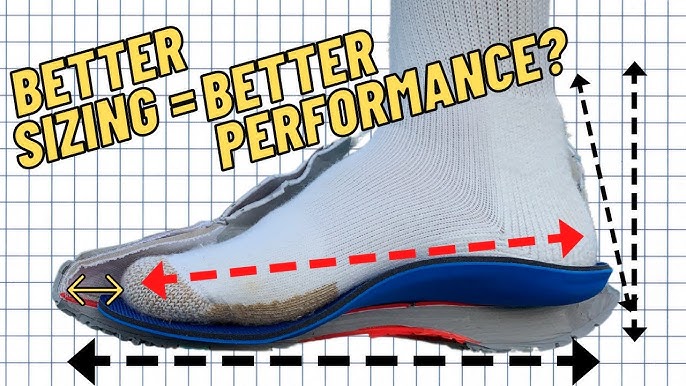
Even the best-performing shoe fails if it doesn’t fit. A bad fit causes blisters, slippage, and instability. Follow these rules for a 1:1 performance fit.
Toe Box: Leave Quarter to Half Inch
Your longest toe should have a thumb’s width of space at the front.
- Too tight: Causes black toenails and restricts toe-off
- Too loose: Leads to foot slide, reducing control and increasing blister risk
Test this by standing and jumping in the shoe. If your toes hit the front, size up.
Heel Lock: No Slippage Allowed
The heel must stay locked during cuts and landings. Check by walking on a slope or doing quick stops. Any heel lift means the shoe is too big or lacks counter stiffness.
The best heel counters score 5/5: New Balance TWO WXY V5 and Nike Giannis Immortality 4.
Width: Measure Your Foot
Standard width is D. But many players need wider or narrower fits.
- Wide feet: Look for 2E options, which are 3-4mm wider than standard. New Balance offers true wide widths
- Narrow feet: Avoid models like Li-Ning Gamma 2 or Nike KD 18, which run tight
Pro tip: Try shoes late in the day when feet are slightly swollen. This mimics game conditions.
Pick the Right Cut for Your Ankle

Ankle height doesn’t prevent injuries, but it does affect feel and confidence.
High-Top: Maximum Containment
High-tops wrap the ankle and reduce slippage. They boost psychological confidence and work best for centers and post players.
Reality check: Studies show collar height has no significant impact on sprain rates. Real support comes from midsole stability, heel counter stiffness, and base width, not collar height.
Top models include Nike LeBron 23 and Nike G.T. Hustle 3.
Mid-Top: Balanced Support
Mid-tops cover the ankle bone without restricting movement. They work best for forwards and versatile players who want support without bulk.
Top models include Nike KD 18 and Way of Wade 12.
Low-Top: Speed and Agility
Low-tops are lighter, more flexible, and allow natural ankle motion. They work best for guards and quick players with strong ankles.
Myth busting: No higher injury risk exists if the shoe has strong torsional rigidity.
Top models include Nike Sabrina 3, Curry Series 7, and Anta Kai 3.
Choose Shoes for Indoor or Outdoor Courts
Using the wrong shoe on the wrong surface wastes money and risks performance.
Indoor Courts: Maximize Grip
- Outsole: Soft, sticky rubber, often translucent
- Focus: Traction and court feel
- Examples: Nike LeBron 23, Curry Series 7
Warning: Never use indoor shoes outdoors. Soft rubber shreds on concrete in weeks.
Outdoor Courts: Durability First
- Outsole thickness: Must be 3mm or greater
- Rubber type: Hard, abrasion-resistant compounds like Nike XDR
- Tread depth: Deep, recessed lugs to handle dust and cracks
Test by pressing a key into the outsole. If it leaves a dent over 1mm, it’s too soft for outdoor use.
Top outdoor models include Nike KD 18, Way of Wade All City 14, adidas Believe That 1, and Jordan Luka 77.
Avoid using the Nike Giannis Immortality 4 or LeBron 23 outdoors. Both wear fast on blacktop.
Read Performance Specs, Not the Hype
Forget logos and influencer reviews. Focus on numbers that predict real-world performance.
Traction Score: Aim for 0.75+
Use the SATRA test as a benchmark. Anything below 0.75 risks slips on hard cuts.
Weight: Know Your Sweet Spot
- Under 12.5 oz: Ultra-light like the Nike Sabrina 3 at 12.4 oz
- 13-14.9 oz: Balanced like the KD 18 at 14.9 oz
- Over 15 oz: Heavy, cushion-first like the LeBron 23 at 15.5 oz
Note: Lighter shoes improve sprint speed by 1.6% and jump execution by 2.1%. But the difference is marginal for most players.
Stability: Check Torsional Rigidity
- 5/5: Maximum twist resistance like the G.T. Cut 3 Turbo and TWO WXY V5
- 4/5: High like the KD 18 and G.T. Hustle 3
Look for external caging, plastic shanks, or carbon plates that prevent rollouts.
Avoid Common Basketball Shoe Myths
High-Tops Prevent Ankle Injuries
False. Studies show collar height has no significant impact on sprain rates. Real support comes from heel counter stiffness, torsional rigidity, and base width. High-tops primarily offer psychological confidence.
Heavier Shoes Slow You Down
Partially false. While lighter shoes offer slight gains, heavier models provide better cushioning and stability, which is critical for bigger players. Weight preference is personal.
Brand X Is the Best
Wrong. Performance varies by model, not brand. Nike, adidas, Anta, Li-Ning, and 361 all have elite performers. Focus on specs, not logos.
Maintain Your Shoes to Last Longer
Even the best shoes fail fast without care. Extend their life with smart habits.
Break In Before Game Use
Wear new shoes for 2-3 light sessions to soften materials and mold to your foot.
- Tight spots: Use a shoe stretcher or wear thick socks
- Models needing break-in: Anta KT 10, adidas DON Issue 7, Nike Kobe 3 Protro
Clean and Store Properly
- After every game: Wipe dust from the outsole
- Never wash in a machine: It degrades glue and foam
- Store in a cool, dry place away from sunlight to prevent foam oxidation
Replace on Schedule
Replace shoes every 6-8 months or after 50-75 hours of play.
Signs it’s time:
- Cushioning feels flat
- Tread is smooth
- Upper is separating
Key Takeaways for Choosing Basketball Shoes
Choosing basketball shoes comes down to matching data to your game. First, identify your position and prioritize accordingly: guards need lightweight responsiveness, forwards need balanced stability, and centers need maximum impact protection. Second, verify the numbers that matter. Look for traction above 0.75, appropriate shock absorption for your body type, and torsional rigidity of 4/5 or higher. Third, match your shoes to your surface. Indoor shoes with soft rubber destroy outdoor, and outdoor shoes waste the grip of indoor courts. Fourth, fit matters more than brand. A perfectly fitted budget shoe outperforms a poorly fitted premium shoe every time.
Your shoes should be an extension of your body, not a liability. Use data, not hype. Test metrics, not marketing. When you step on the court, play confidently knowing your footwear matches your game.
Frequently Asked Questions About Choosing Basketball Shoes
How do I know if basketball shoes fit properly?
Your longest toe should have a quarter to half inch of space at the front of the shoe. The heel must stay locked during movement with no slippage. Walk and jump in the shoes before buying to check for any heel lift or toe crowding.
Which basketball shoe cut is best for ankle support?
No cut inherently prevents ankle injuries more than others. Research shows collar height doesn’t significantly affect sprain rates. True support comes from heel counter stiffness, torsional rigidity, and base width. High-tops offer psychological confidence, but low-tops with strong stability metrics work just as well.
Can I use indoor basketball shoes for outdoor courts?
No. Indoor shoes use soft, sticky rubber that wears down rapidly on concrete and blacktop. Outdoor shoes require thick, durable rubber with deep lugs. Using indoor shoes outdoors will ruin them within weeks and create safety hazards from lost traction.
How often should I replace my basketball shoes?
Replace basketball shoes every 6-8 months or after 50-75 hours of play. Signs you need new shoes include flat cushioning, smooth tread, and upper separation. Playing in worn shoes increases injury risk and reduces performance.
What is the most important metric when choosing basketball shoes?
Fit comes first. Without proper fit, even the best traction and cushioning fail. After fit, match metrics to your position. Guards should prioritize traction and weight. Forwards need balanced cushioning and stability. Centers must maximize shock absorption and base width.