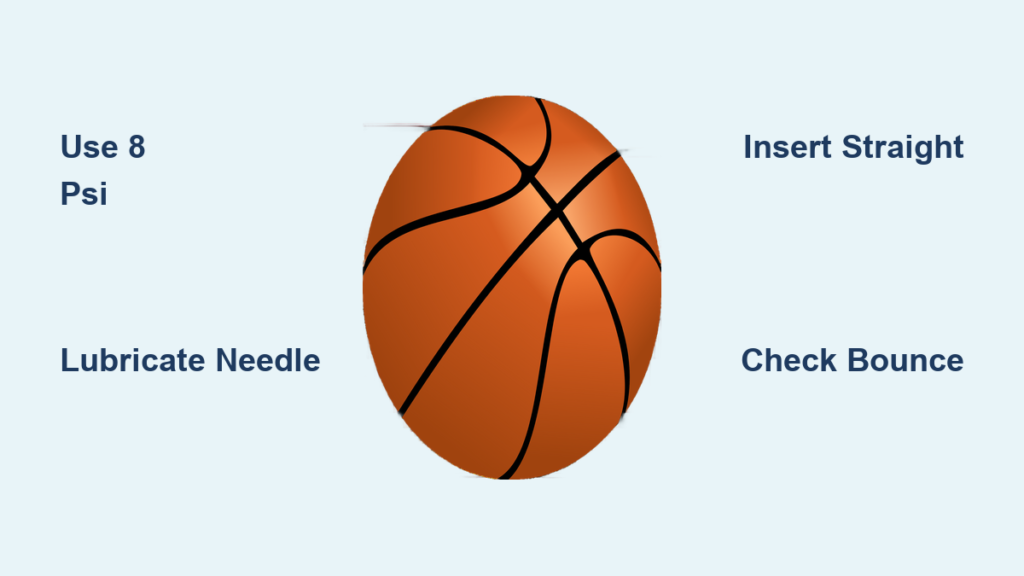
Nothing ruins a game faster than a flat basketball. If your ball isn’t bouncing right, it’s time to pump it correctly. Knowing how to pump a basketball ensures peak performance, safety, and longevity. Most full-size basketballs require 8 PSI (pounds per square inch), but inflating without the right tools or technique can lead to under-inflation, over-inflation, or even damage to the ball. This guide walks you through every step from selecting the right pump and needle to checking pressure and avoiding common mistakes. Whether you’re using a manual hand pump, electric inflator, or improvising with compressed air, you will learn how to get the perfect bounce every time.
Choose the Right Pump and Needle for Basketballs
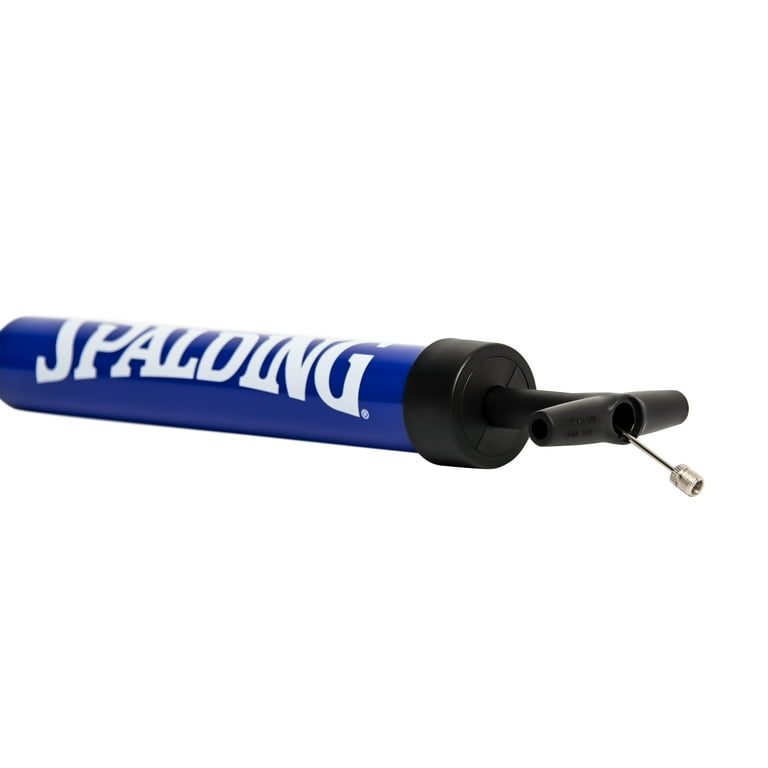
Using the wrong pump is one of the most common mistakes when learning how to pump a basketball. Standard bike pumps often lack the correct needle size, while tire inflators deliver too much pressure too quickly. Choose a sports ball pump designed specifically for basketballs, footballs, and volleyballs. These come with a built-in inflation needle that fits snugly into the ball’s valve. Many models, like Spalding or Wilson pumps, include a needle storage compartment in the handle for convenience.
Basketballs use a bladder valve, which is a small rubber port that opens when the needle is inserted. The standard needle is a 0.5-inch sports inflation needle. Ensure it is clean and straight before use. Bent needles can damage the valve or fail to seal properly, causing air leaks. If using a bike pump, attach a ball inflation adapter to convert the nozzle.
Know the Correct PSI for Your Basketball

The ideal pressure for most basketballs is 8 PSI, with an acceptable range of 7 to 9 PSI. This pressure gives optimal bounce, grip, and control. Always check the manufacturer’s label near the valve for exact specifications, as youth or indoor balls may vary slightly.
Exceeding 9 PSI increases the risk of bladder rupture or valve failure. In extreme cases, the ball can explode during use, especially in hot conditions where air expands. Never pump beyond the recommended range, even if the ball feels soft at first. Over-inflation is the leading cause of basketball damage and can even cause injury.
NEVERFLAT basketballs are pre-pressurized and should not be pumped during the first year of ownership. If it goes flat early, it is a defect, and you should contact the manufacturer. After one year, use standard inflation procedures, but always remove the valve cap before inserting the needle and replace it afterward.
Prepare the Ball and Needle Before Inflation
Before pumping, examine the basketball surface for cracks, dents, or worn patches. A damaged ball will not hold air properly and should be replaced. Check the valve area for dirt, debris, or misshapen rubber. Clean it with a damp cloth to prevent contaminants from entering the bladder.
Lubricating the needle is essential for preventing damage. Dry needles can tear the rubber valve, leading to leaks. Always lubricate the tip with water, glycerin, or petroleum jelly. This reduces friction, ensures smooth insertion, and helps maintain an airtight seal. For older or stiff valves, extra lubrication improves durability.
Pro Tip: Rub the needle against your thumb to add moisture quickly if no lubricant is available, but glycerin is best for long-term valve health.
Insert the Needle and Pump Correctly
Screw the needle onto the pump hose tightly, following the righty-tighty rule, to prevent air loss during inflation. Wiggle it gently to confirm it is secure. Some electric pumps have quick-connect fittings, so ensure they click into place.
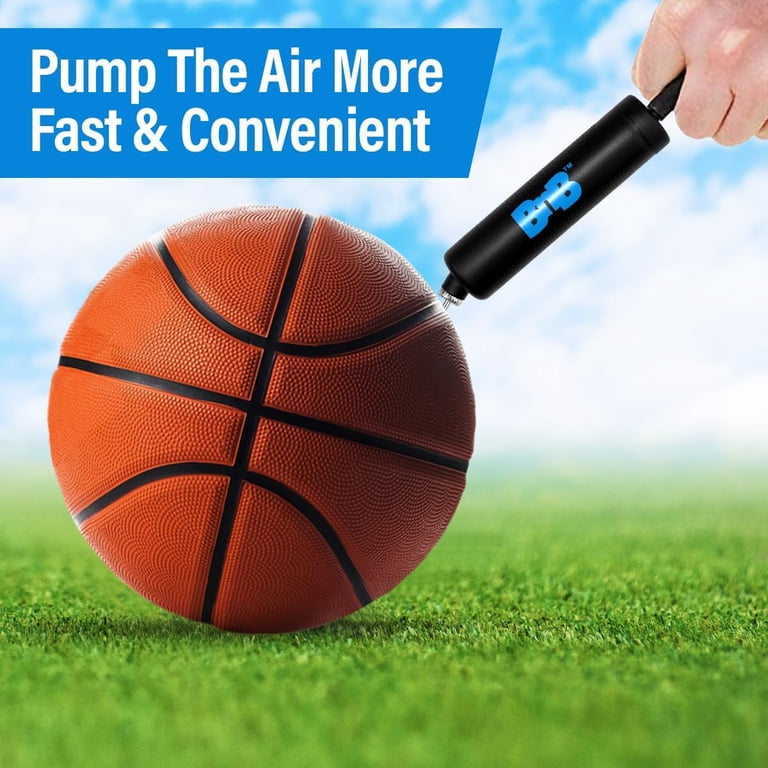
Hold the basketball firmly against a flat surface. Insert the lubricated needle straight into the valve. Do not angle or wiggle it. Forcing the needle can bend it or damage internal valve flaps. If it resists, apply more lubricant rather than pushing harder.
Begin pumping slowly. With a manual pump, use steady strokes. With an electric or battery-powered pump, engage in short bursts to avoid over-pressurizing. If your pump has a built-in gauge, watch the reading climb toward 8 PSI.
Time Estimate: Inflating from completely flat takes about 2 to 5 minutes with a hand pump, less with electric models.
Check Pressure Without a Gauge

The most reliable way to confirm proper inflation is with a PSI gauge. Attach it to the pump or use a standalone gauge. Stop pumping when the needle reaches 8 PSI. If you overshoot, press the valve tip briefly with the needle to release small amounts of air.
No gauge? Use the bounce test. Drop the ball from chest height, about 4 to 5 feet. A properly inflated ball should rebound to waist level. For precision, drop from 6 feet on a hardwood surface. It should bounce back 49 to 54 inches.
Squeeze the ball with your palm. It should feel firm but have slight give. If it feels soft or squishy, add more air. If it is rock-hard or difficult to compress, it is over-inflated, so release some pressure immediately.
Remove the Needle and Finalize
After inflation, pull the needle straight out. Do not twist or yank. Twisting can damage the valve seal. Some users give a final quick pump just before removal to offset minor air loss during withdrawal.
If your ball has a rubber or plastic valve cap, put it back on. This protects the valve from dust, moisture, and punctures. Store the needle in the pump’s handle or a secure case to prevent bending.
Alternative Ways to Inflate a Basketball
In a pinch, a canned air duster used for electronics can inflate a basketball. Remove the plastic straw, moisten the nozzle or attach a ball needle, and insert into the valve. Spray in 1-second bursts and monitor firmness closely.
Caution: Long sprays can freeze the valve. Use with caution and check frequently.
Bicycle CO² inflators work with an adapter. Connect a tubeless tire valve stem to the needle, attach the CO² cartridge, and release gas slowly. This method is not ideal for frequent use because it is hard to control pressure.
Gas station compressors are powerful, so use them with extreme caution. Bring your own ball needle and adapter. Use the smallest possible burst, about 0.5 seconds maximum, and check firmness after each burst. High airflow can over-inflate or burst the ball, so this method is not recommended unless no other option is available.
Maintain Your Valve and Prevent Air Leaks
If your ball loses air quickly, the valve may be dried out. Fix it by dipping the needle in glycerin, inserting and removing it 3 to 5 times, and coating the valve interior with lubricant. This restores elasticity and improves sealing.
If pressure drops rapidly, check for leaks. Submerge the ball in water and look for bubbles, or listen closely at the valve and seams for hissing. Persistent leaks mean the bladder is damaged, so replace the ball.
Keep extra needles on hand because they are prone to bending or breaking. Always check the needle for sharp edges or debris before insertion.
Store Your Basketball Properly
Extreme heat or cold affects air pressure. Cold causes air to contract, making the ball deflate. Heat causes air to expand, risking over-pressure. Always store indoors, away from direct sunlight, car trunks, or garages.
If not using the ball for weeks, slightly deflate it to about 6 PSI to reduce stress on seams. Re-inflate to 8 PSI before next use. Never store a fully inflated ball in extreme conditions.
Clean the ball with a damp cloth after playing to remove sweat and dirt. Allow it to dry completely before storing. Avoid harsh chemicals or submerging in water.
Troubleshoot Common Inflation Problems
Ball won’t hold air? The cause is likely a damaged valve, punctured bladder, or dry seal. Try lubricating the valve first. If there is no improvement, replace the ball.
Needle won’t go in? The cause is debris in valve, dry rubber, or bent needle. Clean with a damp cloth, lubricate, and try a new needle.
Pumping but no pressure gain? The cause is poor needle seal, leaking hose, or faulty gauge. Resecure the needle, check pump connections, or test with a different pump.
Ball feels uneven or lumpy? The cause is bladder misalignment or internal damage. Deflate completely, wait 30 minutes, then re-inflate slowly. If still lumpy, replace the ball.
Safety Tips for Basketball Inflation
Never exceed 9 PSI. Over-inflation is the leading cause of basketball explosions. Even a small excess, like 10 PSI, can cause sudden rupture, especially in warm environments. Always stop at 8 PSI.
If inflating an old or damaged ball, wear safety glasses. Rarely, weakened bladders can burst during pumping.
Children should not pump balls unsupervised. Teach them proper needle use and pressure limits.
Key Takeaways for Pumping Your Basketball
Pumping a basketball seems simple, but doing it right makes all the difference. Use the correct 8 PSI pressure, always lubricate the needle before insertion, insert it straight into the valve, and verify pressure with a gauge or bounce test. Store your ball at room temperature, maintain the valve regularly, and never exceed the recommended PSI range. Follow these steps, and your basketball will deliver consistent performance, a perfect bounce, and years of reliable use whether you are practicing free throws or playing a full-court game.
Frequently Asked Questions About Pumping a Basketball
What PSI should a basketball be inflated to?
Most basketballs should be inflated to 8 PSI, with an acceptable range of 7 to 9 PSI. Always check the manufacturer’s label for specific recommendations.
How do I know if my basketball is properly inflated without a gauge?
Drop the ball from chest height. A properly inflated basketball should bounce back to waist level. Alternatively, squeeze the ball. It should feel firm but have slight give.
Can I use a bike pump to inflate a basketball?
You can use a bike pump, but you need a ball inflation adapter to convert the nozzle. Standard bike pumps often lack the correct needle size for basketballs.
Why does my basketball keep losing air?
The valve may be dried out, damaged, or the bladder may be punctured. Try lubricating the valve. If the problem persists, the ball likely needs replacement.
How often should I inflate my basketball?
Check pressure before each use. Basketballs naturally lose some air over time, so regular checking ensures optimal performance.
Can over-inflated basketballs explode?
Yes. Exceeding 9 PSI increases the risk of bladder rupture, especially in hot conditions. Always stay within the recommended 7 to 9 PSI range.