
If you’ve ever laced up a pair of Air Jordans, watched LeBron’s latest Soldier model dominate the NBA Finals, or spotted a vintage Blazer on the streets of Tokyo, you’ve touched a piece of Nike basketball shoes history. What began as a bold challenge to Converse’s 80% market dominance in the 1970s has evolved into a cultural and technological empire. Nike didn’t just enter the basketball footwear game. It rewrote the rules. From the first Swoosh on a Portland Trail Blazer’s court shoe to the FlyEase revolution for adaptive athletes, Nike’s journey is defined by innovation, athlete legacy, and cultural reinvention.
This is the full story of how Nike built an on-court dynasty, survived market upheaval, and transformed sneakers into global icons.
Early Breakthrough: Nike’s First Hoops Shoes (1972)
In 1972, Nike, then emerging from Blue Ribbon Sports, launched its first two basketball shoes: the Nike Bruin and Nike Blazer. These weren’t just products. They were statements.
The Bruin and Blazer Debut
The Bruin, made of full-grain leather, was worn by Portland Trail Blazer players, marking the first time professional athletes sported the Swoosh. The Blazer followed the same year, named after the team and built for toughness. Its construction used a vulcanizing process where a Japanese-made oven heat-bonded the leather upper to the rubber sole, a rare technique at the time that created a durable, rigid shoe ideal for the hardwood.
Design and Market Positioning
The Blazer featured a minimalist white or black upper, a bold Swoosh, and a mesh nylon tongue. With no flashy branding beyond the logo, it functioned as a walking billboard, a deliberate move to build brand recognition. By 1973, both models were released in suede and new colorways like red and navy, with the Blazer Low joining the lineup.
First Player Exclusive: George Gervin’s Iceman P.E. (1970s)
Nike’s first major athlete coup was signing George “The Iceman” Gervin of the San Antonio Spurs. A former Adidas athlete, Gervin switched for better quality and financial incentives. His partnership wasn’t just a sponsorship. It produced one of the first player-exclusive basketball shoes ever made.
The Iceman Custom Blazer
Gervin’s P.E. Blazer replaced the standard NIKE heel tag with ICEMAN stitched in bold letters. This subtle but powerful customization gave fans a personal connection to the player and showcased Nike’s early focus on individuality. Gervin’s visibility on national broadcasts acted as free advertising, helping Nike gain traction beyond the Pacific Northwest.
Air Force 1: The Game-Changer (1982)

In 1982, Nike dropped the Air Force 1, a revolutionary shoe that introduced Nike Air cushioning to basketball. No longer relying on rigid vulcanized soles, the AF1 used pressurized air units in the heel for impact absorption.
Launch of the Original Six
Nike launched the shoe with six NBA players: Moses Malone, Michael Cooper, Bobby Jones, Calvin Natt, Mychal Thompson, and Jamaal Wilkes, known as the Original Six. Each received custom colorways, reinforcing the P.E. model’s marketing power.
Cultural and Performance Impact
The Air Force 1 wasn’t just a performance upgrade. It was a design icon. Its clean lines, cupsole construction, and full-grain leather made it wearable beyond the court. By the mid-80s, it became a staple in urban fashion, especially in New York City. Though briefly discontinued in 1984, its underground popularity forced Nike to re-release it in 1986, cementing its legacy as both a basketball and lifestyle legend.
Air Jordan I: The Cultural Earthquake (1985)
In 1984, Nike signed a then-unknown rookie, Michael Jordan, to a five-year, $2.5 million deal, a staggering sum at the time. The following year, they released the Air Jordan I, a high-top with a bold red-and-black colorway that famously violated the NBA’s uniformity rule.
Why the Air Jordan Changed Everything
The Air Jordan I wasn’t just a shoe. It was a cultural rebellion. Its outlaw status, combined with Jordan’s rising stardom, created unprecedented demand. The Banned ad campaign turned controversy into legend. By 1988, the Air Jordan III, designed by Tinker Hatfield, introduced visible Air and elephant-print overlays, setting a new standard for design and performance. The Jordan Brand eventually became a $5 billion subsidiary, proving that a signature shoe could be bigger than the sport itself.
Dunk and College Market Domination (1985–1987)
While the Air Jordan and Air Force 1 targeted pros, Nike’s Dunk and Terminator High were built for college basketball. Released in 1986–1987, these shoes were distributed to powerhouse programs like Syracuse, Georgetown, Kentucky, and Michigan.
The College Colors Marketing Play
The Dunk’s design, a high-top with a padded collar and thick sole, was ideal for the college game. But its real power was in branding. By aligning with elite programs, Nike built a pipeline: college stars wore Nikes, then carried the brand to the NBA. This strategy laid the foundation for future signature deals and helped Nike surpass Converse as the dominant collegiate shoe.
1990s: Signature Stars and Tech Explosion
The 1990s were Nike’s golden age of athlete endorsements. They signed a who’s who of the NBA: Penny Hardaway, Scottie Pippen, Charles Barkley, Chris Webber, Tim Duncan, Vince Carter, Kevin Garnett, and Dennis Rodman. Each received a signature model, turning the Nike Basketball line into a constellation of star power.
Key Signatures and Innovations
The Penny 1 released in 1995 was designed for speed with a low profile and visible Air. The Air Pippen I through V series was known for sleek design and Zoom Air cushioning. The Air Garnett I released in 1997 was built for agility with a herringbone tread and supportive upper. The Air Foamposite One released in 1997 featured a molded foamposite upper, offering structure and water resistance, a game-changer in durability.
Nike also leveraged stars from other sports, including Andre Agassi, Deion Sanders, Barry Sanders, and Ken Griffey Jr., to cross-promote basketball shoes. Their visibility in ads and on TV helped Nike dominate youth culture, making sneakers a lifestyle choice, not just athletic gear.
Shox and Zoom: 2000s Tech Revolution
In 2000, Nike introduced Shox technology with the Shox BB4, worn by Vince Carter during the Sydney Olympics dunk over a 7’2″ French center. The shoe featured rubber columns in the heel that compressed and rebounded, mimicking springs. Though heavy and polarizing, it became iconic for its bold look and performance in high-impact moments.
Rise of Zoom Air
While Shox grabbed headlines, Zoom Air became the decade’s stealth MVP. A thin, responsive air unit, it appeared in models like the Hyperdunk and Zoom Huarache 2K4. Lightweight and fast, Zoom Air catered to the new era of perimeter play and athleticism. It remains a staple in modern performance shoes.
LeBron James: The Modern Dynasty (2003–Present)
LeBron James entered the NBA in 2003 with the Nike Air Zoom Generation, a shoe that blended Zoom Air cushioning with a durable upper. Designed by Eric Avar, it set the tone for a signature line defined by technical diversity and innovation.
Evolution of the Soldier Line
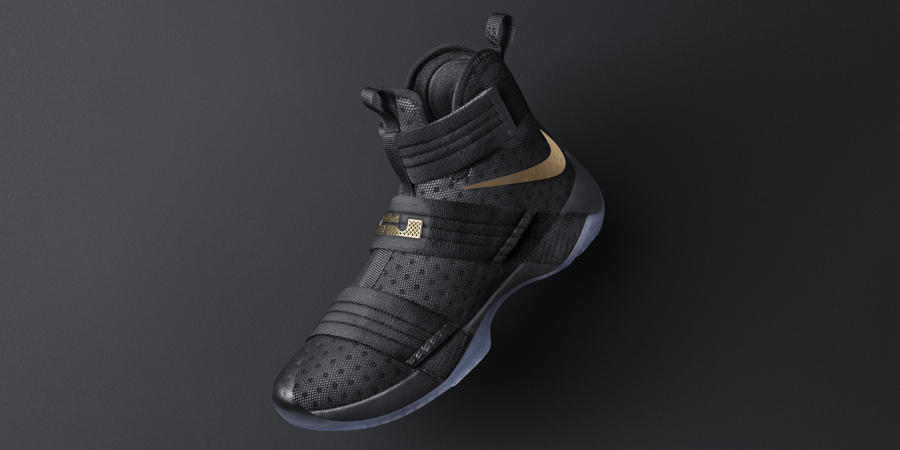
The LeBron Soldier sub-line, designed for durability and lockdown, became a fan favorite. The Soldier III released in 2008 featured double straps and a shark-tooth midsole, worn during LeBron’s 2009 playoff buzzer-beater. The Soldier VI released in 2012 featured an asymmetrical strap and Hyperfuse upper, worn during the 2012 championship run. The Soldier VIII released in 2014 was the first to feature Flywire and FlyEase, a laceless system for adaptive athletes. The Soldier X released in 2016 was Nike Basketball’s first laceless performance shoe, worn during the historic 2016 Finals comeback. The Soldier XIV released in 2020 was lightweight and speed-focused with dual toggle lacing.
Each release responded to player feedback, proving Nike’s commitment to iterative design.
Kobe Bryant’s Zoom Legacy
After his Adidas Crazy 8, Kobe Bryant signed with Nike in 2006, launching the Zoom Kobe I. The line emphasized low-top design, responsiveness, and precision, a radical shift from the high-tops of the era.
Zoom Kobe IV: Redefining Basketball Shoes
The Zoom Kobe IV released in 2009 shocked the NBA by proving elite players could thrive in low-tops. Its ultra-lightweight build and aggressive traction influenced a generation of perimeter-focused shoes. Kobe’s Mamba Mentality and design input made the line a symbol of discipline and innovation.
Blazer’s Second Life: Skate and Fashion Icon
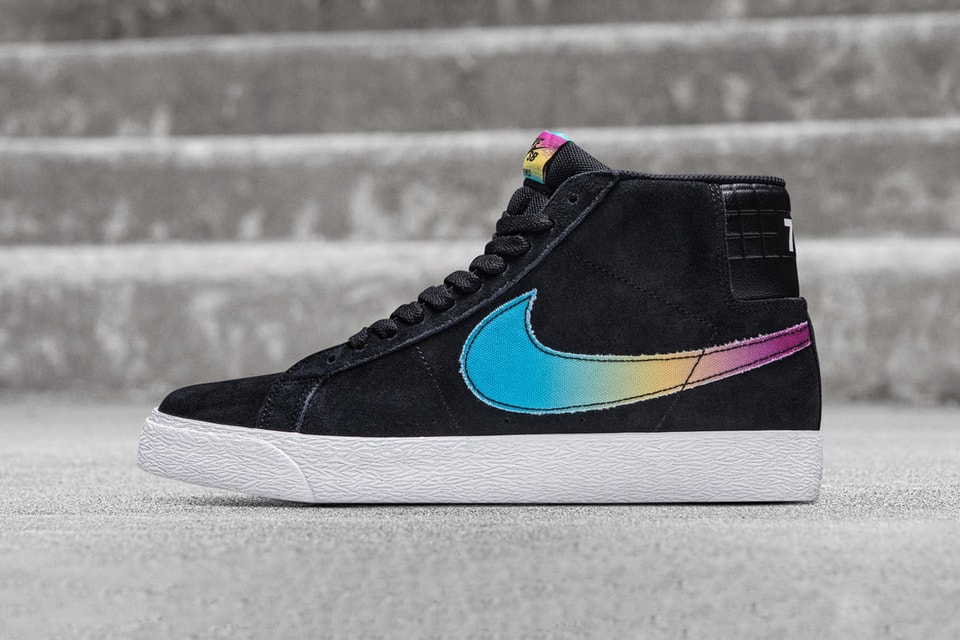
By the 1980s, the Blazer was obsolete on the court. Its heavy leather and rigid sole couldn’t compete with Air and Zoom tech. By the 90s, it was retired from pro play.
Skateboarders Adopt the Blazer
Skateboarders, however, loved its grip on grip tape, durability, and board feel. The shoe’s stiffness made it ideal for ollies and kickflips. By the early 2000s, it had become a staple in skate culture.
Nike SB Blazer Revival (2005)
In 2005, Nike formalized the shift with the Nike SB Blazer, co-designed with skater Lance Mountain. It featured Air insoles, padded tongues, and reinforced stitching for skate performance. This wasn’t a retro reissue. It was a reinvention.
Supreme and Off-White: Hype Culture Begins
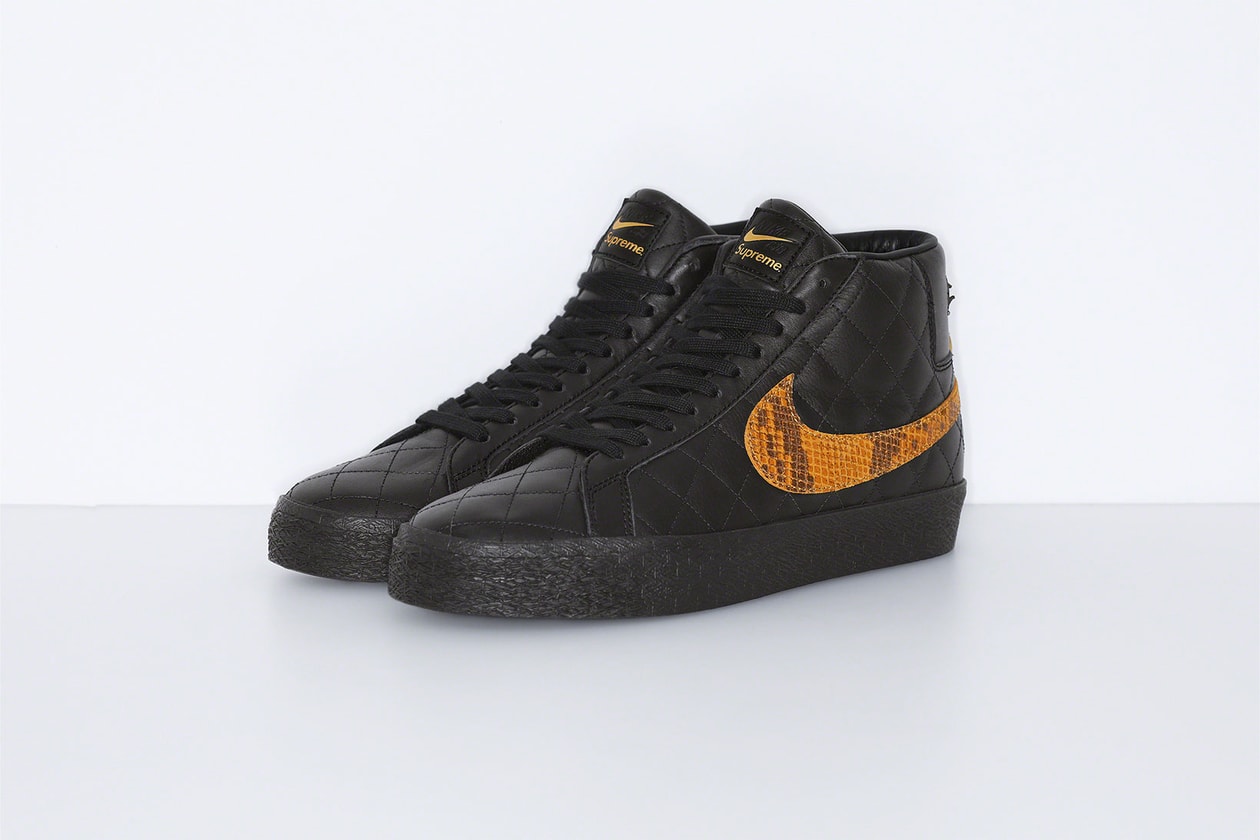
The 2006 Supreme x Nike Blazer was a landmark collaboration. Only 1,000 pairs were made in black, white, and red. Features included fake snakeskin Swooshes, Gucci-style ribbons, and gold D-rings. It sold out instantly and now resells for over $3,000, a symbol of sneaker hype’s birth.
Virgil Abloh’s Off-White x Nike Blazer brought deconstructed aesthetics to the mainstream. With zip ties, exposed foam, and transparent soles, it blurred the line between art and footwear. The Serena Williams edition fused tennis, fashion, and activism, proving the Blazer’s cultural versatility.
Technology Timeline: From Air to FlyEase
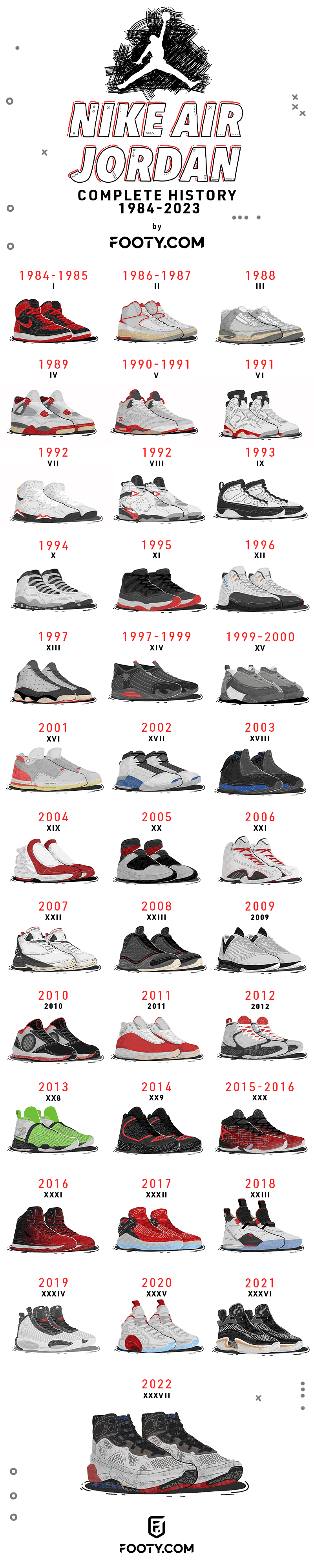
Nike has consistently introduced breakthrough technologies throughout basketball shoes history.
Nike Air cushioning first appeared in the Air Force 1 in 1982. Zoom Air, offering responsive low-profile bounce, debuted in the Zoom Flight 95 in 1995. Shox column-based impact absorption arrived in the Shox BB4 in 2000. Flywire lightweight structural support appeared in the Hyperdunk in 2008. FlyEase adaptive laceless entry debuted in the LeBron Soldier VIII in 2014. Hyperfuse lightweight breathable durability was featured in the LeBron Soldier VI in 2012.
Each innovation responded to athlete needs, from Jordan’s hang time to LeBron’s power to adaptive players’ accessibility.
Cultural Impact: Sneakerheads and Resale Market
Since the 2000s, sneakerheads, collectors and enthusiasts, have turned basketball shoes into cultural artifacts. Limited releases, player exclusives, and collaborations fuel a global resale market. Platforms like StockX and GOAT treat sneakers like stocks, with prices driven by rarity and story.
What drives value? Rarity, like 1,000 pairs of Supreme Blazers. History, like first P.E. and first laceless designs. Cultural moments like the 2016 Finals and Sydney Olympics dunk. Design innovation like Off-White’s deconstruction and FlyEase’s inclusivity.
An 1985 Air Jordan I or a 2006 Supreme Blazer isn’t just footwear. It’s a piece of history.
Frequently Asked Questions About Nike Basketball Shoes History
When did Nike first enter the basketball shoe market?
Nike officially entered the basketball market in 1972 with the release of the Nike Bruin and Nike Blazer. The Bruin was worn by Portland Trail Blazer players, making them the first professional athletes to wear the Swoosh.
What was the first Nike basketball shoe with Air cushioning?
The Air Force 1 released in 1982 was the first Nike basketball shoe to feature Nike Air cushioning. It introduced pressurized air units in the heel for impact absorption, revolutionizing basketball footwear.
How did the Air Jordan change sneaker culture?
The Air Jordan I released in 1985 created a cultural phenomenon. Its bold red-and-black colorway violated NBA dress codes, generating publicity that Nike cleverly marketed as rebellion. The shoe transcended basketball, becoming a fashion icon and spawning a $5 billion subsidiary.
What is the LeBron Soldier line known for?
The LeBron Soldier line is known for its durability, strap-based lockdown systems, and innovative fit solutions. It produced Nike’s first laceless performance shoe, the Soldier X, worn during the historic 2016 NBA Finals comeback.
Why did the Nike Blazer become a skate shoe?
The Blazer’s decline on the basketball court came from its heavy leather and rigid vulcanized sole, which couldn’t compete with new Air technology. However, skateboarders embraced these same traits for their grip, durability, and board feel. Nike formalized this shift in 2005 with the Nike SB Blazer.
Key Takeaways for Understanding Nike Basketball Shoes History
Nike basketball shoes history is more than a timeline of models. It’s a story of innovation, rebellion, and cultural transformation. From the first Blazer on a Portland court to LeBron’s FlyEase Soldier, Nike has consistently pushed boundaries. It beat Converse with technology, beat Adidas with Jordan, and beat time by turning obsolete shoes into fashion icons. Today, Nike doesn’t just make basketball shoes. It makes legends. Whether you’re a player, a collector, or a fan, every Swoosh tells a story. And the game isn’t over yet.