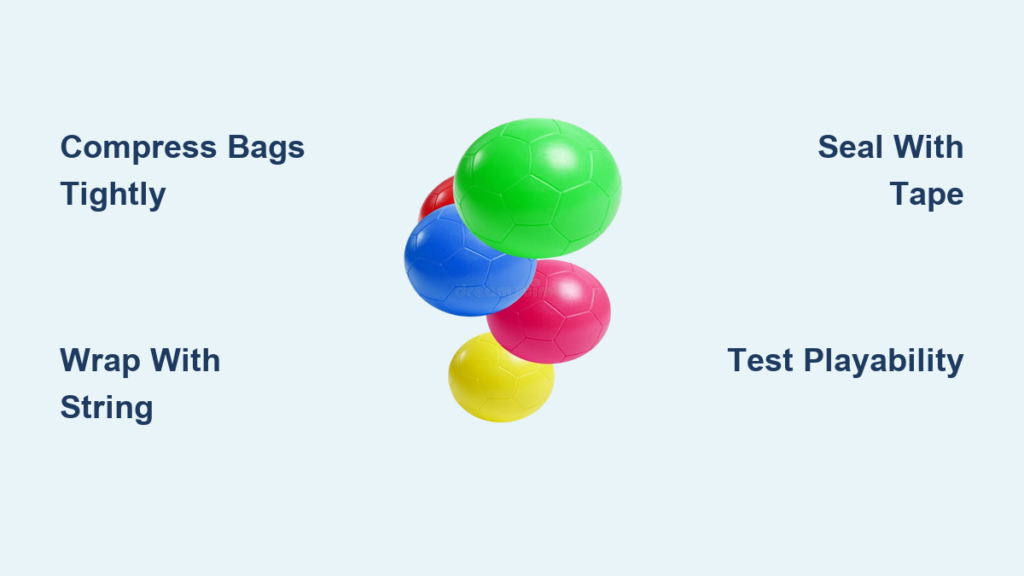
You don’t need expensive equipment to play soccer. With just a stack of old plastic grocery bags, some string, and a few minutes of your time, you can create a fully functional ball that kicks, rolls, and lasts. Learning how to make a plastic soccer ball is a rewarding DIY project that turns everyday waste into hours of play, all while reducing plastic pollution in your community.
This guide walks you through every step, from building a tight core to adding string panels that mimic professional soccer ball design. You’ll also discover tips to customize weight, improve durability, and maintain your ball so it lasts for months of practice and play.
Gather Your Materials for Plastic Soccer Ball Construction
Before starting, collect all necessary supplies from around your home. Having everything ready makes the building process smoother and faster.
You will need these core materials:
– Clean plastic grocery bags (20-30 bags minimum)
– Strong string or twine (kite string or cotton twine works well)
– Duct tape or strong adhesive tape
– Scissors for trimming
Optional items include newspaper (for alternative core methods), mismatched socks (for soft indoor versions), and rubber bands for added texture. Ensure all plastic bags are dry and free of holes or tears before use. Wet bags can develop mold, and torn bags weaken the structural integrity of your ball.
Build a Tight Core from Plastic Bags
The foundation of your ball determines how well it holds its shape during play. Taking time to create a dense, round core pays off in better performance and longer lifespan.
Start by crumpling one plastic grocery bag into a tight ball. Squeeze it firmly with your hands to compress the material into a dense center. This small core will grow as you add more layers.
One by one, insert additional crumpled plastic bags into the growing mass. After each addition, squeeze the ball tightly and rotate it between your palms to maintain roundness. Push in any loose edges that create lumps or flat spots.
Aim for a diameter of 8-10 inches, which matches a standard size 5 soccer ball. This typically requires 20-30 bags depending on thickness. The ball should feel solid but still slightly malleable when squeezed. If you want a two-tone appearance, mix white and colored bags (such as black or blue) during the early layering stages.
Compact and Shape the Ball for Better Playability
A loosely packed ball will sag and lose its form quickly during active play. Proper compaction creates the density needed for realistic kicking and rolling behavior.
Use the twist-and-pull technique for extra density. Take a damaged or oversized plastic bag and slide it over your partially built ball. Reach inside, grab the inner end of the bag, twist it tightly, and pull it back through the layers. This dragging action draws inner plastic inward, tightening the core without adding bulk.
Repeat this process 2-3 times from different angles. This method, used in community programs across Kenya and Guatemala, dramatically increases firmness while maintaining the ball’s spherical shape.
After compaction, hold the ball at eye level and rotate it slowly to check for bulges or flat spots. Gently squeeze high areas and add extra plastic to low spots until the ball appears perfectly round. A smooth sphere rolls straighter and kicks more predictably.
Seal the Outer Layer with Tape
Once your core reaches the desired size and firmness, lock it in place with tape to prevent unraveling during play.
Wrap the ball with duct tape in a crisscross pattern. Start with horizontal bands around the equator, then add vertical loops from pole to pole. Finish with diagonal wraps for maximum coverage.
Cover approximately 60-70% of the surface area. Focus extra tape on areas where bag handles were tied, as these are stress points that loosen first during kicking.
Tape serves three important functions: it prevents air from re-entering compressed layers, adds weather resistance, and creates a smoother kicking surface. However, avoid over-taping as excessive weight reduces playability and makes the ball too heavy for comfortable use.
Create Panel Patterns with String
This step transforms your wrapped ball into something that looks and plays like a real soccer ball. String wrapping mimics the pentagon-hexagon design of official match balls.
Tie one end of a long piece of string to the taped knot at the top of the ball. Use a double knot and tuck the tail under the tape to prevent slipping. Choose thick, durable string for best results.
Wrap in geometric patterns to simulate panel stitching. Begin with a continuous spiral from top to bottom. Start a second spiral from the opposite pole, crossing the first at 90 degrees. Add two more spirals at 45-degree angles for complete coverage.
Overlap strands densely with no gaps larger than a finger’s width. More coverage means better structure and improved grip during dribbling. When finished, tie a triple knot at the bottom and tuck the end under tight wraps. Trim any excess with scissors, ensuring no loose ends that could catch on grass or shoes.
Make a Soft Sock Ball for Indoor Play
For younger children or indoor environments, a sock ball offers a safer, softer alternative that still provides authentic ball-like behavior.
Gather 2-4 clean socks, a handful of newspaper for optional filler, and needle and thread for permanent closure. Cotton or blend fabrics work best.
Crumple newspaper into a firm ball and place it inside the toe of the first sock. Pull the sock up snugly over the core and twist the shaft tightly above the ball to secure it.
Slide this bundle into a second sock and repeat the twisting process. Continue layering with additional socks until reaching your desired size and firmness. For permanent use, have an adult sew the top closed. Otherwise, knot it tightly.
Sock balls work excellently for hallway games, toddler play, or dodgeball. They cause no damage to walls or furniture and eliminate injury risks from hard impacts.
Customize Your Ball’s Appearance and Weight

Adjust your ball’s characteristics to match specific training needs or personal preferences.
Create panel-like patterns by tracing hexagon and pentagon outlines with colored tape or thicker cord after string wrapping. Black string on a white plastic base provides instant recognition as a soccer ball.
Control weight by adding or removing plastic layers. More layers create a heavier ball (500-700g) ideal for strength training and control drills. Fewer layers and less tape produce a lighter version suitable for younger players or casual use.
Adjust string density to change bounce characteristics. Less string means more give and softer kicks. Dense wrapping creates a firmer surface with quicker rebounds. You can also leave slight ridges between bag layers for improved grip during dribbling.
Test Performance and Understand Its Characteristics
Your homemade ball performs differently than a regulation soccer ball. Understanding these differences helps you use it effectively.
Expect weight between 500-700g, significantly heavier than the 410-450g of official balls. This added mass actually benefits training by improving foot strength and ball control skills.
Bounce is notably lower. The ball absorbs impact rather than springing back, making it ideal for trapping exercises and two-touch passing drills. Roll is slower and more predictable on dirt or concrete surfaces.
This ball excels for juggling practice (slower fall allows more touches), dribbling through cones, and trap-and-hold exercises. Coaches frequently use it for warm-ups to sharpen first-touch skills.
Avoid using it for long kicks, high-speed shots, or on wet grass where unpredictable bounce could cause injury. It performs best in small spaces and controlled practice environments.
Maintain and Extend Your Ball’s Lifespan
Regular maintenance keeps your ball game-ready for weeks or months of use.
Inspect before each play session. Check for loose or frayed string, torn outer plastic, or soft spots in the core. Addressing problems early prevents complete failure.
Every few uses, pull loose string taut and re-knot securely. Wrap new tape over worn patches and replace the outermost bag if punctured. You can even add a fresh plastic layer over the old one by inserting the ball into a new bag, twisting, and retaping.
Store the ball indoors away from direct sunlight (UV weakens plastic), rain or humidity (causes odor and material degradation), and rodents or sharp objects. A garage or closet shelf provides ideal storage conditions.
Follow Safety Guidelines During Construction and Play
While generally safe, a few precautions prevent accidents and injuries.
Supervise children under 10 during construction to ensure they don’t ingest small pieces or get tangled in string. Confirm all knots are secure before play begins.
During play, avoid using the ball near roads or traffic zones. Don’t kick at faces or hard surfaces. Reserve soft sock balls for indoor use and young children.
Discard the ball if it unravels significantly or develops sharp edges from material degradation. This is a DIY item with no warranty—replace it when signs of wear compromise safety.
Frequently Asked Questions About Making a Plastic Soccer Ball
How many plastic bags do I need to make one soccer ball?
You typically need 20-30 plastic grocery bags to create a ball approximately 8-10 inches in diameter. The exact number depends on bag thickness and your desired firmness. Thinner bags require more layers, while thicker bags may need fewer.
Can I use this ball for official soccer games?
No, homemade plastic bag balls are not suitable for official matches. They are heavier than regulation balls (500-700g versus 410-450g) and have inconsistent bounce characteristics. They work best for practice drills, skill development, and casual play in informal settings.
How long does a plastic bag soccer ball last?
With proper construction and maintenance, these balls last several weeks to months. Regular inspection, string retightening, and tape repairs extend lifespan significantly. Balls used on rough surfaces wear faster than those used on grass or indoor floors.
Is this method safe for children to make?
Children can participate with adult supervision, but adults should handle the string wrapping and knot-tying steps. Ensure young children don’t put small plastic pieces in their mouths during construction and confirm all knots are secure before allowing play.
What makes the ball heavier than a regular soccer ball?
The multiple layers of compressed plastic bags create density that exceeds standard ball construction. This added weight actually benefits training by building foot strength and improving ball control. You can reduce weight by using fewer bag layers if preferred.
Key Takeaways for Making Your Own Plastic Soccer Ball
Creating a plastic soccer ball from recycled materials is a simple process that delivers significant benefits. The core requires 20-30 tightly compressed plastic bags shaped into an 8-10 inch sphere. Tape sealing and dense string wrapping transform this core into a durable ball with realistic panel patterns.
Your finished ball weighs 500-700g, heavier than regulation balls but ideal for skill development. It excels at control drills, juggling, and small-space play. Regular maintenance extends its life to weeks or months.
Every ball you make repurposes 20-30 plastic bags that would otherwise pollute the environment. Organizations like Compassion International teach this method in low-income communities worldwide, giving children access to play when commercial balls are unaffordable.
Grab those grocery bags, follow these steps, and create a ball that kicks, lasts, and makes a positive impact. Your DIY plastic soccer ball proves that innovation starts with necessity and sustainability plays beautifully.