Spinning a soccer ball on your finger is a show-stopping freestyle move that looks difficult but is surprisingly achievable with the right technique and consistent practice. Whether you’re a beginner looking to impress friends or a soccer enthusiast diving into freestyle tricks, this skill is within reach. The key isn’t strength or talent—it’s wrist control, proper ball selection, and precise finger placement. With just a few minutes of daily practice, you can go from failed flicks to spinning the ball smoothly for several seconds—and eventually, even minutes. This guide breaks down every step, from choosing the best ball to mastering advanced momentum taps, so you can learn how to spin soccer ball on your finger with confidence and style.
Choose the Right Soccer Ball

The ball you select significantly influences your success rate. Using the wrong ball makes the trick nearly impossible regardless of your technique.
Pick a Slightly Worn Ball
A slightly used soccer ball—one played with for 10 to 20 days—is ideal. Brand-new balls have a slick outer coating that makes spinning nearly impossible, while old, scuffed balls lack grip and balance. You want a ball with enough texture to grip, but not so rough that it wobbles on contact.
Avoid Extreme Conditions
Don’t use a brand-new or overly worn ball. The sweet spot is a ball that’s lost its factory shine but still holds its shape. This condition gives you the perfect mix of controlled slip and surface friction, helping the ball rotate smoothly on your fingertip.
Set Up Hand and Wrist Position
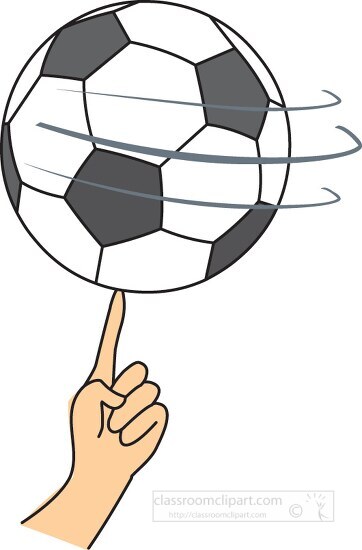
Proper positioning builds the foundation for a successful flick. Master these positions before attempting the full motion.
Start with Palm Up
Hold the ball in your dominant hand with your palm facing upward. Keep your grip firm to prevent slippage during the flick. This starting position ensures you can generate maximum spin with a clean motion.
Turn Wrist Outward
Begin with your wrist radially deviated—turned outward—so you can snap it forward with full range. This angle builds power and control for the flick, just like cracking a whip. Practice this motion empty-handed to build muscle memory.
Snap, Don’t Throw
Use a quick, strong wrist flick—not your whole arm—to launch the ball. The power comes from a backward-to-forward snap, like turning a doorknob. Keep your forearm still; only your wrist moves. This focused motion creates clean rotation, not chaotic flight.
Launch the Ball Correctly
Your launch method determines how easily you can catch and balance the ball. Choose the approach that matches your skill level.
Use Single-Handed Spin
The single-handed spin is best for starters. Hold the ball in your dominant hand, flick upward with a sharp wrist snap, and catch it on your fingertip. It’s easier to coordinate and helps you control spin direction and height.
Try Double-Handed Assisted Spin
If the single flick feels unstable, use the double-handed assisted spin. One hand holds the ball steady while the other delivers the flick. This method improves launch consistency and alignment, making it easier to catch cleanly.
Avoid Full Arm Throws
Never swing your entire arm. That creates too much force and sends the ball off-axis. Isolate the wrist to generate spin. Precision beats power every time.
Place Finger for Maximum Spin

Finger placement is the most critical factor in maintaining rotation. Get this right, and the spin lasts longer.
Target the Index Fingernail
Catch the ball on the tip of your index fingernail, not the soft pad. The nail provides more surface area and grip, allowing the ball to spin longer. Think of it like balancing on a tiny platform—more contact equals better stability.
Angle Finger at 45 Degrees
Hold your finger at a 45-degree angle to the ground. A vertical finger reduces balance and makes wobbling more likely. The 45-degree tilt aligns your fingertip with the ball’s rotation axis, improving control.
Find the Ball’s Rotation Point
Watch the ball mid-air. The spot that looks still is the rotational center. Place your finger directly under that point. If you miss the center, the ball will wobble and fall fast.
Execute the Spin Step by Step
Follow this sequence to complete a successful spin from launch to sustain.
Step 1: Flick to Launch
With palm up and wrist cocked, snap your wrist forward. Launch the ball 4 to 5 inches above your hand in a straight line. A curved arc throws off alignment.
Step 2: Catch on Fingertip
As the ball peaks, slide your index finger underneath at a 45-degree angle. Make contact with the nail, centered under the rotation axis. Keep your hand steady; don’t chase the ball.
Step 3: Balance and Hold
Once spinning, don’t move your finger unnecessarily. Let the ball rotate freely. Small wobbles are normal; resist overcorrecting. Focus on keeping your finger centered.
Step 4: Tap to Sustain Spin
As the ball slows, use your non-dominant hand to gently tap the side. These taps re-energize rotation. Use light, rhythmic touches—too hard and you’ll knock it off.
Control Motion and Height
Managing the ball’s trajectory and height directly impacts your ability to maintain balance.
Keep Trajectory Straight
Launch the ball straight up, not in a curve. A crooked path makes it harder to align your finger. Practice flicking vertically to build consistency.
Limit Height to 4 to 5 Inches
Higher throws reduce control and increase fall risk. The ideal spin happens just above your hand. This short distance gives you faster reaction time and better balance.
Fix Wobble Fast
If the ball wobbles, it means your finger wasn’t centered or the flick was uneven. Re-center quickly with micro-adjustments. Over time, your body learns to auto-correct.
Train Smart with Daily Practice
Consistent, focused practice beats random attempts. Structure your sessions for maximum improvement.
Start with Short Sessions
Practice 5 to 10 minutes daily. Short, frequent sessions build muscle memory better than one long weekly attempt. Consistency is key.
Break It Into Parts
Master each phase separately. Practice the wrist flick alone. Work on catching without spin. Combine steps once each feels natural.
Film Your Attempts
Record yourself to spot flaws. Are you using your arm? Is the ball wobbling? Video feedback speeds up improvement.
Track Progress Weekly
Aim to add one second per session. Early spins may last 1 to 3 seconds. Celebrate small wins—each extra second means better control.
Advance Your Technique
Once you’ve mastered the basics, these refinements take your spin to the next level.
Refine the Wrist Flick
Skilled performers use a minimal, efficient flick that generates maximum spin. It’s not about force—it’s about timing and precision. Smooth is fast.
Develop Passive Stability
Learn to make tiny finger adjustments without jerking. The best spinners look almost motionless. This quiet hand control comes with repetition.
Master the Tap Rhythm
Time your opposite-hand taps like a metronome. Light, consistent taps maintain momentum. Too many or too hard? You’ll destabilize the ball.
Try Multi-Finger Spins
Once confident, transfer the spin between fingers or hands. This is freestyle-level skill, but it starts with mastering the basics.
Fix Common Problems Fast
Every problem has a specific cause and solution. Address these quickly to keep progressing.
Ball Wobbles Immediately
Cause: Finger misaligned or flick off-axis. Fix: Focus on straight flicks and center your finger under the rotation point. Use slow-motion video to diagnose.
Ball Slips Off Quickly
Cause: Poor grip or contact on fleshy pad. Fix: Use a slightly worn ball and ensure contact is on the fingernail, not the skin. Keep your finger dry; sweat reduces friction.
Can’t Catch the Ball
Cause: Launch too high or mistimed. Fix: Lower the throw to 4 to 5 inches. Slow down the flick and focus on clean release.
Spin Dies Too Fast
Cause: Weak initial flick or no taps. Fix: Strengthen your wrist snap and use gentle side taps to keep it spinning. Even pros tap to maintain momentum.
Frequently Asked Questions About Spinning a Soccer Ball on Your Finger
What type of soccer ball is best for spinning?
A slightly worn ball that has been used for 10 to 20 days is ideal. It offers the perfect balance between grip and controlled slip. Avoid brand-new balls (too slippery) and very old balls (too worn).
Why does my ball keep falling off my finger?
This usually happens because you’re catching on the fleshy pad instead of the fingernail, or using a ball that’s too new. Switch to contact on your index fingernail and use a properly conditioned ball.
How long does it take to learn this trick?
Most beginners achieve their first successful spin within a few days of consistent practice. Extending the spin to 10 seconds or more typically takes 1 to 2 weeks of daily practice.
Can I spin a soccer ball on any finger?
The index finger works best for most people because it provides good length and control. However, some advanced performers successfully use their middle finger or even switch between fingers during a spin.
Why do I need to tap the ball to keep it spinning?
The initial flick provides most of the rotation, but friction gradually slows the ball. Gentle taps from your opposite hand add small amounts of momentum, extending the spin duration significantly.
Key Takeaways for Spinning a Soccer Ball on Your Finger
Spinning a soccer ball on your finger isn’t magic—it’s mechanics. With the right ball, a sharp wrist flick, and precise fingertip control, anyone can learn this trick. The three most important factors are using a slightly worn ball for optimal grip, catching on your index fingernail at a 45-degree angle, and using a quick wrist snap rather than your whole arm. Once the ball is spinning, gentle taps from your opposite hand keep the momentum going. Start today, practice daily, and soon you’ll be spinning like a freestyle pro. Keep your form clean, your finger angled, and your flick snappy—and the ball will stay spinning, one second at a time.