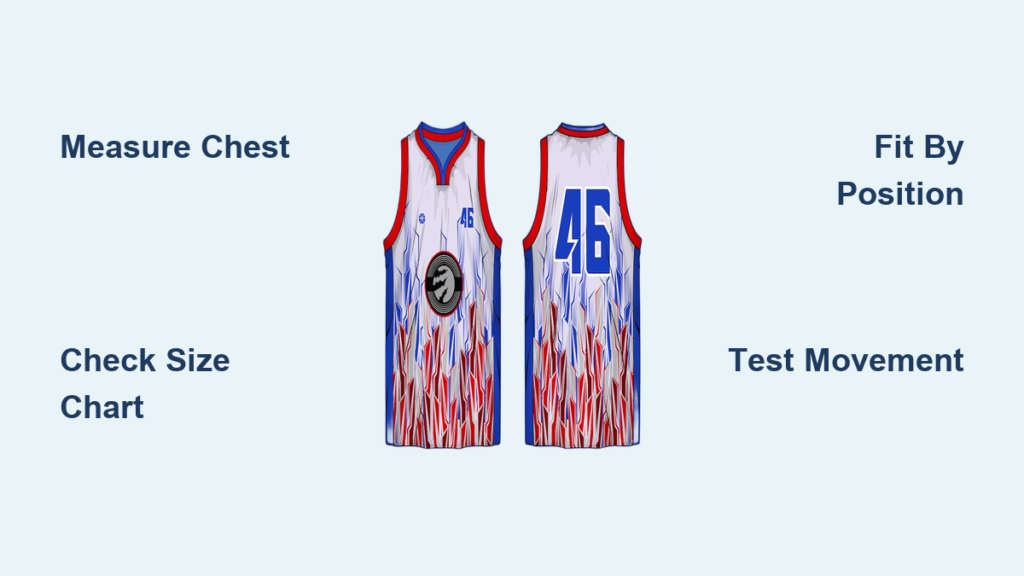
Basketball jersey fit is not just about aesthetics. It directly impacts how you move, how comfortable you feel, and how well you perform on the court. Whether you play pickup games at the local gym or compete in an organized league, the right jersey can enhance your game, while the wrong fit can slow you down, cause chafing, or even get you tangled with an opponent. Today’s jerseys range from loose, throwback styles to tight, compression-style cuts, and choosing the right one requires understanding your body type, playing position, and the technology behind modern fabrics.
This guide walks you through everything you need to know about basketball jersey fit. You’ll learn how to measure yourself correctly, understand the differences between loose and fitted styles, match your jersey to your position, and avoid common mistakes that lead to poor fit choices.
Loose vs Fitted Basketball Jerseys: Which Fits Your Game?

The first major decision when choosing a jersey is whether you want a loose or fitted style. Each offers distinct advantages depending on your priorities.
Why Players Choose Loose Fits
A loose basketball jersey gives you that classic 90s aesthetic. It is roomy, flowing, and relaxed, often preferred for casual wear or by players who value maximum airflow over aerodynamics.
The benefits include maximized ventilation in hot environments, unrestricted shoulder movement, and the ability to hide your body shape for a streetwear look. However, loose fits come with drawbacks. They can flap during fast breaks, creating drag that slows you down. There is also a risk of getting caught on opponents’ arms during plays, and the excess fabric may feel bulky when tucked into shorts.
Loose fits remain popular among some centers and power forwards who want maximum freedom in the paint, though even they are trending toward more tailored versions.
Why Fitted Jerseys Win on Performance
Fitted jerseys have become the standard in professional and competitive basketball. Brands like Nike design NBA jerseys with slim, athletic cuts that mirror compression gear.
The performance benefits are significant. Fitted jerseys reduce air resistance for faster cuts and sprints. They eliminate flapping and grabbing risks entirely. They wick sweat efficiently, reducing chafing during long games. They also enhance muscle support and improve blood flow during play.
The trade-offs include potentially feeling restrictive if sized incorrectly and offering less airflow in high-heat conditions. Guards and wings like Stephen Curry and Ja Morant almost exclusively wear fitted jerseys to support shooting mechanics and quick transitions.
When to Choose Each Fit
• Choose a fitted jersey for competitive gameplay, shooting-heavy roles, or when you want to minimize drag.
• Choose a slightly loose or breathable fitted jersey for hot gyms or outdoor courts.
• Choose a loose or oversized jersey for a streetwear look.
Your jersey should match not just your size, but your role on the court.
Best Jersey Fit for Your Playing Position
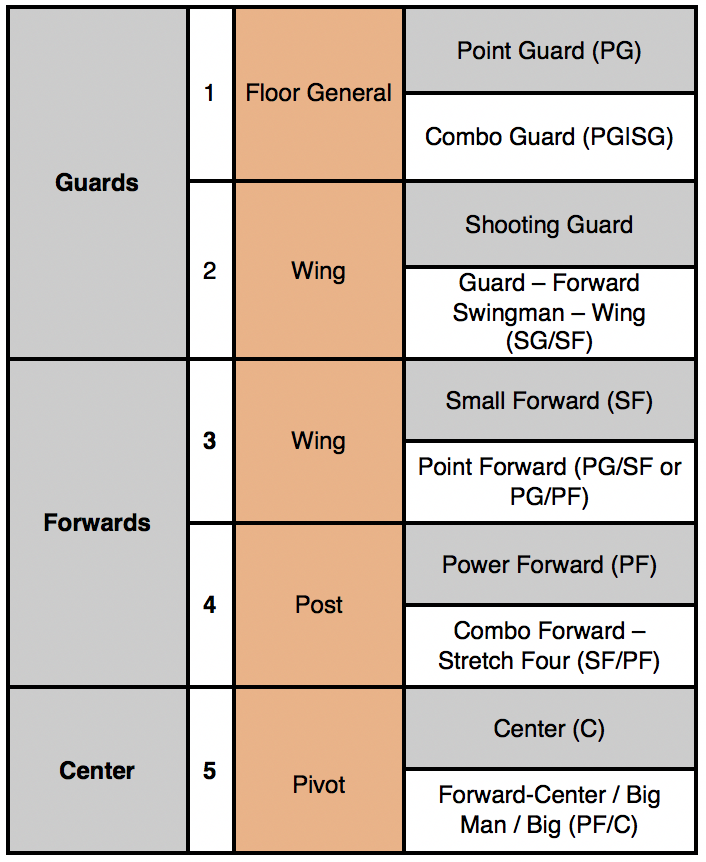
Your position on the court should directly influence your jersey choice. Speed, space, and movement all factor into what fit works best for you.
Guards: Snug for Speed and Control
Point and shooting guards rely on agility, quick releases, and ball-handling precision. A fitted jersey keeps fabric out of the way during dribbling and prevents interference with your shooting form.
Your key needs include minimal fabric around arms and torso, no drag during full-court sprints, and a secure feel without bouncing. Stephen Curry wears a tight jersey specifically to maintain consistency in his shooting motion, because any loose fabric could disrupt muscle memory during a shot.
Forwards: Balanced Fit for Versatility
Wings and small forwards need a balance between mobility and protection. They play both inside and out, requiring a jersey that moves with them in drives and rebounds.
The ideal forward fit is slightly tapered but not skin-tight. You want room across the back and shoulders, plus the ability to layer with compression shirts if needed. Many forwards opt for a true-to-size jersey with stretch fabric for flexibility.
Centers: Room to Move in the Paint
Big men operate in tight spaces, battling for position and rebounds. While older generations wore baggy jerseys, modern centers like Giannis Antetokounmpo wear tailored, athletic fits, not loose ones.
The modern center fit features a fitted chest and shoulders with extra length or a tall cut for coverage. Stretch side panels allow for deep stances in the paint. Even with bulk, today’s centers prioritize function. A jersey that flaps can be grabbed, so snug, durable fits now dominate the position.
How to Measure Your Body for the Perfect Jersey Fit

Guessing your size leads to poor performance and discomfort. Measuring properly ensures you get the right fit every time.
Measure Your Body First
Always start with your actual body measurements, not clothing labels.
What you need:
• Soft measuring tape
• Flat surface for garment checks
• No bulky clothing
Steps to measure:
1. Chest: Wrap the tape around the fullest part of your chest, under your arms, keeping it level.
2. Waist: Measure at the narrowest part of your torso.
3. Height and build: Note if you are tall and slim or broad and stocky, because this affects length and width needs.
A player who is 6’2″ and 183 lbs typically fits best in a Size 44 (Large) Authentic jersey.
Compare to Brand Size Charts
Never assume sizes are consistent across brands. Nike, Mitchell & Ness, and Adidas all vary in their sizing.
Nike NBA Jersey Size Guide (Body Measurements)
| Size | Chest (in) | Waist (in) |
|---|---|---|
| S | 35–37.5 | 29–32 |
| M | 37.5–41 | 32–35 |
| L | 41–44 | 35–38 |
| XL | 44–48.5 | 38–43 |
Note that these are body measurements, not garment sizes.
Check Actual Garment Dimensions
If buying secondhand or comparing brands, measure a real jersey directly.
| Size | Pit-to-Pit | Length | Body Width |
|---|---|---|---|
| 40 | 21.5″ | 31″ | 19″ |
| 44 | 23.75″ | 32″ | 22″ |
| 48 | 25″ | 33.5″ | 23″ |
A deviation of 0.5 inches or more from these numbers may indicate a defect.
Choosing the Right Size: Sizing Strategy Guide
Even with measurements, choosing between two sizes can be tricky. Use this decision logic to make the right call.
Between Sizes? Follow the Rule of Priority
If your chest fits a Large but your waist fits an XL, go with the Large. Jerseys stretch at the waist more than they do across the chest.
Your fit goal also matters. Size down for a performance fit. Size up for a loose or casual fit. Stick to your true size for a true athletic fit.
Body Type Adjustments
Broad shoulders: Size up for armhole clearance.
Slim or tall frame: Look for “Tall” or “+2” sizes that add 2 inches to the length.
Stocky build: Prioritize your chest measurement and avoid tight armholes.
Want a Slim Look? Size Down
Many players wear jerseys one size smaller than their streetwear size for a sleek, modern silhouette. This works best with stretch fabrics found in Swingman or Icon editions.
Do not size down on Authentic jerseys unless you want a compression feel, because they are already cut tight.
Fabric Technology and Modern Jersey Fit

Modern jerseys are not just cotton and polyester. The fabric determines how the fit feels during play.
Moisture-Wicking Materials
Today’s jerseys use Dri-FIT (Nike), Climalite (Adidas), or similar technology to pull sweat away from your skin.
These materials prevent cling and chafing. They keep you cooler during intense play. They work best in fitted cuts where fabric stays close to your body.
Loose jerseys can still wick moisture, but if they flap, sweat stays trapped against your skin.
Stretch and Recovery Fabrics
New blends include spandex or elastane (typically 5–10%) for flexibility.
This allows fitted jerseys to move with your body. It prevents restriction in shoulders and arms. It helps the jersey recover its shape after stretching.
This is why a modern fitted jersey feels freer than a 90s baggy one.
Breathable Mesh Zones
High-heat areas like underarms, sides, and the back often use mesh panels.
These panels increase airflow without sacrificing fit. They are common in both loose and fitted styles. They are ideal for hot gyms or summer leagues.
Look for jerseys with strategic ventilation if you sweat heavily during play.
NBA Jersey Rules: What Players Need to Know

What is allowed in the NBA affects how you should wear your jersey, even in recreational leagues.
Jerseys Must Be Tucked In
NBA rules state that all jerseys must be tucked into shorts during play.
Failure to comply results in a delay-of-game violation. This rule is enforced for safety and uniformity.
Why Tucking Changes Fit Needs
A loose jersey that flaps when untucked becomes manageable when tucked. A tight jersey stays secure and distraction-free. Compression layers underneath work better with fitted cuts.
For casual wear, untucked long jerseys are stylish, but they are not legal on official courts.
Because jerseys must be tucked, length matters less than chest and shoulder fit. Focus on the chest and shoulder areas to avoid restriction. Avoid overly long jerseys that bunch at the waist.
Custom Jerseys: Getting the Perfect Personal Fit

Off-the-rack sizes do not fit everyone. Custom options solve this problem.
Custom Sublimation Jerseys
Teams and individuals can design jerseys with specific adjustments.
You can request specific sleeve length. You can adjust the neckline for better mobility. You can cut side panels for better stretch.
A player with long arms can request extended sleeves without affecting chest fit.
Tailored Compression Fits
Some custom programs offer true compression jerseys.
These improve blood flow and reduce fatigue. They are best for high-intensity training. They require precise measurements.
These options are common in college and professional development programs.
Climate Considerations for Jersey Fit
Where you play affects what fit works best.
Hot Courts: Prioritize Breathability
Choose looser fits or mesh-heavy jerseys. Light colors reflect heat. Fitted wicking jerseys also work if you run cool.
Avoid thick, non-breathable fabrics, even if they are tight.
Cold Gyms: Go Fitted for Warmth
Compression fits trap body heat. Layer with a long-sleeve tee underneath. A tight jersey prevents cold air from rushing in.
Fitted jerseys are warmer, which helps with muscle activation in cold conditions.
Fit Mistakes That Can Ruin Your Game
Even experienced players get jersey fit wrong. Avoid these common errors.
Mistake 1: Sizing by Shirt Size Alone
A men’s Large shirt does not equal a Large jersey. Always check your chest measurement, not the label.
Fix this by using the pit-to-pit method on a current jersey to benchmark your true size.
Mistake 2: Ignoring Armhole Fit
Tight armholes restrict overhead motion, which is critical for shooting and blocking.
Fix this by lifting your arms when trying on a jersey. If it rides up or pinches, size up.
Mistake 3: Assuming All Authentic Jerseys Are Baggy
Modern Authentic jerseys (like Nike’s) are slimmer than ever. They are built for professionals, not throwback fashion.
Fix this by checking live garment measurements before assuming roominess.
Mistake 4: Not Testing Movement
Trying a jersey on while standing still does not reveal fit issues.
Fix this by simulating gameplay. Dribble hard, raise your arms quickly, and sprint in place. If it pulls, flaps, or binds, reconsider the size.
Your Pre-Purchase Jersey Fit Checklist
Use this before every jersey purchase to ensure you get the right fit.
• Measure your chest and waist accurately.
• Check the brand-specific size chart (Nike, Mitchell & Ness, or others).
• Consider your playing position (guard vs. center).
• Decide on your fit goal: performance, style, or comfort.
• Account for climate (hot vs. cold).
• Verify tucking rules if playing officially.
• Consider tall or broad-fit options if needed.
If buying online, read reviews for “runs small” or “tight armholes” warnings.
Frequently Asked Questions About Basketball Jersey Fit
Should basketball jerseys be loose or tight?
The answer depends on your priorities. Loose jerseys offer classic style and maximum airflow, while fitted jerseys reduce drag and improve performance. Most professional players now wear fitted or semi-fitted jerseys for competitive play.
How do I know my correct basketball jersey size?
Start by measuring your chest and waist with a soft tape measure. Compare these numbers to the specific brand’s size chart, because sizes vary between manufacturers. Check actual garment measurements when possible.
What happens if my jersey is too big?
A jersey that is too big can flap during movement, creating drag and potentially getting caught on opponents. It may also feel bulky when tucked into shorts. For performance, size down. For style, oversized fits are a valid choice.
Can I wear a fitted jersey for casual wear?
Yes, fitted jerseys work well for casual wear, especially when layered with a tee or hoodie underneath. They offer a sleek, modern look that pairs well with jeans or joggers.
What is the difference between Authentic and Swingman jerseys?
Authentic jerseys are the same ones worn by professional players. They are made with premium materials and have a tighter, more athletic fit. Swingman jerseys are more affordable replicas with a looser, more relaxed fit.
How often should I replace my basketball jersey?
Replace your jersey when it shows signs of wear, loses its shape, or no longer fits your current body composition. Performance fabrics typically last 1-3 years depending on frequency of use and care.
Key Takeaways for Finding Your Perfect Basketball Jersey Fit
The right basketball jersey fit balances performance, comfort, and personal style. While professional players lean toward fitted cuts for speed and control, there is no single correct fit. Only what works for you exists.
Measure your chest and waist accurately before buying. Compare those numbers to brand-specific charts rather than assuming your T-shirt size. Consider your playing position when choosing between loose and fitted styles. Guards benefit from fitted jerseys that do not interfere with shooting, while big men need room to move in the paint but benefit from modern tailored cuts rather than truly baggy ones.
Do not be afraid to try both styles. Order two sizes if you are unsure, or visit a store where you can try before you buy. Your jersey should move with you, not against you, whether you are chasing a championship or just playing weekend games with friends.