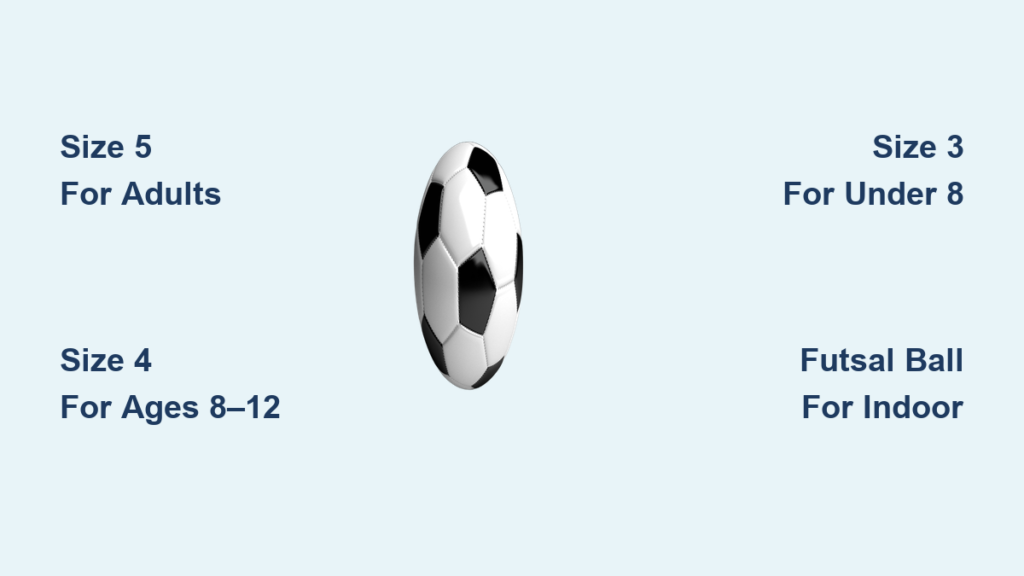
If you’ve ever wondered, how big is a soccer ball, the answer depends on the player’s age, skill level, and type of play. Soccer balls are not one-size-fits-all. They come in standardized sizes from Size 1 to Size 5, plus specialized variants for futsal and indoor play. The most common match ball, Size 5, measures 27 to 28 inches in circumference and is used by players aged 12 and up in professional and competitive games.
This guide breaks down every official soccer ball size, including exact dimensions, weight, recommended age groups, and where each type is used. Whether you are a parent, coach, or player, you will learn how to choose the right ball for training, matches, or skill drills.
Size 5: Standard Adult Soccer Ball

The Size 5 soccer ball is the official match ball used in all adult and professional games worldwide. Understanding its exact specifications helps ensure compliance with league rules and optimal performance on the field.
Dimensions and Weight
The Size 5 ball meets strict FIFA and IFAB standards under Law 2 of the game. Here are the official measurements.
• Circumference: 27 to 28 inches (68 to 70 cm)
• Diameter: 8.6 to 8.9 inches (22.0 to 22.6 cm)
• Weight: 410 to 450 grams (14 to 16 oz)
• Inflation Pressure: 8.5 to 15.6 psi (0.6 to 1.1 atm)
Any deviation from these specs makes the ball illegal for official play.
Who Should Use It
Size 5 is designed for players who have reached sufficient physical development to handle the ball safely and effectively.
• Players aged 12 years and older
• High school, college, and professional leagues
• FIFA World Cup, Premier League, UEFA Champions League
Some national associations, including Football Australia, recommend waiting until age 14 to switch to Size 5 to support proper physical development.
Construction and Materials
The materials used in Size 5 balls directly affect touch, durability, and performance.
• Outer Cover: Premium polyurethane (PU) provides soft touch and durability, while budget models use PVC
• Bladder: Butyl offers long air retention, while latex provides better bounce but needs frequent inflation
• Panel Design: Traditional 32-panel construction (12 pentagons and 20 hexagons) or modern 6 to 14 panel thermal-bonded designs for smoother flight and water resistance
Certification Standards
Only FIFA-approved or FIFA-inspected balls meet competition standards. Testing includes roundness (maximum 1.5% deviation from perfect sphere), rebound (must bounce 120 to 150 cm when dropped from 2 meters), water absorption (no more than 50g after 200 minutes in water), and durability (survives 2,000 machine-rolling cycles and 250 high-speed impacts).
When to Avoid Size 5
Never use Size 5 for players under 12 in official play. Premature use can cause poor technique, reduced confidence, and physical strain in young athletes.
Size 4: Youth Soccer Ball (Ages 8–12)
Size 4 is designed for young players transitioning from beginner to competitive soccer. Using the correct size supports proper skill development and prevents injury.
Exact Measurements
Size 4 balls are slightly smaller and lighter than Size 5, matching the strength and coordination of pre-teens.
• Circumference: 25 to 26 inches (63.5 to 66 cm)
• Diameter: 8.0 to 8.3 inches (20.3 to 21.0 cm)
• Weight: 350 to 390 grams (12.3 to 13.7 oz)
Ideal Age Range
Size 4 is recommended for specific youth age groups to ensure safe and effective play.
• 8 to 12 years old
• Under 10s to Under 13s in youth leagues
Some leagues allow Size 4 in U12 and U13 divisions before switching to Size 5.
Why Use Size 4
Using Size 4 during the appropriate developmental window offers several advantages.
• Improves ball control and passing accuracy
• Reduces fatigue and injury risk
• Builds confidence with age-appropriate equipment
Using a full-size ball too early can lead to improper kicking mechanics and frustration.
Materials and Build
Size 4 balls use scaled-down versions of adult ball construction.
• Cover: PU, PVC, or rubber for durability during frequent use
• Bladder: Latex or butyl depending on bounce and air retention needs
• Panels: 18 to 32 panels, stitched or bonded
These balls are commonly used in youth training sessions and developmental leagues.
Size 3: Junior Ball for Young Players
Size 3 is built for the youngest soccer players just learning the game. Using the smallest official ball helps new players develop proper technique from the start.
Key Specs
Size 3 balls are compact and lightweight, perfect for small hands and feet.
• Circumference: 23 to 24 inches (58.5 to 61 cm)
• Diameter: 7.3 to 7.6 inches (18.6 to 19.4 cm)
• Weight: 300 to 320 grams (10.6 to 11.3 oz)
Best for Ages
This size targets the youngest players in organized soccer.
• Under 8 years old
• U6 to U9 divisions in youth leagues
Size 3 is perfect for school PE programs, recreational leagues, and indoor drills.
Training Benefits
The smaller size supports early motor skill development.
• Easier to kick, trap, and dribble
• Encourages proper technique from the start
• Boosts confidence in beginners
Avoid using larger balls with new players, as they can discourage learning.
Common Uses
Size 3 balls appear frequently in specific environments.
• Introductory soccer clinics
• Backyard play
• Indoor skill sessions
These balls are not permitted in matches for older age groups.
Size 2: Midi Skills Ball
Size 2, also known as a Midi or skills ball, is not for matches. It serves as a valuable training tool for developing advanced ball control.
Size and Weight
Size 2 balls are compact and highly responsive, challenging players to refine their touch.
• Circumference: 20 to 22 inches (55 to 56 cm)
• Diameter: approximately 6.4 inches (16.3 cm)
• Weight: not standardized, lighter than Size 3
Who Uses It
This ball type serves specific purposes across different skill levels.
• All ages, especially elite and professional players
• Coaches for precision drills
Size 2 is not allowed in official matches.
Training Advantages
The smaller size creates unique training benefits.
• Improves foot-eye coordination
• Sharpens close ball control
• Enhances reaction time and touch
The reduced surface area forces players to focus on accuracy.
Common Drills
Size 2 balls excel in specific training exercises.
• Juggling practice
• Rondo (keep-away) games
• One-touch passing
• Dribbling through cones
Professional players use these balls to maintain and refine their technique.
Size 1: Mini Soccer Ball
The smallest official size, Size 1, is mostly for fun, training, and collectibles. Understanding its uses helps buyers choose the right product.
Dimensions
Size 1 balls are tiny compared to match balls.
• Circumference: 18 to 22 inches (45 to 56 cm)
• Diameter: 5.7 to 6.4 inches (14.5 to 16.3 cm)
• Weight: very light, not standardized
Who Should Use It
This ball serves diverse purposes across age groups.
• Toddlers under 3 for early play
• Advanced players for touch drills
• Fans as souvenirs or gifts
Size 1 is not for match use.
Primary Applications
The small size creates unique applications.
• Motor skill development in infants
• Juggling and freestyle tricks
• Precision ball control training
Smaller surface area demands greater dexterity from users.
Popular Variants
Size 1 balls appear in several forms.
• Mini replica balls (autographed, team-branded, World Cup editions)
• Decorative balls for offices, classrooms, or bedrooms
• Travel balls that are lightweight and portable
Futsal Ball: Low-Bounce Indoor Match Ball

Futsal uses a specialized ball designed for hard indoor courts. Using the correct ball is essential for proper gameplay and league compliance.
Size and Circumference
The futsal ball is equivalent to Size 4 but with modified construction.
• Circumference: 62 to 64 cm (approximately 24.4 to 25.2 inches)
• Slightly smaller than standard Size 4 (63.5 to 66 cm)
Key Feature: Reduced Bounce
The futsal ball’s unique construction dramatically reduces rebound.
• Foam-filled bladder suppresses rebound
• Bounces only 50 to 60 cm when dropped from 2 meters (versus 120 to 150 cm for outdoor balls)
This design encourages ground-based play, short passes, and tactical control.
Weight and Build
Futsal balls are heavier than standard Size 4 balls for better control on smooth surfaces.
• Heavier than standard Size 4 for improved handling
• Outer cover: textured PU or synthetic leather
• Reinforced stitching for durability on smooth floors
Certified for Competition
Official futsal play requires specific certification.
• Must carry FIFA-approved or FIFA-inspected mark
• Required in FIFA Futsal World Cup and national leagues
• Not interchangeable with outdoor Size 4 balls
Where It Is Used
Futsal balls appear in specific playing environments.
• Indoor futsal courts (basketball or handball courts)
• Fast-paced, small-sided games (5v5)
• Skill development programs
Indoor Soccer Ball (Felt-Covered)
Often confused with futsal balls, indoor soccer balls serve a different purpose. Understanding the distinction helps buyers make the right choice.
Size and Design
Indoor soccer balls differ from futsal balls in construction and performance.
• Usually Size 5
• Felt coating on surface, similar to tennis balls
Purpose
The felt covering serves specific functional purposes.
• Reduces skidding on smooth floors
• Improves grip and traction
• Produces quieter bounce than outdoor balls
Bounce and Performance
Indoor soccer balls perform differently than futsal or outdoor balls.
• Rebound similar to outdoor balls
• Optimized for acoustics and surface friction in gyms
Usage
These balls serve recreational purposes rather than official competition.
• Recreational indoor leagues
• Multi-sport facilities
• Non-FIFA-regulated play
Key Difference from Futsal Ball
Several factors distinguish indoor soccer balls from futsal balls.
• No foam bladder (bounces higher)
• Felt instead of textured PU
• Not for official matches
How to Choose the Right Soccer Ball Size

Picking the correct ball improves safety, performance, and long-term skill growth. Consider these factors when making your selection.
Match Player Age to Ball Size
Use this guide to match age groups with appropriate ball sizes.
| Age Group | Recommended Size |
|---|---|
| Under 6 | Size 3 |
| 6 to 8 | Size 3 or early Size 4 |
| 8 to 12 | Size 4 |
| 12 and up | Size 5 |
Some leagues suggest waiting until 14 for Size 5. Always check local rules before purchasing.
Consider Skill Level
Skill level influences ball selection beyond age.
• Beginners should use correctly sized balls to build fundamentals
• Advanced players can add Size 1 or 2 for touch drills and juggling
Smaller balls increase difficulty and accelerate learning.
Match Ball to Intended Use
Different activities require different ball types.
• Official matches require FIFA-approved, correct-size ball
• Training benefits from textured, grip-enhanced, or mini balls
• Indoor play calls for futsal ball (official) or felt-covered ball (recreational)
• Size 1 to 2 work well for fun, gifts, or display
Factor in Playing Surface
The playing surface affects ball selection.
• Grass or turf: standard PU or PVC outdoor balls
• Artificial turf: durable, abrasion-resistant covers
• Hard indoor floors: futsal (low bounce) or felt-covered (grip-focused)
Summary: Soccer Ball Sizes at a Glance
This table provides a quick reference for all standard soccer ball sizes.
| Size | Age Group | Circumference | Diameter | Weight | Match Legal? | Best Use |
|---|---|---|---|---|---|---|
| 5 | 12+ (14+ rec.) | 27–28 in / 68–70 cm | 8.6–8.9 in / 22–22.6 cm | 410–450 g / 14–16 oz | Yes | Pro, high school, adult |
| 4 | 8–12 | 25–26 in / 63.5–66 cm | 8.0–8.3 in / 20.3–21.0 cm | 350–390 g / 12.3–13.7 oz | Yes (youth) | Youth leagues, training |
| 3 | Under 8 | 23–24 in / 58.5–61 cm | 7.3–7.6 in / 18.6–19.4 cm | 300–320 g / 10.6–11.3 oz | Yes (youth) | Intro, school, recreation |
| 2 (Midi) | All | 20–22 in / 55–56 cm | ~6.4 in / ~16.3 cm | Light | No | Skills, promotion |
| 1 (Mini) | All (Under 3 typical) | 18–22 in / 45–56 cm | 5.7–6.4 in / 14.5–16.3 cm | Very light | No | Souvenir, juggling |
Final Tips for Choosing and Using Soccer Balls
These practical recommendations help ensure optimal ball performance and longevity.
• Follow league rules: using the wrong size invalidates match legality
• Progress naturally: Size 3 to Size 4 to Size 5 as players grow
• Use mini balls for training: Size 1 to 2 improve touch and control
• Check certifications: look for FIFA Quality Pro, FIFA Quality, or IFAB compliance
• Inflate properly: use a pump with needle, check pressure before play
• Store correctly: keep in cool, dry place, avoid direct sunlight
• Clean after use: wipe with damp cloth, do not submerge in water
Whether buying for a 5-year-old beginner or a competitive teen, knowing how big a soccer ball should be makes all the difference. The right size supports proper development, technical accuracy, and long-term enjoyment of the game.
Frequently Asked Questions About Soccer Ball Sizes
What is the standard size for adult soccer matches?
The standard size for adult and professional soccer matches is Size 5, with a circumference of 27 to 28 inches (68 to 70 cm). This ball weighs between 410 and 450 grams and is used in all FIFA-sanctioned competitions, including the World Cup and major league matches.
What size soccer ball should an 8-year-old use?
An 8-year-old should use a Size 4 soccer ball, which has a circumference of 25 to 26 inches (63.5 to 66 cm). This size is appropriate for players aged 8 to 12 and helps develop proper ball control and technique.
Can younger players use Size 5 balls in training?
Using Size 5 balls for players under 12 is not recommended. The larger size can cause poor technique, reduced confidence, and physical strain. Age-appropriate sizes (Size 3 or 4) support proper development and skill building.
What is the difference between a futsal ball and an indoor soccer ball?
A futsal ball is designed for official competition, with a foam-filled bladder that reduces bounce to 50 to 60 cm when dropped from 2 meters. An indoor soccer ball (felt-covered) is recreational, bounces similarly to outdoor balls, and provides better grip on smooth gym floors.
How do I know if a soccer ball is FIFA approved?
FIFA-approved balls display the FIFA Approved, FIFA Quality Pro, or FIFA Quality mark on the ball. These certifications indicate the ball has passed rigorous testing for circumference accuracy, roundness, rebound, water absorption, and durability.
What size soccer ball is used for professional play?
Professional and adult competitive soccer exclusively uses Size 5 balls. These balls must meet FIFA and IFAB standards, including a circumference of 68 to 70 cm, weight of 410 to 450 grams, and specific pressure requirements of 0.6 to 1.1 atmospheres.
Key Takeaways for Choosing the Correct Soccer Ball Size
Selecting the right soccer ball size directly impacts player development and game performance. Size 5 serves adult and professional play with a 27 to 28 inch circumference, while Size 4 supports youth players aged 8 to 12 with its 25 to 26 inch range. Size 3 targets young children under 8 with a 23 to 24 inch circumference. Specialized balls like futsal and indoor variants serve specific environments. Always match ball size to player age and league requirements to ensure safety, proper technique development, and competitive eligibility.