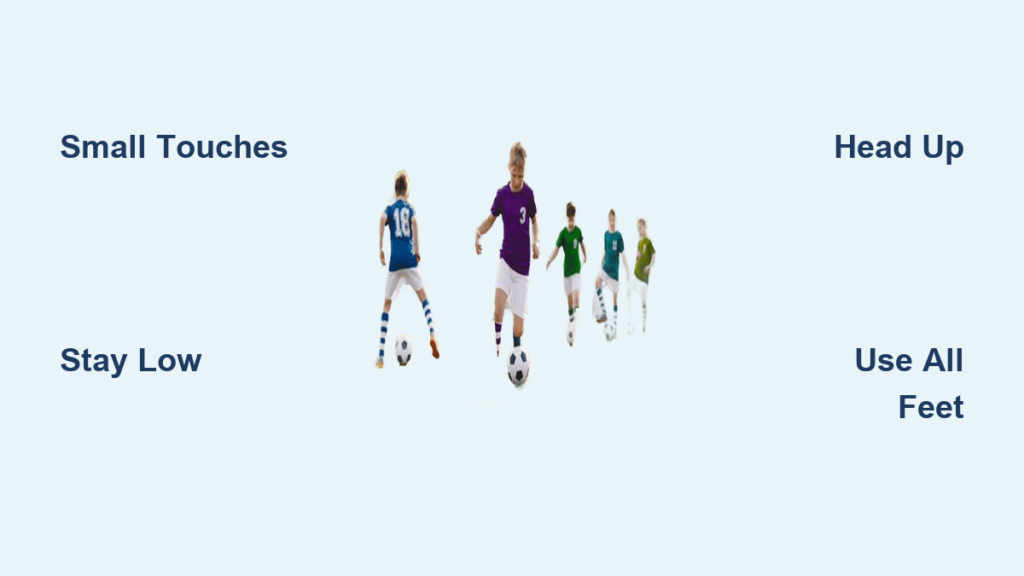
You’re on the field, the ball at your feet, and a defender steps into your path. What do you do? The answer lies in one of soccer’s most essential skills: dribbling. More than just moving the ball forward, effective dribbling is about control, deception, speed, and decision-making, all while keeping the game flowing. Whether you’re a beginner or looking to sharpen your edge, mastering how to dribble a soccer ball separates casual players from those who dominate possession and break defenses.
This guide breaks down exactly how to dribble with precision and purpose. From body posture and foot technique to advanced moves and game-ready drills, you’ll learn the science and art behind elite-level dribbling. You’ll discover how to keep the ball glued to your feet, beat defenders with confidence, and make smart decisions under pressure.
Master Tight Ball Control with Small Touches
Great dribblers do not kick the ball. They guide it. The foundation of learning how to dribble a soccer ball is small, light touches that keep the ball within immediate reach. Think of the ball as being attached to your foot by a short string: close enough to react instantly, far enough to move forward.
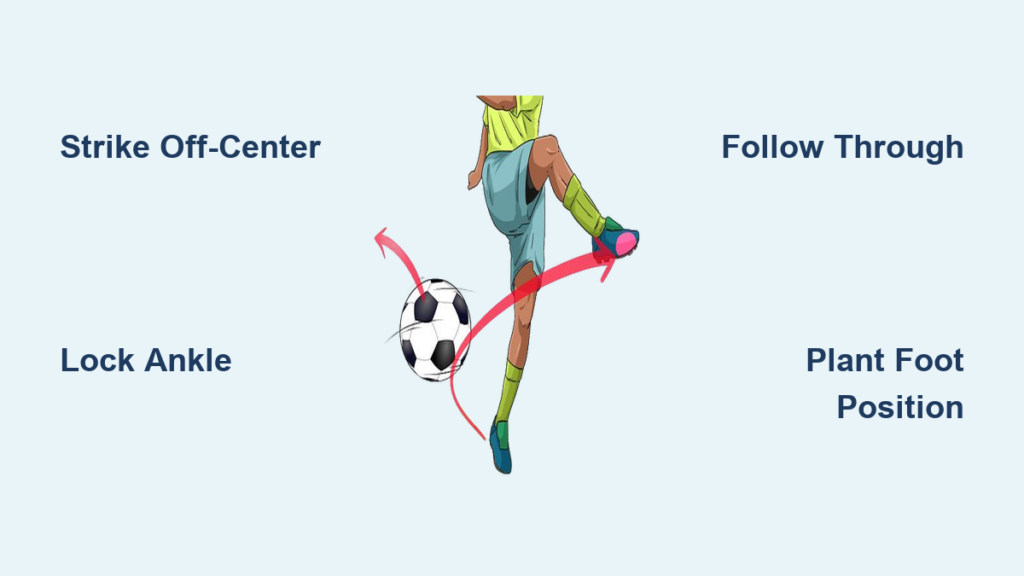
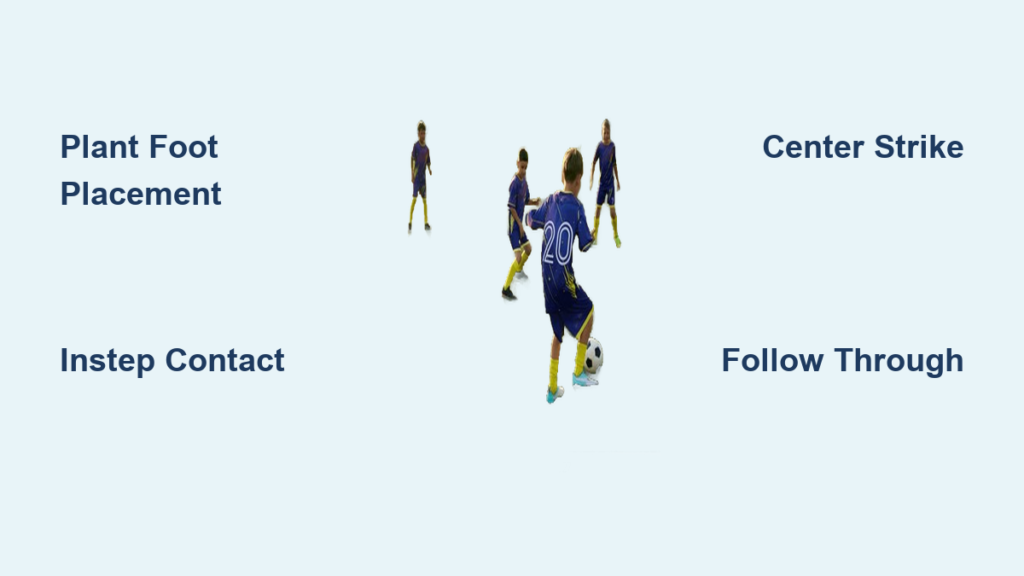
Each touch should be no larger than one stride, especially under pressure. This allows rapid changes in direction and prevents defenders from intercepting. Strike the middle of the ball to ensure stability. Striking too high risks tripping, while striking too low lifts the ball off the ground and breaks control.
Avoid powerful kicks that send the ball sprinting ahead. That forces you to chase it and leaves you vulnerable. Instead, focus on touch weight: strong enough to advance, soft enough to retain command.
Keep the ball one to two steps ahead of your body. This sweet spot balances momentum and reaction time. Any farther and you lose control. Any closer and you limit forward progress. The closer the ball is to your foot, the faster you can stop, shield, or turn.
Use All Three Foot Surfaces for Better Dribbling

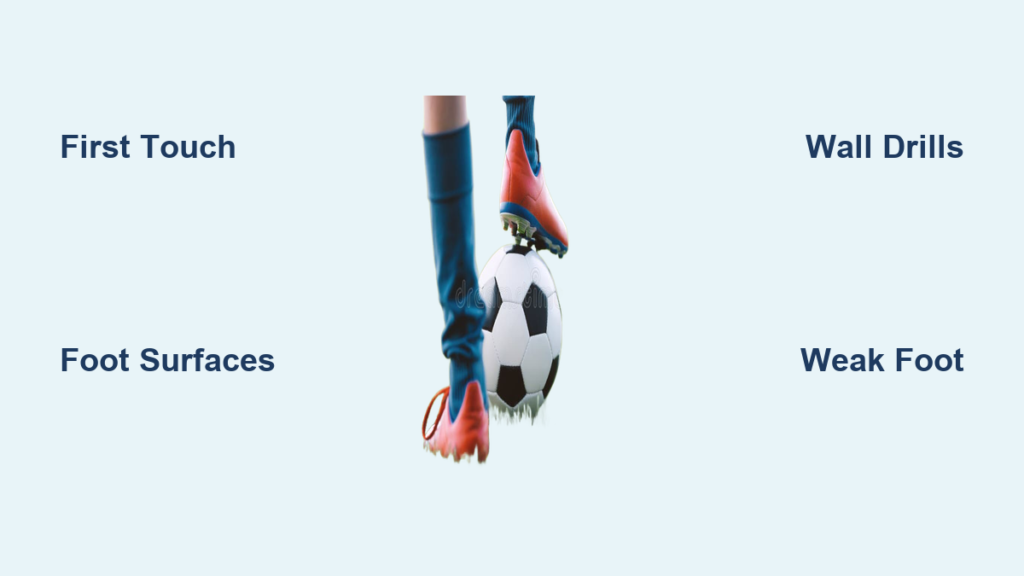
Understanding which part of your foot to use is essential when learning how to dribble a soccer ball. Each surface serves a different purpose.
The inside of your foot offers the largest surface area and greatest control. Use it for tight dribbling in crowded spaces, shielding the ball from defenders, and executing smooth turns and cuts. This surface is ideal when you need accuracy over speed.
The outside of your foot lets you push the ball straight ahead while staying balanced. It is perfect for sprinting with the ball, making sharp diagonal cuts, and feinting one way before going the other. It is also key for body feints and jinking actions that fool defenders.
The sole of your foot is your emergency brake and stealth tool. Use it to stop the ball instantly, drag it backward especially diagonally, and shield the ball with your body. Mastering sole control allows sudden changes in rhythm, which is critical for beating defenders.
Train all three foot surfaces daily. Ambidexterity makes you unpredictable on the field.
Adopt the Correct Body Posture for Control

Your body position directly impacts how well you execute moves when learning how to dribble a soccer ball. A low center of gravity is non-negotiable.
Bend your knees and stay on the balls of your feet. Keep your stance athletic. This improves balance during cuts, explosiveness in acceleration, and resistance to physical challenges from defenders. An upright posture slows you down and reduces control. Stay compact and ready to move in any direction.
Tilt your upper body slightly forward so your chest aligns over the ball. This keeps your center of mass over the point of contact, enhancing control and preventing overreaching. Avoid hunching, as this restricts vision and movement. Instead, stay relaxed but engaged, ready to react.
Protect the Ball Using Your Body
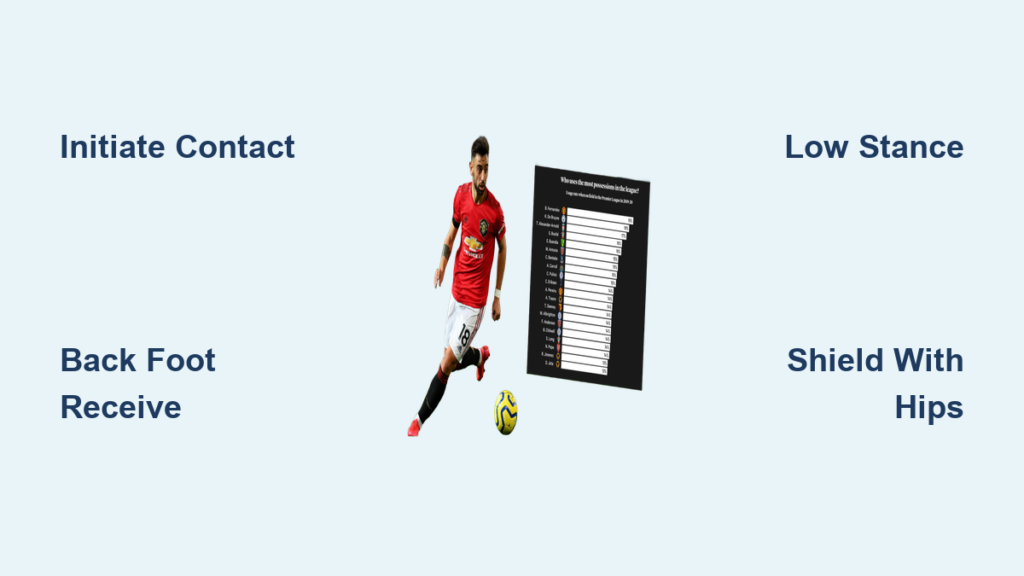
Shielding is not just about footwork. It is about using your entire body to protect the ball. Position yourself between the defender and the ball, using your torso, hips, and non-dominant leg to create a physical barrier. This makes it hard for opponents to reach the ball.
Sometimes, not touching the ball is the best move. Simply holding your ground can stall a defender until help arrives. When pressure mounts, turn your back slightly to the defender and use your arms within legal limits to hold them off. Keep the ball tucked to your side with the sole or inside foot.
The half-turn allows you to receive, shield, and pivot, which is a fundamental move in tight spaces.
Keep Your Head Up and Scan the Field
New players often stare at the ball, missing everything around them. The key is to look up after every touch and use peripheral vision to track the ball.
Start by glancing up every few steps, then build to continuous scanning. This lets you spot open teammates, identify passing lanes, anticipate defender movements, and find space to exploit. Touch the ball, look up, decide.
Every dribble should have purpose. Ask yourself: are you advancing, drawing defenders, or creating space for a pass? Avoid wasteful dribbling, which means beating one player just to pass backward. Aim for economy of movement: one action to beat multiple defenders.
Train yourself to play ahead of the game. Anticipate your next move before you receive the ball.
Control Speed and Rhythm During Dribbling
Once you have mastered control, practice sprinting with the ball. Accept a slight trade-off in touch for pace, but never lose command. Focus on accelerating into open space after a turn or feint. Speed is not just raw pace; it is timing and burst.
Defenders react to rhythm. Break theirs by switching between fast dribbling to stretch the defense and slow dribbling to lure defenders in. Use deceleration before a cut, then explode into space. This stop-and-go technique exploits a defender’s momentum. A well-timed pause can be more effective than a sprint.
Execute Sharp Directional Changes
You do not need flashy moves to beat a defender. Often, a small inside or outside touch is enough to shift your body angle and create space. Practice weaving through cones with one touch per cone to build efficiency and precision.
The stop-and-go turn works deadly in one-on-one situations. Drive forward toward a cone, stop instantly using the sole or inside foot, then turn sharply and accelerate in a new direction. The sudden halt disrupts the defender’s timing, giving you a split-second advantage.
Essential turning techniques include the drag back, which pulls the ball diagonally backward with the sole to create space. The cutback pushes the ball behind you with the inside foot after drawing the defender forward. The body feint involves stepping across the ball without touching it, then exploding in the opposite direction. These moves work best when integrated into play, not performed in isolation.
Build Skills with Progressive Drills
Start with straight-line dribbling to develop control at speed. Set up two cones fifteen steps apart. Use the outside of your foot, one touch per step, with knees bent and chest over the ball. Gradually increase speed. After ten reps, lift your head to scan.
Practice diagonal dribbles to change angles while maintaining control. Place cones at forty-five-degree intervals. Accelerate to the first cone, decelerate, then re-accelerate. Alternate fast and slow segments. Complete five round trips with short rest.
Drill subtle direction changes to beat defenders with minimal touches. Set up four cones two steps apart. Weave in and out using inside and outside foot. Accelerate off each cone. Reduce to one touch per cone as skill improves.
Train sharp turns and stops to halt and re-accelerate instantly. Set up four gates in a line. Sprint to gate two, stop, return. Then sprint to gate four, stop, finish sprint. The ball stays glued with no kicking it out.
Simulate game-like dribbling by applying skills without structure. Dribble slowly, then accelerate. Add feints and body movements. Keep your head up. Complete five full reps.
Follow a 4-Stage Training Framework
Stage one focuses on building foundational control. Practice straight-line dribbling, inside and outside footwork, and sole rolls. Use cones at a slow pace. The goal is making the ball feel glued to your foot.
Stage two adds direction and feints. Practice lacereta, sole drags, and body feints through zigzag patterns. Master one-touch directional changes.
Stage three puts you under pressure. Simulate one-on-one scenarios and small-sided games. Apply skills with defenders present.
Stage four integrates speed and precision. Practice speed dribbling and timed trials. Combine pace with tight control.
Avoid Common Dribbling Mistakes
Chasing the ball happens when touches are too strong. Fix it by reducing touch weight and focusing on the middle of the ball.
Staring at the ball breaks the habit. Scan every two to three touches and use drills that force head-up play.
Using only one foot limits you. Train your weak foot daily. Dedicate five minutes per session to non-dominant foot drills.
Over-dribbling wastes opportunities. Ask yourself if the move helps the team. Dribble to progress, not to show off.
Standing too upright hurts everything. Stay low. A bent-knee stance improves balance, speed, and control.
Develop Age-Appropriate Dribbling Skills
For ages four to seven, start at walking pace. Use games like musical soccer where players dribble until music stops. Use traffic lights with commands like green equals dribble and red equals stop. Teach cues like small soft taps, ball on a string, and use both feet.
For ages eight to ten, add obstacle courses and dribbling tag. Introduce defenders to simulate one-on-one situations. Combine dribbling with jumping, dodging, and balancing. The goal is mastering all dribbling components by age ten.
Track Your Dribbling Mastery
A player has mastered dribbling when they can maintain tight control at full sprint, execute sharp turns with one touch, shield effectively using body positioning, dribble with head up making real-time decisions, beat defenders efficiently, switch feet seamlessly using all foot surfaces, and accelerate and decelerate with precision.
Apply Dribbling in Real Game Situations
In attack, dribble into central zones to break compact defenses and draw multiple defenders to open passing lanes.
Under pressure, use sole rolls and quick cuts in tight spaces. Stop-and-go to protect the ball.
In counterattacks, combine speed dribbling with head-up scanning and exploit space behind retreating defenders.
On the wings, use wide areas for one-on-one opportunities and cut inside to shoot or pass.
Maintain and Improve Long-Term
Practice ten to fifteen minutes daily. Consistency beats volume. Record yourself to analyze posture, touch, and vision. Get feedback from coaches or peers. Increase difficulty gradually using smaller cones, faster pace, and added defenders. Train both feet equally. Ambidexterity wins games.
Frequently Asked Questions About How to Dribble a Soccer Ball
What is the most important skill for dribbling?
The most important skill is maintaining tight ball control through small, light touches. The ball should feel glued to your foot, allowing instant reactions to pressure and directional changes.
Which foot surface should I use for dribbling?
Use all three foot surfaces depending on the situation. The inside foot offers precision, the outside foot provides speed, and the sole helps with stopping and quick direction changes.
How can I improve my dribbling quickly?
Practice ten to fifteen minutes daily using progressive drills. Focus on straight-line dribbling first, then add directional changes. Always keep your head up and train both feet equally.
Why do I keep losing the ball when dribbling?
You may be kicking the ball too far ahead or staring at the ball instead of scanning the field. Focus on keeping the ball one to two steps ahead and use smaller, lighter touches.
How do I beat a defender one-on-one?
Use a combination of speed changes and subtle directional moves. The stop-and-go technique works well. Decelerate to draw the defender in, then explode past them with a sharp cut or feint.
Should I dribble with both feet?
Yes. Training both feet equally is essential for becoming a complete dribbler. Ambidexterity makes you unpredictable and much harder to defend against.
Key Takeaways for Mastering How to Dribble a Soccer Ball
Learning how to dribble a soccer ball requires mastering small touches, staying low with bent knees, and keeping your head up to scan the field. Use all three foot surfaces, protect the ball with your body, and alternate between fast and slow dribbling to unbalance defenders. Practice progressive drills daily, train both feet equally, and apply these skills in real game situations. Remember the formula: small touches, stay low, head up, be productive, use your body, train daily, and always play with purpose. Whether you are six or sixteen, the path to elite dribbling starts with the next touch.