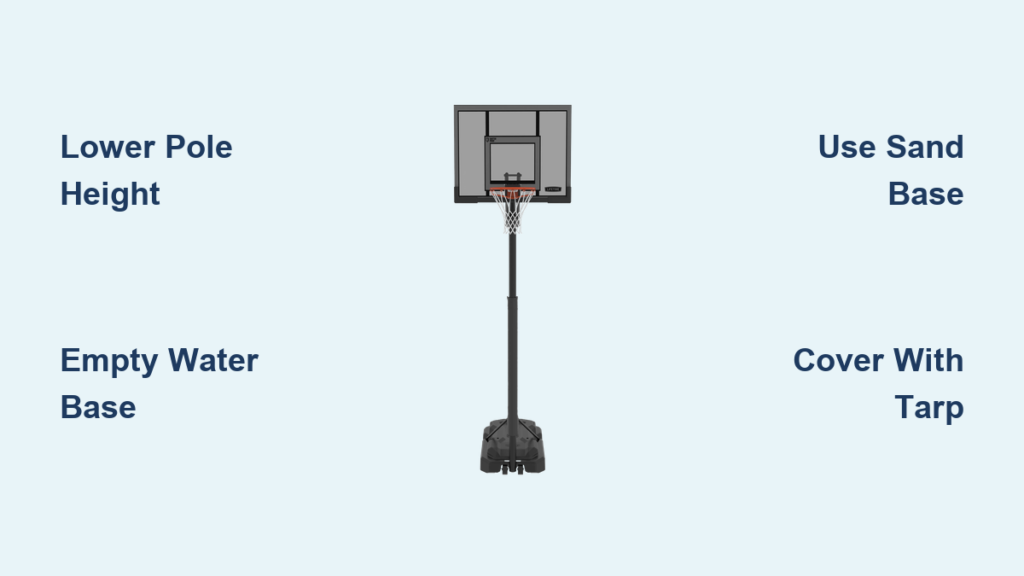
If you own a portable basketball hoop, you know it brings hours of fun and exercise. But when the game is over, the real challenge begins: figuring out how to store a portable basketball hoop without damaging it. Leaving your hoop exposed to snow, wind, or UV rays can crack the base, warp the backboard, and weaken the rim. A water-filled base left outside in freezing temperatures is especially vulnerable to catastrophic damage. This guide walks you through every storage option, from indoor garage solutions to winterization techniques, so you can protect your investment and keep your hoop game-ready for years to come.
Choosing Between Indoor and Outdoor Storage
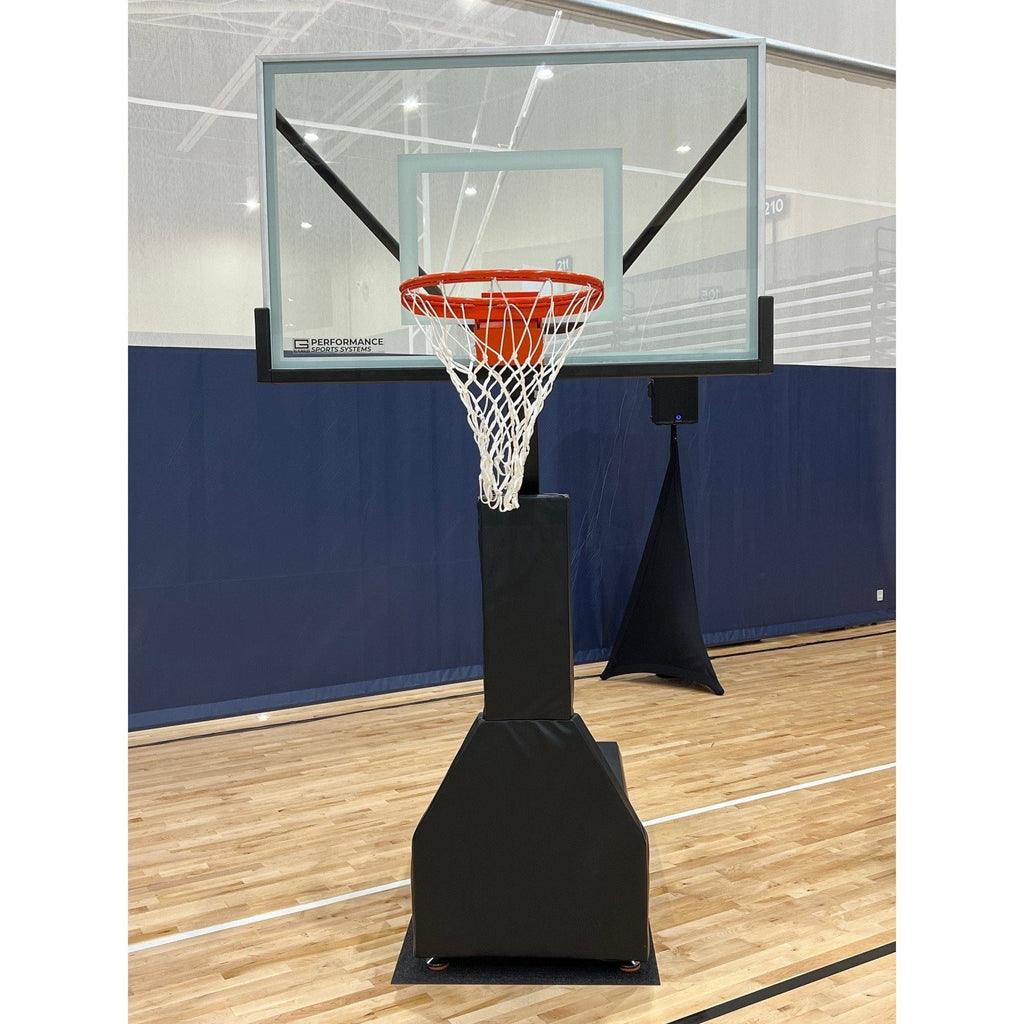
Your storage method depends on three factors: available space, local weather, and neighborhood rules. The two main approaches are indoor storage and outdoor storage, each with distinct advantages and challenges.
Indoor Storage: Garage, Shed, or Barn
Storing your hoop indoors provides the best protection against weather, theft, and UV damage. This approach is ideal if you live in an area with harsh winters or if your HOA has strict aesthetic rules.
Most portable hoops range from 10 to 12 feet tall when fully extended. To fit inside a standard garage with 7 to 8 foot ceilings, you must lower the pole to its minimum height, typically around 7.5 feet. If vertical storage is impossible, lay the hoop horizontally. This requires floor space of about 12 to 14 feet in length.
Before tilting the hoop indoors, empty a water-filled base completely. Water-filled bases are extremely heavy and can leak when tilted. Sand-filled bases are safer for horizontal storage because sand does not shift or leak.
Be prepared to move the hoop in and out each time you want to play. Wheels help, but the process still requires effort, especially with sand-filled models that cannot be lightened.
Outdoor Storage: Driveway or Protected Areas
Leaving your hoop outside is convenient but comes with risks. Sun exposure degrades plastic, snow accumulation adds weight that can bend rims, and wind can tip over an improperly secured unit.
During winter, move the hoop away from driveways and sidewalks to avoid damage from snow plows or shovels. Position the hoop under a carport, against a garage wall, or under any covered area to reduce exposure to the elements.
Many HOAs consider visible portable hoops an eyesore. Some communities require hoops to be stored out of sight when not in use. Check your neighborhood rules before deciding on outdoor storage.
Never leave a full water base outside in freezing temperatures without protection. Ice expansion can crack the base, rendering it unusable.
Managing Your Hoop’s Base: Water vs. Sand

The base is the heaviest component of your portable hoop, and your choice between water and sand filling directly affects how you store and move the system.
Water-Filled Base: Easy Setup with Seasonal Demands
Water is popular because it is accessible and simple to fill, but it requires attention during cold weather.
For winter storage, fill the base only 75% full to leave room for ice expansion. Alternatively, mix approximately 2 gallons of non-toxic antifreeze with water to prevent freezing entirely. This allows you to keep the base full and stable throughout winter.
If storing indoors or during extended cold snaps, drain the base completely using a siphon pump or gravity drain. Draining adds time to setup and takedown but prevents cracks and leaks.
Sand-Filled Base: Permanent Stability
Sand eliminates freezing concerns entirely, making it ideal for long-term storage. Sand does not expand or degrade in cold weather, so no adjustments are needed during winter.
Sand-filled bases can be safely laid horizontally without leakage, making them excellent for garage storage. However, sand cannot be drained to lighten the load for moving. Sand-filled hoops are significantly heavier and typically require two people to relocate.
Many users switch from water to sand after experiencing a cracked base. The upfront effort pays off in durability and peace of mind.
Winterizing Your Portable Basketball Hoop
Cold weather threatens your hoop’s structural integrity. Proper winterization prevents cracks, warping, and mechanical failure.
Lower the Hoop to Reduce Wind Load
Winter winds are stronger without trees and foliage to block them. A tall hoop acts like a sail and can blow over in strong gusts.
Set the hoop to its minimum height, approximately 7.5 feet. This reduces wind exposure by over 30% and significantly lowers the risk of tipping. The lower profile also helps avoid snowplows and buried equipment.
Cover the Hoop to Prevent Snow Damage
Snow buildup adds weight that can bend rims or crack backboards. A tarp and bungee cord system provides an extra layer of defense.
Lower the hoop first, then drape a heavy-duty tarp over the backboard and rim. Bundle the corners around the pole and secure with bungee cords wrapped around both the pole and base. This keeps snow and ice off mechanical parts and prevents moisture from freezing in joints.
Use UV-resistant tarps if storing outdoors long-term. Standard plastic covers degrade faster under sun exposure.
Safely Moving Your Portable Hoop
Whether you are shifting it across the driveway or storing it for winter, moving your portable hoop requires care to avoid injury or damage.
Step-by-Step Moving Process
Lower the rim to its lowest setting, around 7.5 feet. This reduces wind resistance and lowers the center of gravity.
Prepare the base by partially draining water if it feels too heavy. For sand-filled bases, verify even weight distribution. Remove any supplementary weights like salt bags.
Engage the wheels by gripping the pole firmly and tilting the entire system backward until the wheels contact the ground. Some models like The Beast require rotating a front handle forward to unlock wheels. Others, like the Spalding Highlight Composite 44, tilt backward to engage wheels.
Roll the hoop slowly across flat, hard surfaces. Avoid slopes, gravel, or curbs. Once in position, set the hoop upright, refill if needed, and check balance before raising the rim.
Always have a second person assist with heavy models. One person should grip the pole firmly while the other guides the base.
Handling Heavy Models
Larger hoops like the Lifetime 90865 require two people to move safely. One person stands on the back base for balance while the other removes weights or guides the roll. Reapply all supplementary weights after moving the hoop to its new position.
Using Ground Anchors for Secure Outdoor Storage

If you want stability without filling the base, spiral ground anchors offer a smart alternative that eliminates leaks and freezing concerns.
Install Anchors in Four Steps
Drive 16-inch steel anchors into the ground on each side of the base using a 17mm wrench. Ensure anchors sit flush with or below the surface to avoid tripping hazards.
Attach ratchet straps through the anchor hooks and secure to the base frame. Tighten the ratchet until snug, then cut off excess strap to prevent fraying.
Each anchor holds hundreds of pounds and can be removed seasonally. This system provides leak-proof, weather-resistant stability without permanent modification to your hoop.
Disassembling for Long-Term Storage
Need to relocate the hoop across town or store it compactly? Full disassembly is the safest option.
Remove the rim and backboard by unscrewing attachment bolts carefully. Detach pole sections if your model has telescoping segments.
Bag all hardware including screws, nuts, and washers. Label each bag by component to ensure easy reassembly. Wrap the backboard in moving blankets or bubble wrap to prevent scratches.
Store disassembled parts in a dry garage or basement. Keep hardware together in a labeled container to avoid losing small pieces. Follow your manual when reassembling to ensure secure reattachment.
Never transport a fully assembled hoop in a truck bed. Vibration can loosen joints and damage the backboard during transit.
Model-Specific Storage Tips

Different hoops have unique mechanisms. Knowing your model ensures smooth storage.
Lifetime 90865 models use hydraulic height adjustment that must be lowered manually using the hand pump. The heavy base requires two 40-lb salt bags for stability. Remove these before moving. The hoop can be lowered to 7.5 feet to fit in most garages if the base is drained.
Spalding The Beast requires rotating the front handle forward to unlock wheels for transport. The robust build handles intense play but needs careful rolling on flat surfaces.
Spalding Highlight Composite 44 models tilt backward to engage wheels. The lightweight frame makes them easier to move than heavier models, even with a water base.
Youth 32-inch portable hoops are light enough for a single person to tilt and roll. Their compact size fits easily in small garages or sheds.
Dealing with HOA Rules and Neighborhood Concerns
Even if your hoop is functional, neighbors or your HOA might object to its appearance.
Many HOAs ban permanent garage attachments, forcing residents to use portable units. Some require portable hoops to be stored indoors when not in use. Others limit playtime to avoid noise complaints.
Store your hoop in the garage or side yard, and only set it up during active playtime. Use a cover when the hoop is not in use to maintain a tidy appearance. This approach balances community aesthetics with your family’s enjoyment.
Extending Your Hoop’s Lifespan
Proper storage is just one part of long-term care. Regular maintenance keeps your hoop safe and functional.
Inspect the base monthly for cracks, especially after winter. Patch small leaks with a plastic repair kit designed for water tanks. Avoid overfilling bases in cold climates to allow room for expansion.
Clear the path before rolling to remove rocks, sticks, or ice. Lubricate wheel axles annually with silicone spray to keep wheels turning smoothly.
Consider switching to sand to eliminate annual winterization. Use ground anchors to reduce reliance on base weight. Install a cover even indoors to keep dust off the backboard.
Frequently Asked Questions About Storing Portable Basketball Hoops
Can I leave my portable basketball hoop outside in winter?
Yes, but you must winterize it properly. Lower the hoop to its minimum height, drain or treat the water base with antifreeze, and cover the entire unit with a tarp secured by bungee cords. Move the hoop away from snowplow paths.
Should I use water or sand in my portable hoop base?
Sand offers better long-term stability and eliminates freezing concerns, making it ideal for year-round storage. Water is easier to fill and drain but requires winterization to prevent base cracking. Many users switch to sand after experiencing a cracked water base.
How do I store a portable hoop in a garage with limited space?
Lower the pole to its minimum height, typically 7.5 feet. If ceiling height is insufficient, lay the hoop horizontally. Empty a water-filled base first to prevent leakage. Sand-filled bases can be laid horizontally safely.
Do I need to empty the base before storing my hoop indoors?
Yes, always empty water-filled bases before indoor storage. A full water base is extremely heavy and can leak when tilted, causing water damage to your garage floor. Sand-filled bases do not need to be emptied.
How do I prevent my portable hoop from getting stolen or damaged outside?
Remove the hoop when not in use if theft is a concern in your area. Use a heavy-duty cover to hide the equipment from view. Consider installing ground anchors with locking straps for added security. Check your homeowner’s insurance policy for coverage details.
Key Takeaways for Storing Your Portable Basketball Hoop
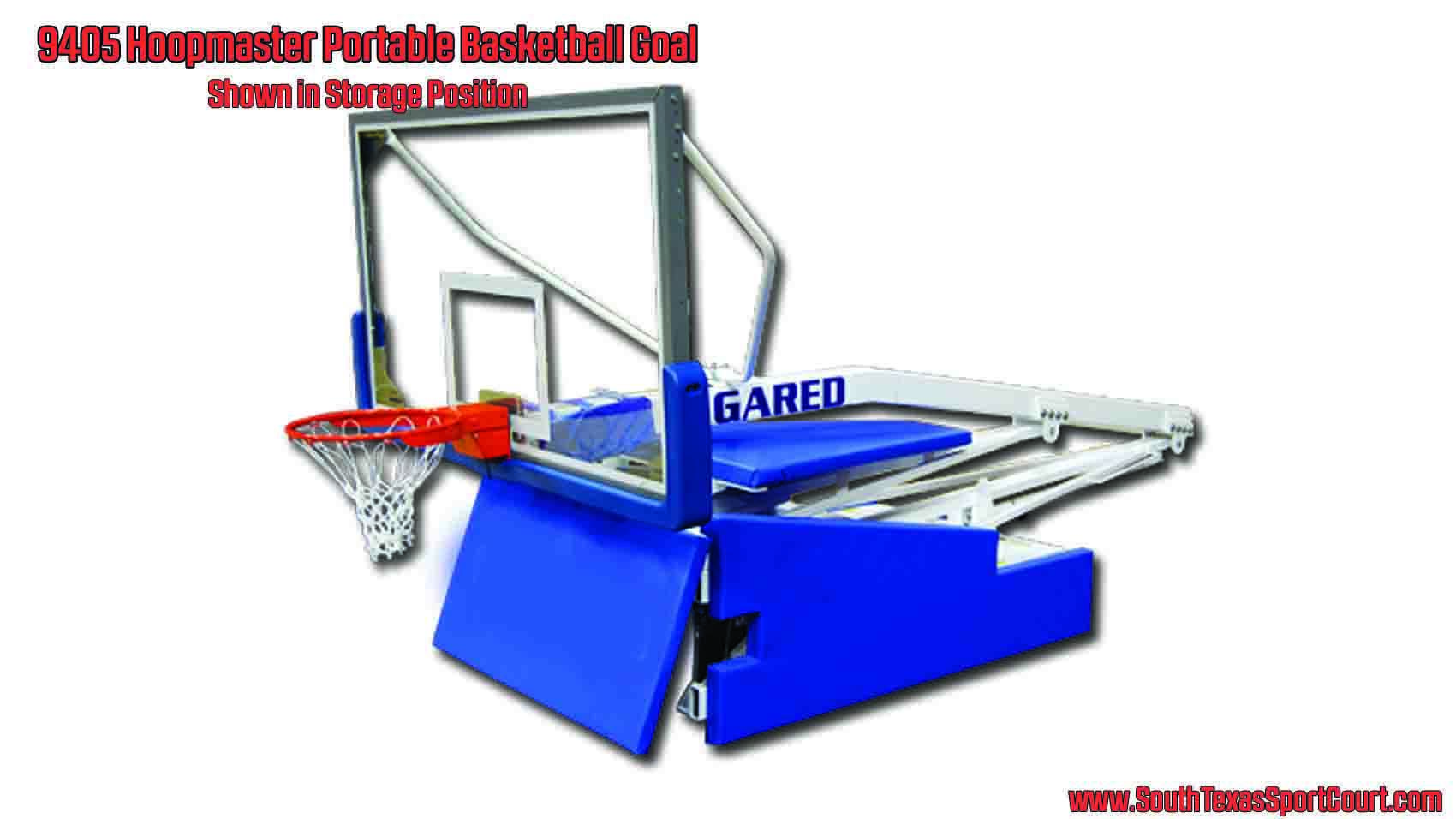
Knowing how to store a portable basketball hoop properly is essential for protecting your investment. Whether you choose indoor storage, winterize a water base, or secure it with ground anchors, each step adds years to your hoop’s lifespan.
Lower your hoop in winter to reduce wind load and prevent snow damage. Cover it with a UV-resistant tarp when storing outdoors. Always empty or treat water bases before cold weather arrives. Respect your HOA rules by storing the hoop out of sight when not in play.
With the right storage routine, your portable hoop can deliver decades of slam dunks without the stress of costly repairs or replacements. Start your storage routine today and keep the game going season after season.