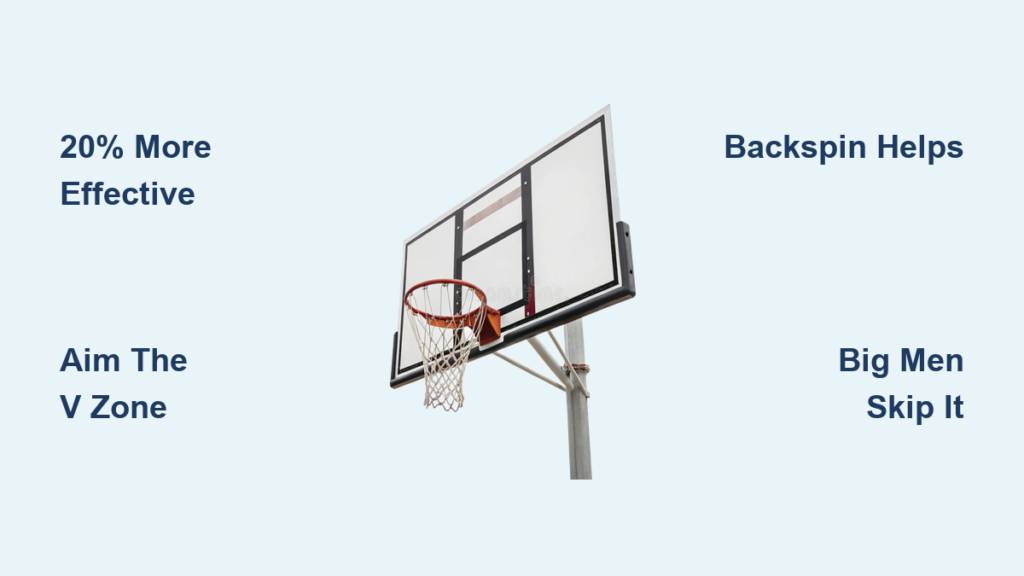
You’re driving to the basket, the defense collapses, and you’re left with a tough angle near the baseline. Instinct says bank it in. But more often than not, NBA players and even college athletes choose to loft the ball directly over the rim instead. Despite overwhelming evidence that the bank shot is up to 20% more effective within 12 feet, especially from the wings, basketball’s modern era has seen a quiet but consequential shift. Players are avoiding the backboard. This article dives into the real reasons behind the decline, the science proving its superiority, and the strategic cost teams pay by ignoring it.
From free throws to layups, the glass offers a built-in margin for error. But personal habits, coaching gaps, and stylistic trends have buried this advantage, costing teams an estimated 4 to 6 points per game. Let’s uncover why the backboard is fading and how bringing it back could change the game.
The Science Behind the Bank Shot

20% More Effective Within 12 Feet
A landmark study by engineers at North Carolina State University analyzed over one million simulated shots and delivered a clear verdict. Bank shots are 20% more effective than direct shots from distances up to 12 feet, particularly from the wing areas. This isn’t a marginal gain. It’s a game-changer.
The advantage comes from geometry. When a ball hits the backboard at the right angle and spin, it absorbs energy and drops softly into the basket. Direct shots, by contrast, rely on perfect arc and precision. A slight misfire means a hard miss. But the backboard acts like a safety net, correcting minor errors in release and trajectory.
Optimal Zones: Where the Glass Wins

Not all shots benefit equally. The study mapped out where the bank shot dominates.
The areas with highest success rates include:
• Wing areas from the elbow to the corner
• Baseline drives especially at sharp angles
• Short mid-range shots from 8 to 12 feet
• Free throws as a hidden opportunity
Outside 12 feet, especially on straight-line shots like the free-throw line extended, direct shots win. But inside that arc, avoiding the backboard is like refusing a GPS when you’re lost.
The V Target: Where to Aim

The research didn’t just prove the bank shot works. It revealed exactly where to aim.
On the backboard’s 24 by 18 inch rectangle, optimal contact points form a V shape near the top center. The ideal aim point is mathematically located 3.327 inches behind the backboard plane. Players can’t measure this, but they can intuit it.
Aiming adjustments by angle work as follows:
• From wide angles: aim higher and farther from the rim
• From tight angles: aim lower and closer to the rim
This V pattern isn’t guesswork. It’s geometry that confirms what old-school shooters knew.
Why Big Men Skip the Backboard on Free Throws
The Free Throw Paradox
Free throws are high-pressure, high-leverage moments. Yet big men, centers and power forwards, rarely use the backboard even when their mechanics are inconsistent. This is a paradox. Players with the most to gain from error correction are the ones avoiding the tool that could help most.
Giannis Antetokounmpo, Joel Embiid, and Kevin Love are exceptions. They use the backboard deliberately, especially when fatigue or pressure affects their stroke. But most big men stick to direct shots even when their percentages dip below 60%.
5 Reasons Big Men Avoid the Glass
Several factors contribute to this widespread avoidance among tall athletes.
• Habit and early development: Shooting form locks in early. If a young player learns to shoot without using the backboard, they rarely change later.
• Perceived simplicity: Many believe aiming straight at the rim is simpler. But this ignores the reality of pressure, fatigue, and mechanical drift.
• Fear of bad bounces: Players worry about hitting the wrong spot and bouncing out. The risk is overestimated. A well-aimed bank shot with backspin is more forgiving.
• Coaching neglect: Youth programs teach balance and follow-through but rarely backboard targeting. The skill isn’t emphasized.
• Positional expectations: Big men aren’t expected to be elite free-throw shooters. The culture accepts hack-a-center tactics because teams assume they’ll miss.
The Lost Art of the Bank Shot
A Dying Fundamental
Old-school coaches call the bank shot a lost art. In the 1960s and 70s, players like Sam Jones and Alex Shorts used the glass on nearly every close shot. Shorts reportedly used it on 89% of his attempts including tough baseline moves. Today that number is closer to 20%.
The shift isn’t due to rule changes. The hoop, ball, and backboard are the same. The physics haven’t changed. What’s changed is style, confidence, and coaching priorities.
Legendary Bank Shot Masters
History proves the technique works at the highest level.
• Lynn Shackelford UCLA: Unstoppable from the right corner using the glass.
• Sam Jones Celtics: Championship-proven bank shot specialist during Boston’s dynasty years.
• Rick Goins Miami: Scored over 2000 points using heavy backspin and relentless banking.
• Alex Shorts: 89% glass usage and it worked at the highest levels.
These players weren’t gimmick shooters. They were efficient scorers who used every tool available.
Nostalgia or Strategy
Some argue the game has evolved past the backboard. The rise of spacing, three-point shooting, and guard-dominated offenses has shifted focus. But evolution doesn’t erase geometry. The 20% efficiency boost within 12 feet is still real. Avoiding the glass isn’t progress. It’s a strategic oversight.
Mechanics: How to Execute the Perfect Bank Shot
Backspin: The Secret Weapon
The NC State study identified 3 Hertz, three revolutions per second, as the optimal backspin rate for bank shots and free throws. Why does this work?
• Energy absorption: Backspin softens the impact with the glass
• Downward trajectory: After contact the ball drops into the rim
• Error correction: Slight misfires still fall in
Rick Goins was famous for his heavy bank with a lot of backspin. Modern players should emulate that approach.
Visual Targeting: Train Your Eyes
Using the backboard turns shooting into a targeting exercise rather than just a motion. Players should train to see the V, visualize the optimal aim points on the square. They should aim through the glass, thinking of the 3.327 inch depth like shooting into the wall. Adjustments by angle matter. Wider angle means higher aim. Tighter angle means lower aim.
This isn’t micromanaging. It’s precision.
Why the Trend Must Reverse

4 to 6 Points Per Game on the Line
Analysts estimate that proper backboard usage could add 4 to 6 points per game. The breakdown shows:
• More made layups especially in traffic and off drives
• Higher free-throw percentages for big men under pressure
• Better clutch shooting in end-game situations from 10 feet out
In a league where games are often decided by 3 points or less, that’s a winning margin.
Clutch Situations Demand the Glass
Imagine game tied, 5 seconds left, you’re 10 feet from the basket on the wing. Do you try to swish it over the defender or bank it in, the 20% more effective option? The data says bank. But most players go direct. That’s not confidence. That’s ignoring the odds.
Breaking the Myths
Three common misconceptions need addressing.
It complicates the shot: The backboard simplifies shooting by adding a visual reference. It’s easier to aim at a spot than to perfectly replicate a motion under stress.
Only short players need it: Tall players with long arms can still misfire. The backboard helps everyone within 12 feet.
It’s outdated: The hoop hasn’t changed. The math hasn’t changed. The physics is timeless.
How to Bring the Backboard Back

1. Reintegrate Glass Practice
Coaches at every level must dedicate time to bank shot drills. Wing bank shots from both sides at game speed matter. Baseline drives should emphasize contact points on the square. Free throw targeting should focus on aiming at top corners or center of the square. Make it routine, not an afterthought.
2. Target Big Men Specifically
Develop backboard-focused free throw routines for centers and power forwards. Use video feedback to show aim points. Drill under fatigue to simulate game conditions. Normalize the technique so it’s not seen as weird.
3. Teach Situational Awareness
Players should learn the 20% zone. Inside 12 feet especially from wings, when under pressure or off-balance, and on free throws with mechanical drift. Knowing when to use the glass is as important as knowing how.
4. Use Visual Cues
Teach players to aim through the backboard, not just at it. Use stickers or tape on the glass to mark the V zone. Make the abstract concept tangible.
Key Takeaways for Bringing Back the Backboard
The backboard isn’t a crutch. It’s a strategic advantage backed by science, history, and math. The decline in its use isn’t progress. It’s a costly oversight.
The NC State research proves bank shots are 20% more effective within 12 feet. Big men and free throw shooters especially benefit from the visual reference and error correction the glass provides. Coaching programs must reintegrate glass practice to recover an estimated 4 to 6 points per game.
By retraining players to see the glass as a tool rather than a last resort, teams can boost scoring, improve free throws, and win more games. The fix isn’t complex. It’s simple. Aim, spin, bank, score.
Frequently Asked Questions About Basketball Backboard Usage
Why do modern basketball players avoid using the backboard?
Modern players avoid the backboard due to stylistic trends, coaching gaps, and personal habits formed early in development. Many believe direct shots are simpler and more confident-looking. Coaching programs rarely emphasize backboard targeting, so players never learn the technique.
Is the bank shot actually more effective than direct shots?
Yes. Research from North Carolina State University shows bank shots are 20% more effective than direct shots from distances up to 12 feet, especially from wing areas. The backboard acts as a safety net, correcting minor errors in release and trajectory.
Why don’t big men use the backboard on free throws?
Big men avoid the backboard due to habit, perceived complexity, fear of bad bounces, lack of coaching emphasis, and low positional expectations. Many developed high-arc shots early and switch feels unnatural. The culture accepts poor free-throw percentages from centers.
What is the optimal aim point on the backboard?
The optimal aim points form a V shape near the top center of the square. From wider angles aim higher and farther from the rim. From tighter angles aim lower and closer to the rim. The mathematically optimal contact point is 3.327 inches behind the backboard plane.
How much could proper backboard usage improve a team’s scoring?
Analysts estimate proper backboard usage could add 4 to 6 points per game through more made layups, higher free-throw percentages, and better clutch shooting. In games often decided by 3 points or less, that margin is significant.
Which NBA players successfully use the backboard?
Notable practitioners include Giannis Antetokounmpo, Joel Embiid, and Kevin Love. These players use the backboard deliberately especially under pressure or fatigue. Historical legends like Sam Jones, Lynn Shackelford, and Rick Goins also mastered the technique with reported usage rates as high as 89%.