You’re sprinting down the court, cut hard to the basket, and your foot slips inside your shoe just enough to throw off your balance. Was it your footwork? Your ankle strength? Or was it something simpler: your basketball shoes lace styles?
More than just a way to keep your shoes on, the right lacing technique can mean the difference between a game-winning move and a misstep that costs you. Whether you’re a weekend warrior or a competitive player, mastering lacing can upgrade your game, comfort, and look.
In this guide, you’ll learn how to choose the best laces, apply performance-boosting techniques, customize for your foot type, and style your kicks like a pro.
Choose the Right Lace Type

The type of lace you choose directly impacts how well your shoe performs. Different profiles offer different benefits, so matching your lace to your playing style matters more than you might think.
Flat vs. Round Laces
Flat laces are the most common on casual and many performance basketball shoes. They’re easy to tie, stay secure longer, and offer a clean aesthetic. However, they can feel bulky and may wear out faster under intense play.
Round laces, on the other hand, are standard in high-performance models. Their cylindrical shape glides smoothly through eyelets, allowing for tighter, more precise tensioning. They provide a snug, locked-in feel ideal for quick cuts and jumps, but they’re more likely to come undone if not tied with a double knot.
Pro Tip: Use round laces for competitive games and flat laces for casual wear or off-court styling.
Specialty Laces for Performance
Several specialty options exist for players with specific needs.
- Elastic laces: Deliver consistent tension without needing to re-tie. Brands like Xpand offer systems that stretch with your foot, perfect for players who hate mid-game adjustments.
- Reflective laces: Woven with light-reflective threads, these boost visibility during night games or outdoor play.
- Waxed cotton laces: Offer a premium feel and sleek look, often used for custom shoe builds or retro styling. They resist fraying and stay tied well.
Size Matters: Getting the Fit Right
Lace length affects both safety and performance. Excess lace creates bulk, increases tripping risk, and can come loose during play. Laces that are too short prevent full lacing through all eyelets, weakening support.
How to measure: Lay your old laces flat and use a tape measure. Or count your shoe’s eyelet pairs: 4 to 5 pairs need 36 to 45 inches, 6 pairs need 45 to 54 inches, and 7 or more pairs need 54 to 72 inches.
Replace laces every 6 to 12 months, or sooner if you notice fraying, discoloration, or slipping knots.
Master Performance Lacing Techniques
The right technique can transform how your shoe feels and performs. These methods range from everyday comfort solutions to advanced lockdown systems for serious athletes.
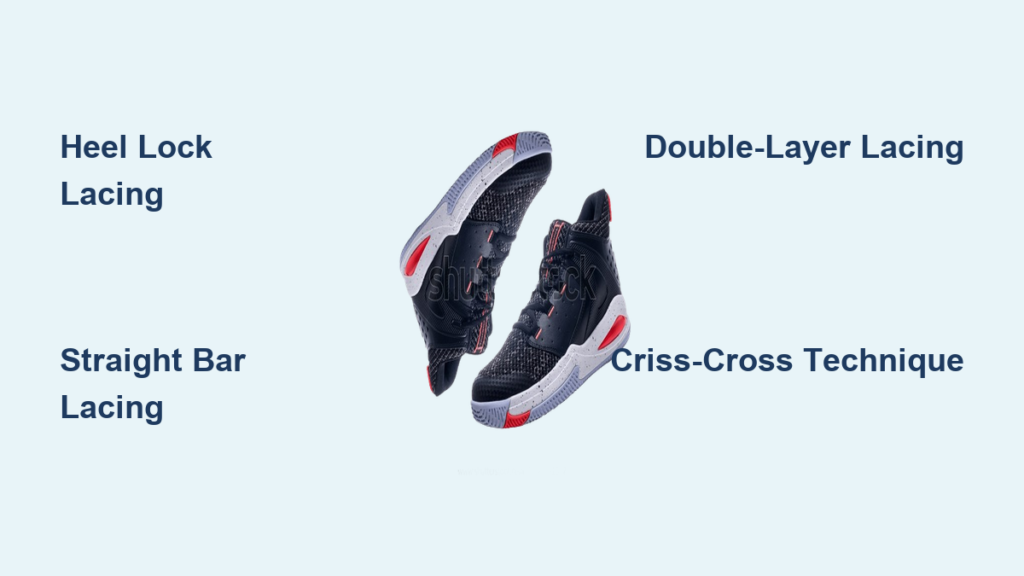
Criss-Cross Lacing (Undercross Method)
This variation of the classic criss-cross reduces pressure on the top of the foot, ideal for players with high insteps or sensitive dorsals.
Steps:
- Start at the bottom eyelets.
- Cross diagonally, but pass each lace under the opposite lace at each intersection.
- Continue to the top and tie securely.
Result: Even pressure, reduced pinching, and better comfort during long play sessions.
Straight Bar Lacing
Perfect for wide feet or high arches, this technique eliminates diagonal tension, creating a wider, more comfortable fit.
Steps:
- Thread laces straight across the bottom eyelets.
- Run each lace vertically up the inside of the shoe to the next eyelet.
- Pull straight across again without crossing.
- Repeat to the top.
Benefit: Even pressure distribution and a roomier feel without sacrificing security.
Heel Lock Lacing (Runner’s Loop)
One of the most effective techniques for preventing heel slippage, a common issue in new or slightly loose basketball shoes.
Steps:
- Lace normally up to the second-to-last eyelet.
- Thread each lace straight up through the top eyelet on the same side, forming a loop.
- Cross the ends and feed them through the opposite loop.
- Pull tight to lock the heel, then tie a standard knot.
Why it works: The loop system cinches the ankle collar, stabilizing the heel and reducing ankle roll risk during cuts and landings.
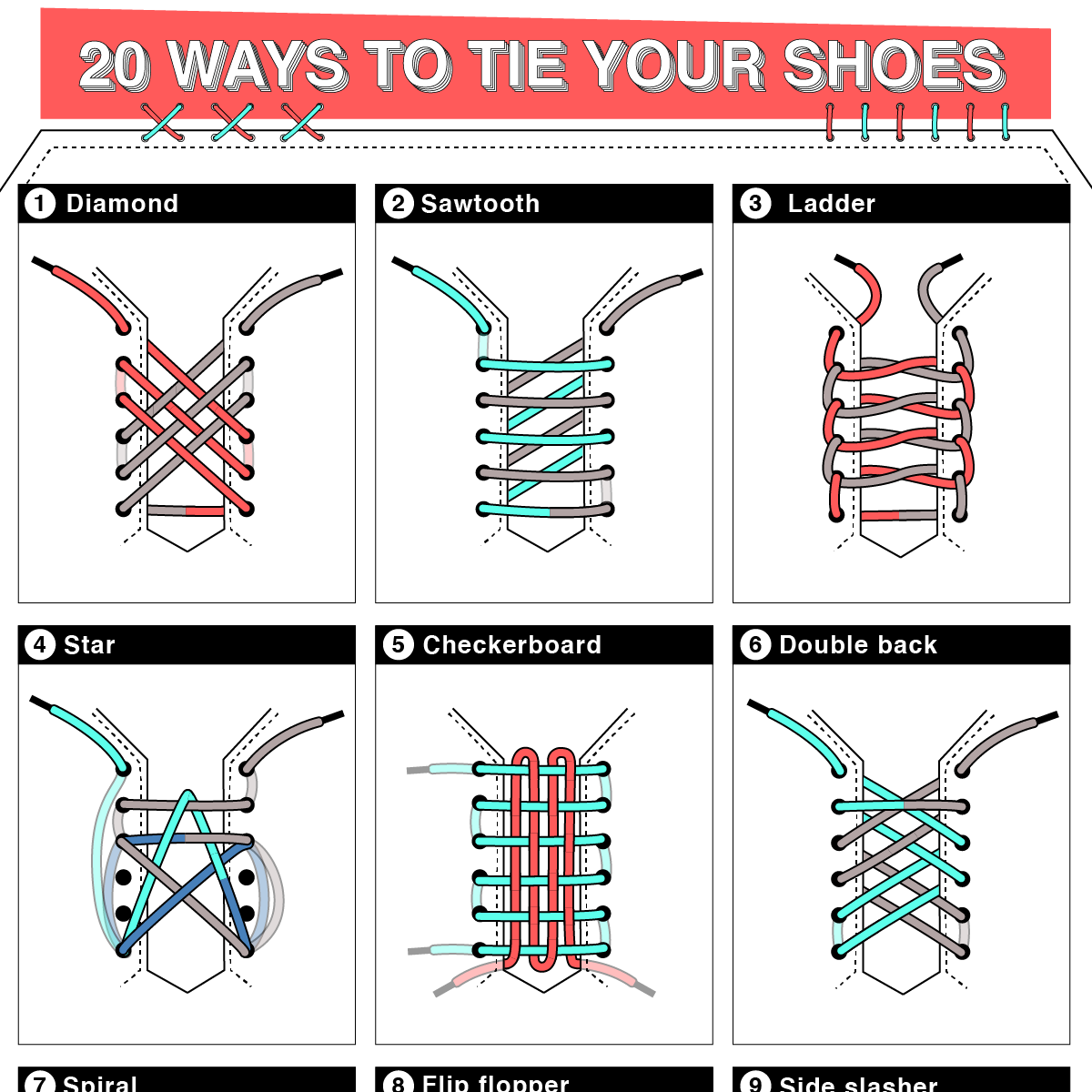
Ladder Lacing
A stylish and functional hybrid that alternates straight bars and diagonal crosses.
Steps:
- Start with a straight bar across the bottom.
- At the next eyelets, cross diagonally.
- Alternate: straight, diagonal, straight, and so on.
Visual Effect: Clean, modern look with structural support. Great for low-tops where aesthetics matter.
Double-Layer Lacing
Adds serious lockdown and a bold visual statement, especially popular on Air Jordans.
Steps:
- Use two pairs of laces, same or contrasting colors.
- Lace the first pair normally using criss-cross.
- Lace the second pair over the first, following the same path.
- Tie both sets at the top.
Performance Boost: Extra midfoot compression and reduced foot movement. Ideal for high-impact games or worn-in shoes that feel loose.
Airport Lacing (Quick-Release)
Designed for fast on and off, great for travel or players who frequently remove shoes.
Steps:
- Lace normally to the top.
- Instead of a knot, use a quick-release system like a loop lock or elastic toggle.
- Pull to release tension instantly.
Alternative: Use elastic no-tie laces for a slip-on feel without sacrificing fit.
Top-Cross Lacing (Custom Lockdown)
Maximizes stability for explosive movements.
Steps:
- Lace tightly through all eyelets.
- Before tying, pull both ends through the top eyelets on the opposite side, creating a reinforced cross.
- Tie and tuck ends under the tongue.
Result: A locked-down feel that prevents any forward slippage during drives or jumps.
Hidden Lacing
For a clean, minimal look popular in streetwear and fashion-forward courtside styles.
Steps:
- Lace to the top.
- Tuck both ends under the tongue or along the side panel.
- Secure with clips or by weaving under upper laces.
Bonus: Prevents laces from coming untied or catching on the court.
Ankle-Wrap Lacing
Adds a supportive cuff around the ankle, ideal for players who rely on agility and quick direction changes.
Steps:
- Lace tightly to the top.
- Wrap both lace ends around the back of the ankle collar.
- Tie securely at the front.
Effect: Enhanced rear support and reduced ankle fatigue during fast-paced games.
Customize for Your Foot Type
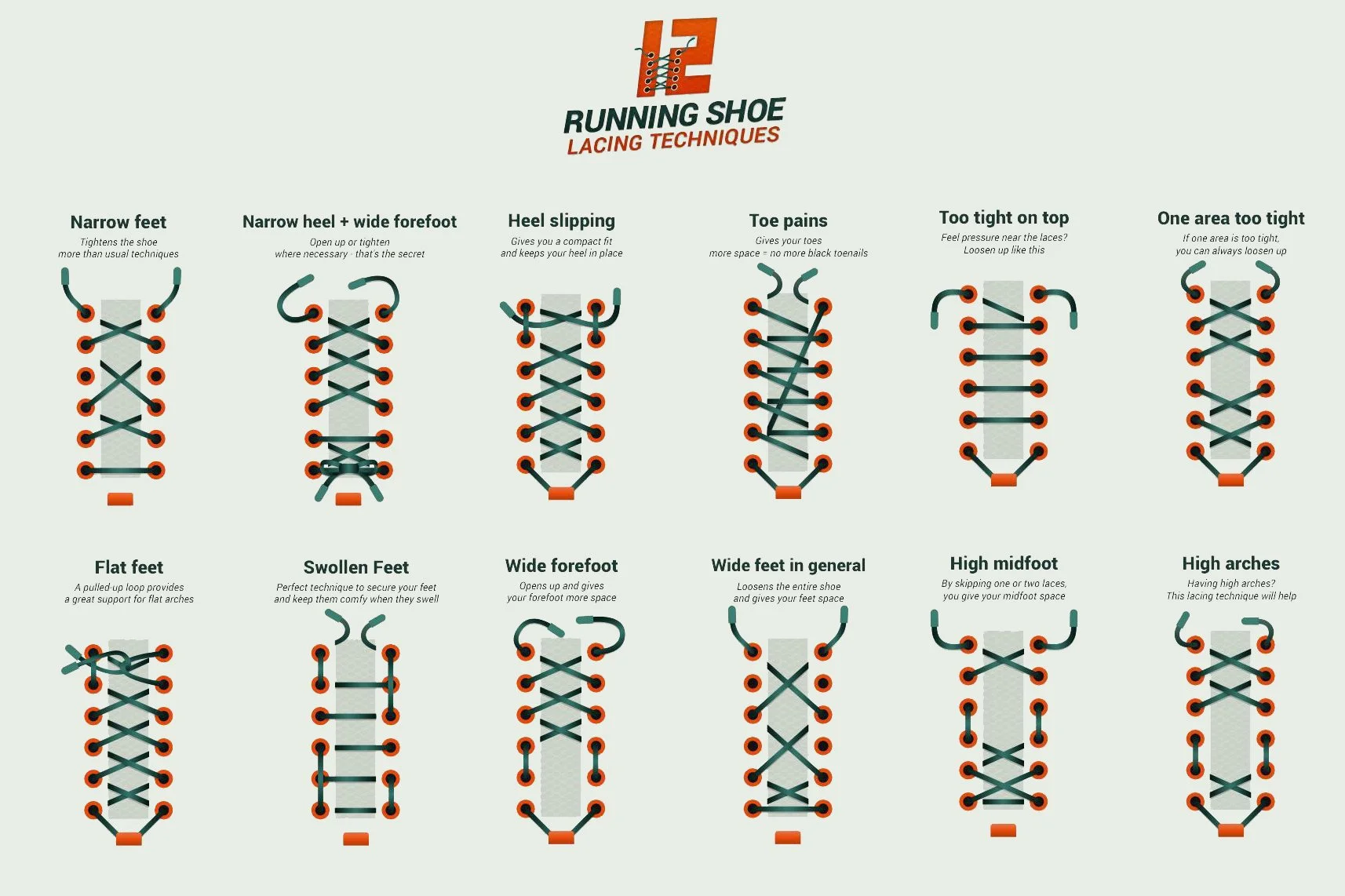
Every foot is different, and your lacing should adapt accordingly. Here’s how to customize based on common foot conditions.
High Arches? Skip Midfoot Eyelets
Players with high arches often feel pressure on the top of the foot. Relieve it by skipping the middle eyelets. Lace up to the second eyelet, skip one, then resume lacing. This creates a pressure bridge over the arch.
Wide Feet? Use Straight Bar or Skip Eyelets
Straight bar lacing gives extra room. Alternatively, skip every other eyelet in the midfoot to increase toe box volume.
Flat Feet? Lock It Down
Low arches need maximum support to prevent overpronation. Lace through all eyelets using a tight criss-cross or double-layer method. Avoid skipping eyelets.
Narrow Feet? Add Volume Control
Narrow feet slide inside standard shoes. Use double-layer lacing or top-cross lacing to reduce internal space and create a snugger fit.
Heel Slipping? Heel Lock Is Essential
Even in a well-fitting shoe, heel slippage can occur. Always use the heel lock technique. It’s the single most effective way to secure the heel counter.
Maintain and Replace Laces
Well-maintained laces perform better and last longer. Here’s how to keep yours in top condition.
Clean Like a Pro
Dirty laces degrade faster and look sloppy.
Steps:
- Remove laces.
- Soak in warm, soapy water for 10 minutes.
- Gently scrub with a soft toothbrush.
- Rinse thoroughly and air dry.
Avoid: Washing machines, dryers, or harsh chemicals. They weaken fibers and cause premature breakdown.
Know When to Replace
Replace laces if fraying or splitting is visible, they no longer hold a knot, elastic laces lose stretch, or discoloration won’t wash out.
Pro Tip: Keep a spare pair in your gym bag for game-day emergencies.
Store Spare Laces Properly
Use small ziplock bags or lace organizers to prevent tangling and dust buildup. Label by length or color for quick access.
Avoid Common Lacing Mistakes
These errors can undermine your performance and even lead to injury. Here’s what to watch out for.
Overtightening: Comfort vs. Circulation
Tight laces don’t always mean better support. Warning signs include numbness or tingling, cold toes, and pain across the instep. Fix this by loosening midfoot lacing or using pressure-relief techniques like skipping eyelets.
Wrong Length: Safety Hazard
Too long creates a tripping risk. Too short prevents complete lacing. Measure before buying and count eyelets to match standard length charts.
Ignoring Wear and Tear
Frayed laces can snap mid-game. Inspect laces weekly and replace at the first sign of damage.
Mismatched Lace Type
Using round laces on a shoe designed for flat laces, or vice versa, can cause slippage or improper tension. Match the lace profile to your shoe’s original design.
Style Your Laces with Confidence

Your laces are a canvas for personal expression. Here’s how to make them work for your look.
Match or Contrast Colors
Team play calls for matching laces to jersey or uniform colors. Streetball flair benefits from bold contrasts like white laces on black shoes or neon on dark soles. Cause awareness shows through pink laces for breast cancer or rainbow for Pride.
Try Double Lacing for Bold Looks
Use two colors, like red and black on a Jordan 1, for a custom layered appearance. Great for sneakerheads and fashion-forward players.
Embrace the Loose Lace Trend
Popularized by Panda Dunks and streetwear culture, loose lacing involves using extra-long laces and leaving them untied or loosely knotted, letting them drape over the tongue. Note that this isn’t ideal for performance and is best reserved for off-court wear.
Model-Specific Styling Tips
Air Jordan models work best with flat, slightly waxed laces for an authentic retro look. Try loose styling with 54-inch laces. Kyrie series shoes work with midfoot straps, so use shorter laces or integrate them into heel lock techniques. High-tops maximize ankle support with heel lock or ankle-wrap styles. Low-tops benefit from clean lines with ladder or straight bar lacing.
Key Takeaways for Basketball Shoes Lace Styles
Your basketball shoes lace styles are more than just a detail. They’re a tool that can enhance stability, prevent injury, improve performance, and express your personal style.
Start by assessing your foot type and playing style. Choose the right lace type based on whether you prioritize comfort or performance. Experiment with different techniques like heel lock for security or straight bar for width. Replace worn laces regularly to maintain a secure fit.
A well-laced shoe isn’t just secure. It’s an extension of your game.
Now go lace up, lock in, and own the court.
Frequently Asked Questions About Basketball Shoes Lace Styles
What is the best lacing technique for preventing ankle rolls?
The heel lock lacing technique, also called the runner’s loop, is the most effective for preventing ankle rolls. It creates a secure lock around the heel that stabilizes the ankle collar and reduces lateral movement during quick cuts and direction changes.
How often should I replace my basketball shoe laces?
Replace basketball shoe laces every 6 to 12 months, or immediately if you notice fraying, splitting, discoloration that won’t wash out, or loss of elasticity. Inspect your laces weekly for signs of wear.
Are round or flat laces better for basketball?
Round laces are generally better for competitive basketball because they provide a tighter, more secure fit and glide smoothly through eyelets for precise tensioning. Flat laces work well for casual play and offer easier tying.
How do I stop my heel from slipping in basketball shoes?
Use the heel lock lacing technique. Lace up to the second-to-last eyelet, create loops through the top eyelets on the same side, cross the ends, and feed them through the opposite loops before pulling tight and tying.
Can lacing affect my performance in basketball?
Yes, proper lacing directly impacts performance. A secure fit prevents foot sliding during lateral movements, ensures efficient energy transfer, and reduces the risk of blisters and ankle injuries. The wrong lacing can compromise stability and waste energy.
What is double-layer lacing and when should I use it?
Double-layer lacing uses two pairs of laces threaded together for extra midfoot compression and lockdown. It’s ideal for high-impact games, loose-fitting worn-in shoes, or when you need maximum foot stability during explosive movements.