Accidentally marked your soccer ball with a Sharpie? You’re not alone. Whether it’s an autograph gone wrong, a prank, or a mistaken signature, permanent marker on a soccer ball can be frustrating—especially when you realize most “permanent” inks are designed to stick. The good news: you can remove Sharpie from a soccer ball without ruining its surface if you use the right method.
This guide reveals the safest, most effective ways to remove Sharpie from a soccer ball, ranked by results, safety, and ease. From the surprising power of dry-erase markers to cautious use of rubbing alcohol, you’ll learn exactly what works and what to avoid.
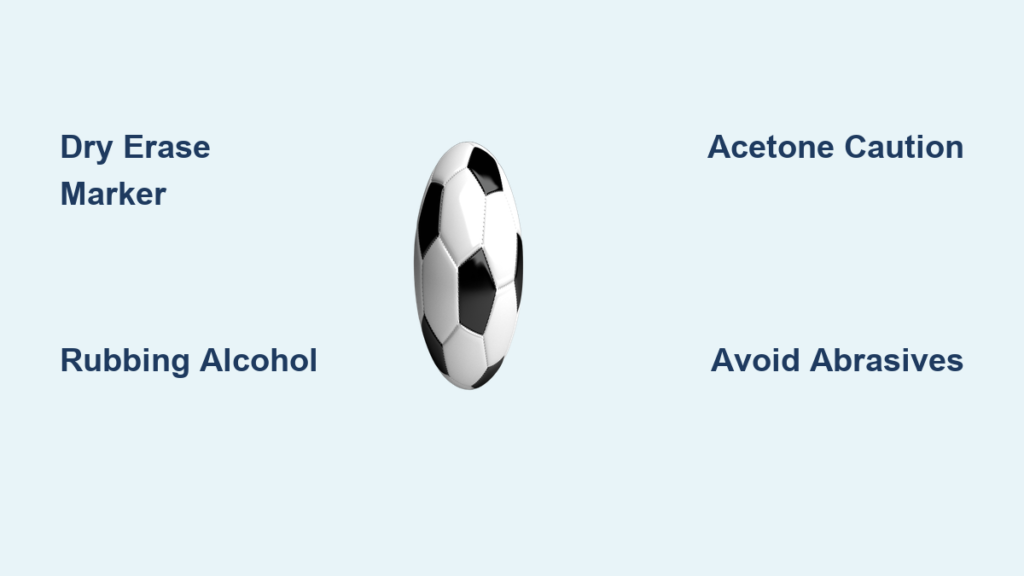
Dry Erase Marker: The Safest First Step
The fastest, safest, and most effective way to remove Sharpie from a soccer ball is using a dry-erase marker. This method works because dry-erase ink contains alcohol-based solvents like isopropanol or ethanol that temporarily dissolve the permanent marker’s pigments. Once liquefied, the ink wipes away cleanly.
Steps:
1. Select any color dry-erase marker.
2. Completely cover the Sharpie mark.
3. Wait 5 to 10 seconds for the solvent to activate.
4. Wipe off with a soft, dry cloth or paper towel.
5. Repeat once if residue remains.
This method delivers instant results on fresh and dried ink, leaves no residue, and is safe for glossy PU and PVC finishes. Test near the valve first. Works best on smooth, coated surfaces but is not recommended for matte or fabric-covered balls.
Using Rubbing Alcohol for Stubborn Marks

If the dry-erase method fails or isn’t available, isopropyl alcohol (70% or higher) is your next best option. Alcohol breaks down the resins and dyes in permanent marker ink, making it easy to lift from non-porous surfaces like soccer ball coatings.
What You’ll Need:
– Cotton ball or soft microfiber cloth
– 70 to 90% isopropyl alcohol
– Damp cloth for cleanup
Steps:
1. Pour a small amount of alcohol onto the cotton ball. Don’t soak it.
2. Gently rub the stained area in circular motions.
3. Most ink lifts within 10 to 15 seconds.
4. Use a second wipe with a damp cloth to remove any leftover residue.
5. Let the area air dry completely.
Rubbing alcohol works best on older, set-in stains and balls without glossy coatings. Always test on a hidden spot like near the valve first to check for discoloration or texture changes. This solvent is flammable, so work in a ventilated space away from flames.
Nail Polish Remover for Set-In Stains
When alcohol doesn’t fully remove the ink, nail polish remover can step in—but only with caution. Look for acetone-based versions for maximum effectiveness, but understand the risks. Acetone is strong and may damage synthetic finishes, especially on high-end match balls.
Steps:
1. Dip a cotton ball lightly in acetone-based remover.
2. Press gently onto the stain. Don’t scrub hard.
3. Let sit for 5 seconds to break down the ink.
4. Wipe clean with a soft cloth.
5. Rinse the area with water and mild soap afterward.
6. Dry thoroughly.
Avoid using acetone on premium leather-look balls, matte or textured finishes, or areas near seams or valve. Moderate risk exists. Acetone can cause clouding, cracking, or softening of synthetic layers over time. Use only as a last resort and never soak the ball.
Household Products That Damage Soccer Balls
Some common household products may remove Sharpie but at the cost of your ball’s integrity.
Skip Lighter Fluid
Lighter fluid (usually naphtha-based) dissolves ink fast but is too aggressive for soccer balls. It is highly flammable and toxic in enclosed spaces. It can soften adhesives, leading to delamination. It may also damage valve seals, causing slow leaks. Do not use lighter fluid. The fire hazard and material risk far outweigh any cleaning benefit.
Avoid WD-40
While WD-40 claims to remove stains, it is not ideal for soccer balls. It leaves behind a greasy film that attracts dirt. Petroleum distillates may degrade synthetic coatings. The odor lingers and can transfer to hands or grass. There is also risk of seeping into the valve and affecting air retention. If you do use it, apply minimally, wipe immediately, and follow with a full soap-and-water wash. But better yet, skip it entirely.
Step-by-Step Removal Workflow

Follow this sequence to safely and effectively remove Sharpie without damaging your ball.
Assess the Stain
Ask yourself how long the ink has been there. Fresh stains under 24 hours respond better than aged stains over 7 days. Consider what the ball is made of (PU, PVC, synthetic leather). Note where the stain is located and avoid valves and seams.
Begin with Dry Erase Marker
This should be your go-to first step. Draw over the entire mark, wait 10 seconds, and wipe with a clean cloth. If partial ink remains, repeat once.
Move to Isopropyl Alcohol
If dry-erase fails, use alcohol on a cotton ball. Rub gently in circles, wipe clean with a damp cloth, and air dry. Most stains vanish after one round.
Resort to Acetone (With Caution)
Only if previous steps fail, use acetone sparingly on a cotton ball. Use light contact with no scrubbing. Wipe and rinse with soapy water, then dry completely. Inspect for surface changes afterward.
Clean the Whole Ball
After stain removal, wash the entire ball with mild soap and warm water. Use a soft sponge with no abrasives. Rinse well and dry with a towel. Store in a cool, dry place. This ensures no chemical residue remains and restores grip.
What NOT to Do When Removing Sharpie
Even with the right method, errors can damage your ball. Steer clear of these common mistakes.
Using Abrasives
Steel wool, scouring pads, or stiff brushes scratch the surface and expose inner layers. Avoid these tools entirely.
Soaking the Ball
Never submerge or soak the ball. Water can enter the bladder and cause mold or pressure loss.
Ignoring the Valve
Keep liquids away from the inflation valve. Moisture intrusion leads to slow leaks or rust.
Overapplying Solvents
Too much alcohol or acetone dries out and weakens the outer coating. Less is more when treating stains.
Skipping the Test Patch
Always test any cleaner on a small, hidden area first. This is especially important on colored or textured balls.
Material-Specific Tips for Soccer Balls
Not all soccer balls react the same. Adjust your approach based on construction.
Synthetic leather and PU balls are the most common type. They respond well to dry-erase marker and alcohol. Avoid acetone unless absolutely necessary.
PVC balls are often cheaper and more rigid. They tolerate mild solvents better but still test first. They can yellow or crack with harsh chemicals.
Matte finish or textured surfaces may have ink settle into grooves. The dry-erase method is less effective here. Try alcohol with a soft toothbrush for gentle scrubbing. Rinse and dry thoroughly.
Match-grade or leather-like balls have high-end finishes that are sensitive. Stick to dry-erase only. Avoid all liquids unless approved by manufacturer.
Preventing Future Sharpie Marks
Once clean, protect your ball from future accidents.
Keep a dry-erase marker handy in your sports bag. It removes accidental Sharpie instantly with no cleanup needed.
Educate teammates about writing on game balls. Use designated autograph balls instead.
Store properly in a dry, shaded area. UV exposure degrades coatings, making them more prone to staining.
Best Method: Dry Erase Marker Wins
| Method | Effectiveness | Safety | Ease | Risk to Ball |
|---|---|---|---|---|
| Dry Erase Marker | 5 stars | 5 stars | 5 stars | Very Low |
| Rubbing Alcohol | 4 stars | 4 stars | 4 stars | Low |
| Nail Polish Remover | 4 stars | 3 stars | 3 stars | Moderate |
| Lighter Fluid | 3 stars | 2 stars | 3 stars | High |
| WD-40 | 3 stars | 2 stars | 2 stars | Moderate |
The winner is dry erase marker. It is fast, safe, chemical-light, and works on both new and old stains. No residue, no risk. Just wipe and go.
The runner-up is isopropyl alcohol. It is a great backup when dry-erase isn’t available. Just use carefully and avoid over-saturation.
Avoid lighter fluid and WD-40. They are too risky. Potential damage isn’t worth the slight cleaning benefit.
Frequently Asked Questions About Removing Sharpie from Soccer Balls
Does the dry erase marker method work on old Sharpie stains?
Yes, the dry erase marker method works on both fresh and dried Sharpie marks. Testing shows it effectively removes ink that has set for 24 hours or even 7 days. The alcohol solvents in dry-erase ink liquefy the permanent marker pigments, allowing them to be wiped away regardless of age.
Can I use rubbing alcohol on all types of soccer balls?
Rubbing alcohol is generally safe for synthetic leather, PU, and PVC balls when used sparingly. Always test on a hidden area first, especially on colored or textured balls. Avoid over-saturation, as excessive alcohol can dry out or dull the finish over time.
Will nail polish remover damage my soccer ball?
Nail polish remover (acetone-based) can damage synthetic coatings, cause clouding, or weaken surfaces. Avoid using it on premium or match-grade balls. If used, apply sparingly, rinse with soap and water afterward, and test on a hidden spot first.
What household items should I never use on a soccer ball?
Avoid lighter fluid, WD-40, bleach, and abrasive cleaning tools. Lighter fluid is highly flammable and can damage adhesives and valve seals. WD-40 leaves an oily residue that attracts dirt and can affect ball handling. Abrasives scratch the surface and expose inner layers.
How do I prevent Sharpie from staining my soccer ball?
Keep a dry-erase marker in your sports bag for instant removal. Educate teammates about avoiding writing on game balls. Store balls in a cool, dry place away from direct sunlight, which degrades coatings and makes them more prone to staining.
Key Takeaways for Removing Sharpie from Your Soccer Ball
The dry erase marker is the best first method for removing Sharpie from a soccer ball. It works fast, leaves no residue, and poses minimal risk to synthetic coatings. Isopropyl alcohol serves as an effective backup for stubborn or aged stains. Harsher solvents like acetone, lighter fluid, and WD-40 should be last resorts only, as they can damage the ball’s surface, compromise air retention, or leave unwanted residue.
Always test any cleaning method on a small, hidden area before treating the stain. Work in a well-ventilated area, protect the valve from liquid intrusion, and avoid abrasives. After cleaning, wash the entire ball with mild soap and water, then store in a cool, dry place.
Keep a dry-erase marker in your sports gear bag for quick, chemical-free fixes to accidental Sharpie marks. This simple tool saves your ball and keeps it looking game-ready.