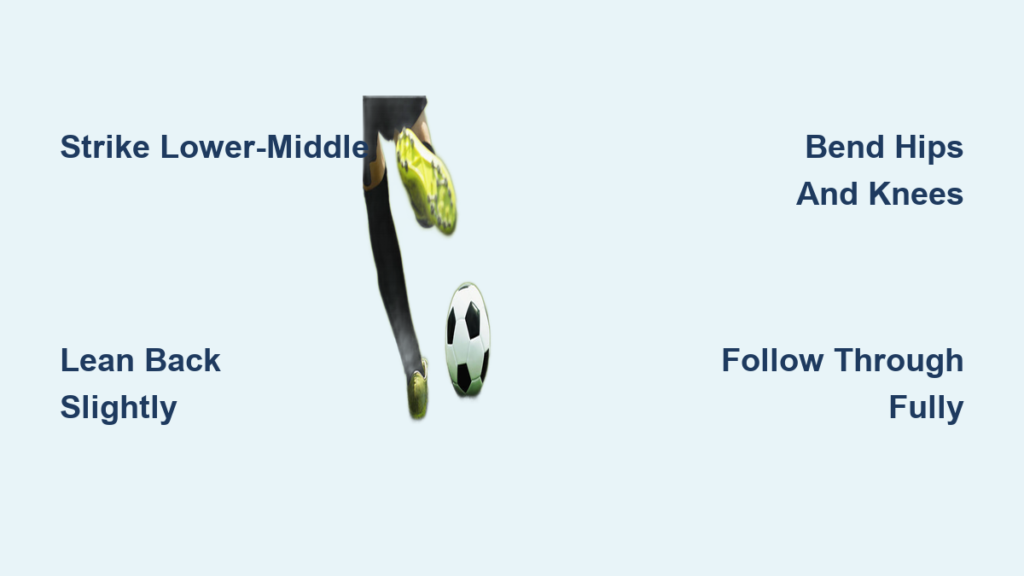
Kicking a soccer ball into the air with control and power is a fundamental skill that separates casual players from effective ones. Whether you’re launching a long clearance, delivering a cross, or attempting a soaring shot, mastering this technique opens up the field and creates scoring opportunities. The ability to elevate the ball accurately relies not on raw strength, but on proper form, timing, and body mechanics. This guide breaks down exactly how to kick a soccer ball in the air using proven techniques from elite instruction and biomechanics.
You’ll learn the correct strike zone, foot positioning, body posture, and follow-through. Plus common mistakes to avoid and drills to build consistency. By the end, you’ll be able to send precise aerial passes and powerful shots on command.
Strike the Lower-Middle of the Ball
Where you hit the ball determines its flight path. To send it airborne with forward momentum, contact the lower-middle third, just below the equator.
Hitting too high flattens the trajectory. Striking the bottom creates a chip with little distance. The sweet spot allows the ball to rise while maintaining speed. For long passes or clearances, aim slightly lower than center to generate lift without sacrificing power.
Avoid Top or Bottom Contact
Striking the top of the ball causes it to dive downward. This kills lift and momentum. Conversely, hitting the very bottom produces a short, high arc useful only for chips, not long-distance kicks.
For sustained aerial kicks, avoid both extremes. Focus on clean contact below the center, letting the angle of your foot and body create natural elevation.
Use the Instep for Maximum Power
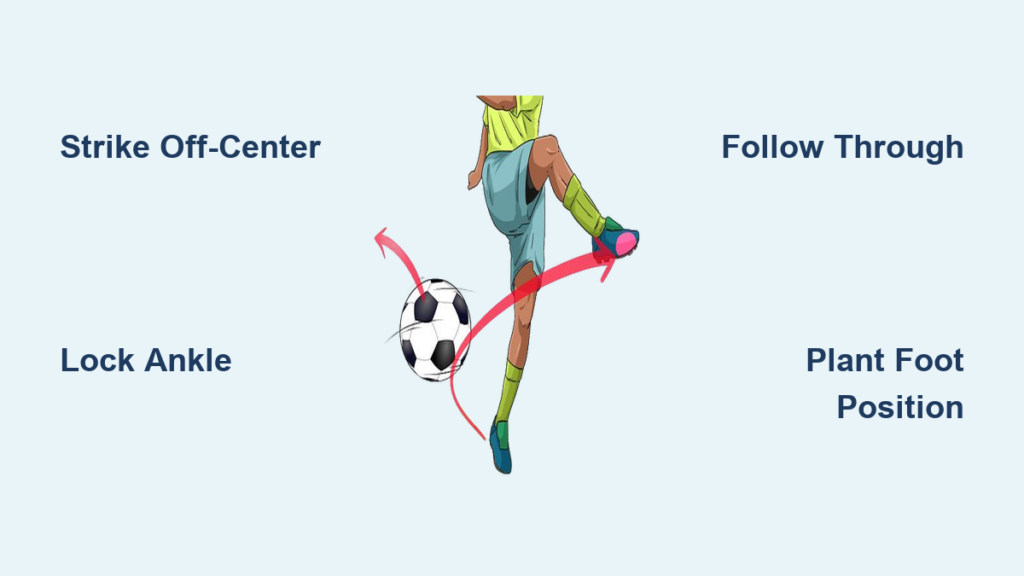
The instep, the laces area of your shoe, is the strongest and most accurate surface for launching the ball into the air.
This part of the foot offers a broad, firm striking platform that transfers energy efficiently. It allows full leg extension and follow-through, essential for distance and height. Never kick with your toes. Toeing the ball reduces power, increases injury risk, and leads to wild inaccuracy.
Lean Back Slightly for Lift

Body lean directly controls how high the ball flies. To elevate it, tilt your upper body slightly backward at the moment of contact.
The more you lean within reason, the higher the trajectory. This is crucial for clearing defenders or launching goal kicks. However, over-leaning throws off balance and sends the ball skyward with no direction. Keep your head steady and eyes fixed on the ball throughout the motion.
Align Shoulders and Hips
Your upper body must point toward the target. Misaligned shoulders or hips pull the ball off course, even with perfect foot contact.
Before striking, rotate your torso so your chest faces the intended direction. This ensures your leg swings through on the correct path. Think of your body as a guided rail. The ball follows where your core is aimed.
Bend Hips and Knees for Power
Power does not come from the leg alone. It starts in the hips and core.
To generate maximum force, bend both hips and knees during the backswing. This engages the quads, glutes, and hip flexors, your strongest leg muscles. Bending only at the hip limits swing speed and reduces power output.
Cock the Leg Fully Back
Pull your kicking leg back until your heel nearly touches your glutes. This increases the swing arc, giving your leg more time to accelerate before impact.
A longer backswing means faster strike. More power. But do not overdo it. The motion should be fluid, not robotic. Let the leg swing naturally like a pendulum building speed.
Follow Through Fully
The kick does not end at contact. It continues through full follow-through.
After striking, let your leg swing upward and across your body. This completes the kinetic chain and ensures maximum energy transfer. An abrupt stop at impact cuts power and hurts accuracy.
Use Arms for Balance
Swing your arms naturally to stabilize your body. The non-kicking arm can extend outward for balance while the opposite arm moves forward with the kicking leg. This mimics a sprinter’s motion.
Plant Foot Placement Matters

Your non-kicking plant foot sets the foundation for the entire kick.
Position it 4 to 6 inches beside the ball, slightly behind its line, and pointing at your target. This alignment allows proper hip rotation and directional control.
Keep Plant Leg Slightly Bent
A rigid plant leg absorbs shock poorly and limits mobility. A slightly bent knee acts as a shock absorber and allows dynamic movement through the kick.
If your plant foot is too close, your range of motion shrinks. Too far, and you lunge, throwing off balance. Practice finding the ideal distance through repetition.
Smooth Approach, Not Rushed
Use a 3 to 6 step run-up to build rhythm. A controlled approach helps time the kick and maintain balance.
Avoid overstriding or sprinting into the ball. Rushed steps lead to mistimed contact and poor form. Let your steps flow naturally, ending with the plant foot in position.
Tactical Uses of Aerial Kicks
Different game situations require slight adjustments in technique.
Clear the Ball Under Pressure
When defenders close in, a high, long clearance buys time and resets play.
Use an instep drive with moderate back lean. Strike the lower-middle of the ball. Aim beyond the defensive line so attackers can chase it. Avoid blind kicks. Only go long if a teammate is positioned to receive it.
Cross Into the Box
Deliver the ball high into the penalty area for headers.
Contact point should be just below center. Use moderate back lean for lift. Follow through across the body to add curve, especially for inswingers. Time the cross with attackers’ runs.
Shoot in the Air
High shots work best in specific scenarios.
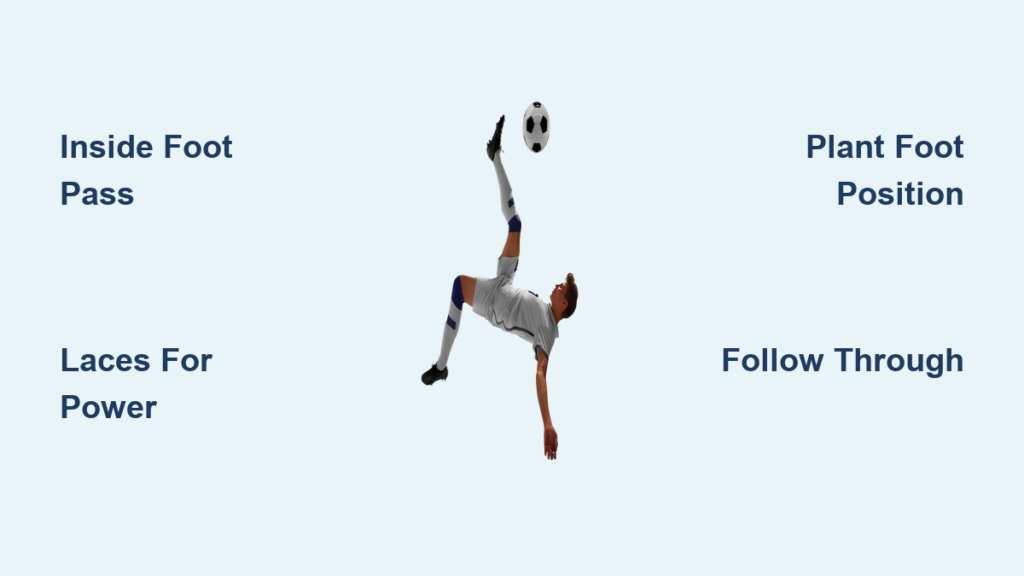
Over a defensive wall on free kicks. Volleyed shots from crosses. Surprise attempts when the keeper is off-balance. But most goals come from low, driven shots. Reserve high shots for tactical moments, not default choices.
Execute Smart Goal Kicks
Modern rules allow defenders in the box during goal kicks, making long booting riskier.
Preferred technique is a short pass to a teammate inside the box to build play. Go long only when a clear aerial route exists and a target is ready. Avoid 50-50 duels from aimless kicks.
Fix Common Mistakes
Even experienced players make errors. Here is how to correct them.
Striking with Toes
The problem involves low power, inaccuracy, and injury risk. The fix is to lock your ankle, point toes down, and use the instep.
Leaning Back Too Much
The problem is the ball flies over the target. The fix is moderate back lean. Keep your head down and eyes on the ball.
Poor Plant Foot Position
The problem is kicks go off-target. The fix is placing the plant foot 4 to 6 inches beside the ball, aligned with your target.
Incomplete Follow-Through
The problem is weak, short kicks. The fix is swinging the leg fully through. Follow through high and across your body.
Rushed Approach
The problem is loss of balance and mistimed contact. The fix is using 3 to 6 smooth, rhythmic steps.
Aerial Pass When Ground Option Exists
The problem is higher interception risk. The fix is preferring low passes for quick transitions. Use aerial only when necessary.
Train with Purpose
Skill comes from deliberate, consistent practice, not just playing.
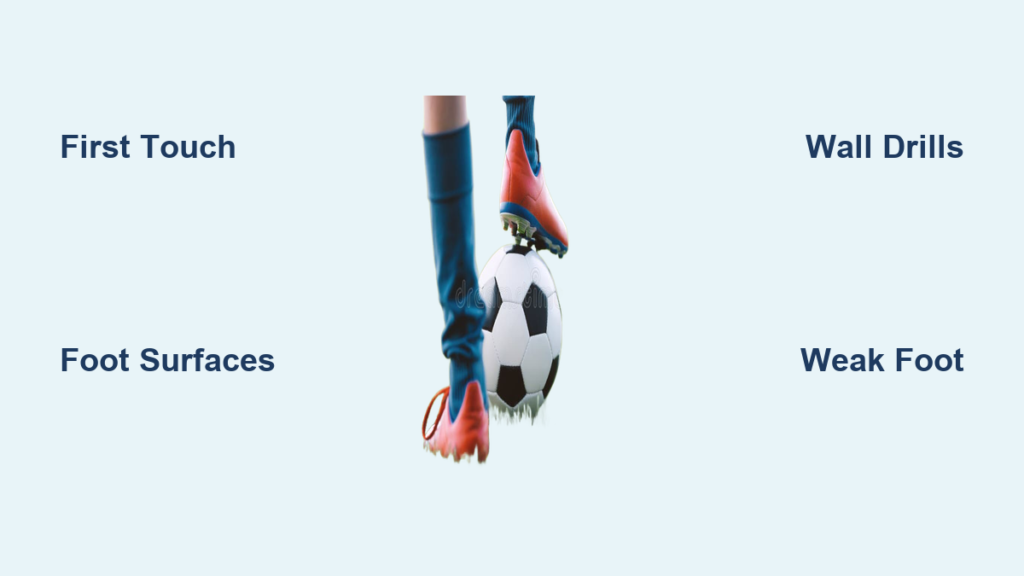
Wall Kicking Drill
Stand 5 to 10 yards from a wall or goalpost.
Kick repeatedly using proper form. Focus on clean contact and full follow-through. Gradually increase distance as technique improves.
Target Practice
Set up a target at height, like a hanging cone or marked zone on a wall.
Practice hitting specific zones. Work on consistency, not just power. Vary distance and trajectory.
Long-Distance Repetition
Perform 50 to 100 kicks per session from the defensive third.
Simulate real-game scenarios. Focus on accuracy and clean technique. Track progress weekly.
Build Skill Over Time
Even late starters can master this technique with dedication.
Expect Gradual Progress
Natural fluency takes weeks to months of consistent practice. Muscle memory develops slowly but lasts.
Do not expect perfection overnight. Focus on form first. Power and accuracy follow.
Consider a Coach
One or two sessions with an experienced coach can correct bad habits early.
Even pros refine their technique. A coach can spot flaws you cannot see.
Use the Right Resources
Visual learning accelerates skill development.
Watch YouTube Tutorials
Search for how to kick a soccer ball long distance, instep drive technique, and aerial pass tutorial.
Look for videos with slow-motion breakdowns and coaching cues.
Frequently Asked Questions About Kicking a Soccer Ball in the Air
What part of the foot should I use to kick the ball high?
Use the instep, the flat area where your shoelaces meet the top of your shoe. This provides the largest striking surface and generates the most power. Avoid kicking with your toes, which reduces accuracy and increases injury risk.
Where on the ball should I make contact?
Strike the lower-middle third of the ball, just below its center. This contact point creates lift while maintaining forward momentum. Hitting too high produces a flat trajectory, while striking the bottom creates a short chip.
How do I get more height on my kicks?
Lean your upper body slightly backward at the moment of contact. The more you lean, the higher the ball flies. Keep your head down and eyes on the ball throughout the kick to maintain balance and accuracy.
How many steps should my run-up be?
Use 3 to 6 smooth, rhythmic steps. A controlled approach helps timing and balance. Rushing or overstriding leads to mistimed contact and poor form.
Why does my kick lack power even when I swing hard?
Power comes from proper technique, not just effort. Ensure you bend your hips and knees during the backswing, cock your leg fully back, and follow through completely. A well-executed kick with proper form travels farther than a wild, forceful swing.
Key Takeaways for Kicking Soccer Balls in the Air
Mastering the aerial kick is about technique, not strength. A smooth, well-timed kick with proper form travels farther and more accurately than a wild, forceful swing. Focus on striking the lower-middle of the ball with your instep, leaning back slightly to generate lift, planting your non-kicking foot 4 to 6 inches beside the ball, and following through fully with your leg swinging upward and across your body.
Practice daily, even 15 minutes of wall kicks builds muscle memory. Use the wall kicking drill starting at 5 to 10 yards and gradually increasing distance. Avoid common errors like toe-kicking, over-leaning, or incomplete follow-through. Apply aerial kicks strategically, preferring ground passes when available and reserving high kicks for clearances, crosses, and specific shooting situations.
With consistent effort, anyone can master this essential skill. Focus on form first, and power and accuracy will follow naturally.